


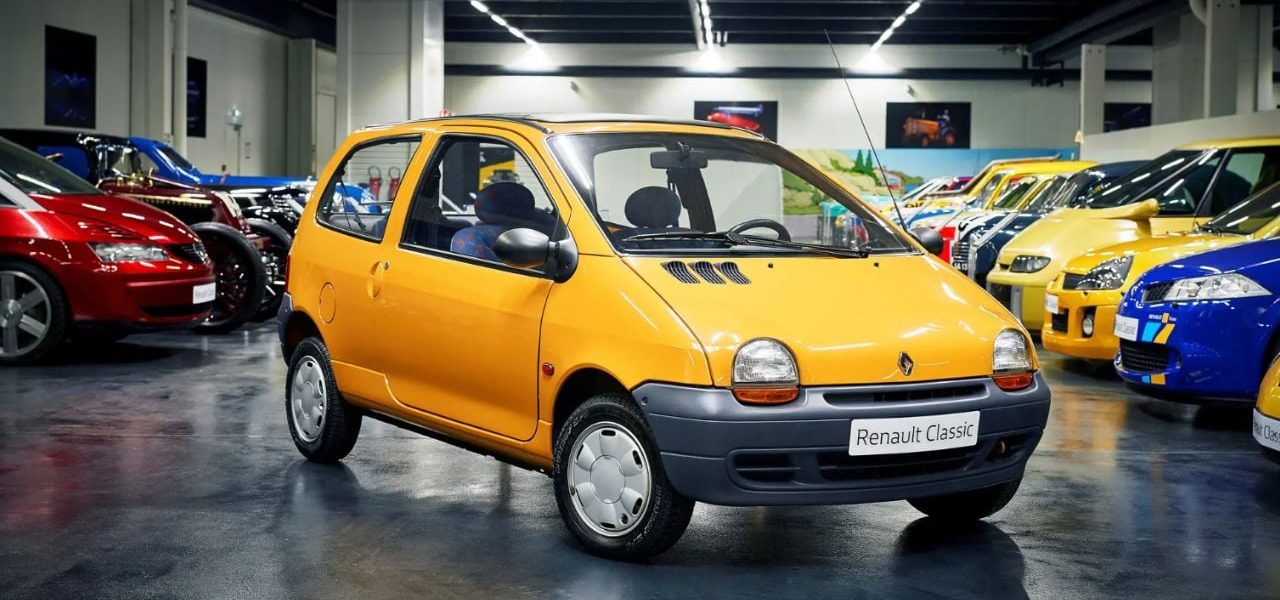
Renault Twingo’s Enduring Legacy: How the Original Model Redefined Urban Car Design
POLICY WIRE — Paris, France — Over three decades after its initial launch, the original Renault Twingo continues to hold a significant place in automotive history, influencing design and urban...

POLICY WIRE — Paris, France — Over three decades after its initial launch, the original Renault Twingo continues to hold a significant place in automotive history, influencing design and urban mobility concepts long after its production ceased.
Unveiled at the 1992 Paris Motor Show and hitting showrooms in 1993, this compact hatchback quickly distinguished itself with its distinctive, playful aesthetic and revolutionary interior packaging.
A Revolutionary Design Ethos
Designed under the visionary leadership of Patrick Le Quément, the Twingo was a radical departure from the typically conservative small car market of the early 1990s. Its monobox silhouette, friendly ‘frog-eye’ headlights, and minimalist approach challenged conventional automotive styling norms.
The car’s charm extended beyond its exterior, offering a surprisingly spacious and modular cabin. A standout feature was its innovative sliding rear bench seat, allowing owners to prioritize either rear passenger legroom or cargo capacity with remarkable flexibility.
“The Twingo wasn’t just a car; it was a statement about joyful, unpretentious mobility. It truly democratized intelligent design.”
Impact on Urban Mobility and Market Positioning
The original Twingo carved out a unique niche as an affordable, practical, and highly characterful city car. Its ingenious use of interior space in a compact footprint made it ideal for navigating crowded urban environments, setting a benchmark for future small car designs.
The vehicle’s success demonstrated that consumers were eager for alternatives to bland, utilitarian transport, provided it offered smart solutions and a strong personality. This philosophy arguably paved the way for subsequent successful urban vehicles emphasizing design and functionality.
📄 POLICY WIRE WHITEPAPER PUBLISHED: PAKISTAN'S NATIONAL SECURITY POLICY PRIORITIES
👉 READ BY CLICKING HEREThe Enduring Cultural Icon
More than just a means of transport, the first-generation Twingo developed a cult following and became a cultural phenomenon, particularly in France. Its vibrant color palette and customizable elements encouraged personalization, fostering a deep connection with its owners.
Even today, classic car enthusiasts and design aficionados celebrate the original Twingo’s innovative spirit and timeless appeal. Its impact is evident in the ongoing discussion about sustainable urban vehicle design and the demand for compact cars that don’t compromise on character or practicality.
Legacy in Modern Automotive Design
The principles championed by the Twingo – intelligent packaging, bold aesthetics, and user-centric features – continue to resonate within the automotive industry. It proved that a small car could be both functional and fun, leaving an indelible mark on vehicle development for generations to come.
Read More: Supreme Court Affirms Michigan’s State Court Jurisdiction in Enbridge Line 5 Pipeline Dispute