

Beijing’s Electric Offensive: Global Automakers Grapple with China’s New Mobility Map
POLICY WIRE — BEIJING, China — The air inside Beijing’s sprawling exhibition halls wasn’t merely thick with the scent of new car interiors and the faint ozone tang of charging stations;...

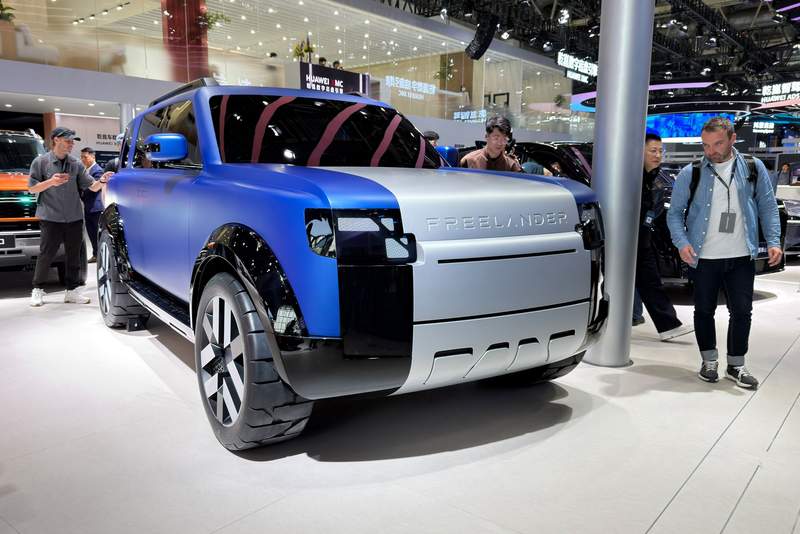
POLICY WIRE — BEIJING, China — The air inside Beijing’s sprawling exhibition halls wasn’t merely thick with the scent of new car interiors and the faint ozone tang of charging stations; it was heavy with an unspoken, collective anxiety. Auto China 2024, ostensibly a showcase of automotive prowess, unfolded less like a conventional trade fair and more like a pivotal summit on the future of global mobility – a future increasingly dictated by Chinese innovation and manufacturing might. Foreign automakers, once the undisputed titans, now found themselves less as exhibitors, more as supplicants, desperately trying to discern how to compete, or perhaps, simply survive.
Gone are the days when Chinese brands were relegated to cheap knock-offs or niche markets. Now, they’re the vanguard, their sleek, hyper-connected electric vehicles (EVs) brimming with cutting-edge technology and price tags that leave Western competitors reeling. It’s a stark reordering of the global automotive hierarchy, one that few in Detroit, Stuttgart, or Tokyo had genuinely anticipated with such ferocity. This isn’t just about selling cars; it’s about geopolitical leverage, industrial supremacy, and the very definition of 21st-century manufacturing.
At its core, the Beijing auto show laid bare the profound shift underway. China’s new energy vehicle (NEV) sales, encompassing both pure electrics and hybrids, surged by a staggering 37.9% year-on-year in 2023, according to the China Association of Automobile Manufacturers (CAAM), reaching 9.495 million units. This isn’t a mere uptick; it represents 31.6% of all vehicle sales in China, a market share that underscores an undeniable domestic pivot. So, it’s not just that China makes more EVs; it’s that its own citizens are buying them at an unprecedented clip, fueling an ecosystem of innovation that’s difficult for anyone else to match.
Mr. Ren Zhiqiang, Deputy Director of the China Automotive Technology & Research Center (CATARC), didn’t mince words. Speaking from a brightly lit pavilion showcasing a self-driving concept car, he asserted, “Our innovations aren’t merely incremental; they’re foundational shifts in how the world moves. We don’t just aspire to lead; we’re actively redefining the competitive landscape. Any nation that ignores this seismic shift does so at its peril.” It was a statement delivered with an almost serene confidence, a subtle but potent declaration of technological and market dominance.
But the confident pronouncements from Chinese officials are met with growing trepidation elsewhere. Ms. Ursula Schmidt, Head of European Auto Trade Policy at the Brussels-based European Commission, expressed her anxieties succinctly. “While we acknowledge the formidable progress made by Chinese manufacturers, fairness in trade and transparent market access remain paramount,” she shot back during a virtual press briefing concurrent with the show. “It’s not about stifling innovation; it’s about ensuring a level playing field for all, without the distorting effects of disproportionate state subsidies that arguably underpin much of this rapid expansion.” She’s not alone in her concerns, clearly. The spectre of trade protectionism, tariffs, — and retaliatory measures looms large over these gleaming new vehicles.
📄 POLICY WIRE WHITEPAPER PUBLISHED: PAKISTAN'S NATIONAL SECURITY POLICY PRIORITIES
👉 READ BY CLICKING HEREStill, the geopolitical tremors extend far beyond the traditional Western markets. Chinese automakers are aggressively eyeing — and entering — burgeoning markets across Asia, Africa, and Latin America. In places like Pakistan, for instance, where energy costs and import duties on traditional cars can be prohibitive, affordable Chinese EVs and hybrids are making significant inroads. Brands like BYD, MG (now owned by China’s SAIC), and others are either exporting directly or establishing local assembly plants, leveraging lower production costs and offering technologies often perceived as more advanced than legacy options. This move isn’t just about sales; it’s about establishing long-term influence, integrating supply chains, and shaping the future of transportation in these developing nations, many of which (like Pakistan) are grappling with acute energy insecurity and environmental degradation. It’s a complex dance between economic opportunity and strategic entanglement.
And it’s a trend that’s not going to dissipate. The sheer scale of Chinese production, coupled with vertical integration of battery and critical mineral supply chains, creates a formidable competitive moat. You’ve got to wonder if established players can really catch up without significant retooling of their entire business models — and perhaps, their geopolitical allegiances. This isn’t just a technological race; it’s a marathon of policy, subsidies, and strategic foresight where Beijing has evidently been running for years while others were still lacing up their shoes.
What This Means
The implications of China’s ascendant automotive industry, so vividly displayed at Auto China 2024, are manifold and profound. Economically, it signifies a massive wealth transfer — and a reorientation of global manufacturing hubs. Western legacy automakers face existential choices: innovate faster, form deeper partnerships with Chinese firms (at the risk of further technology transfer), or lobby for protectionist measures that could ignite a full-blown trade war. The latter, however, carries its own economic perils, potentially alienating a critical consumer base and stifling global cooperation on climate goals. From a political standpoint, China’s EV dominance provides Beijing with significant diplomatic leverage, tying developing nations into its technological orbit and influencing global energy transition policies. The push into markets like Pakistan isn’t just about selling vehicles; it’s about shaping future urban landscapes, infrastructure development, and technological standards. it complicates the West’s de-risking strategies, demonstrating the deep intertwining of global supply chains. The auto industry, often a bellwether for industrial power, suggests a future where Beijing isn’t just a workshop for the world, but its primary architect of critical technologies. It’s a challenging new reality that demands nuanced responses, not just knee-jerk protectionism.