


Israel’s Invisible Tax: Beneath the Surface, a War on the Silent Extortionists
POLICY WIRE — Tel Aviv, Israel — It isn’t the grand corruption schemes, the multi-million dollar embezzlements, that often bleed a society dry. No, it’s the invisible tax, the quiet...

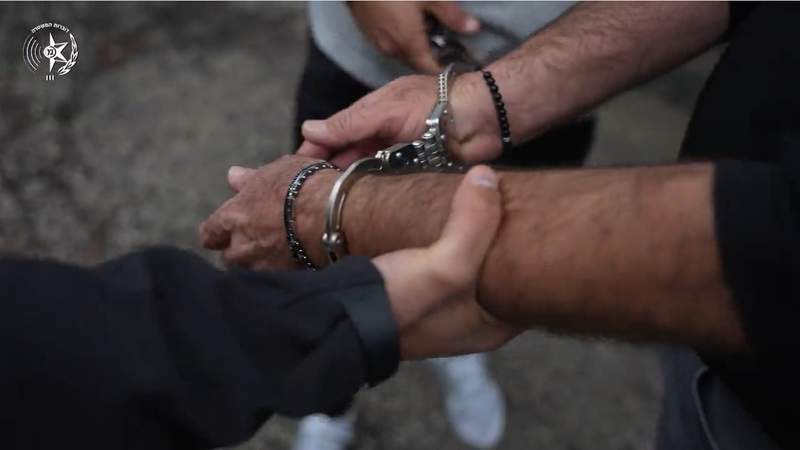
POLICY WIRE — Tel Aviv, Israel — It isn’t the grand corruption schemes, the multi-million dollar embezzlements, that often bleed a society dry. No, it’s the invisible tax, the quiet menace, that truly suffocates: the protection racket. That insidious fiscal drain, extracting tribute from bakeries and boutiques alike, has seen a momentary but potent pushback this week, deep in Israel’s heartland. A coordinated dragnet, far from the international headlines, swept up eleven alleged orchestrators of such an enterprise, pulling them from the mundane rhythm of their lives into the glare of police interrogation.
But this wasn’t just another arrest; it’s a stark reminder of the persistent, subterranean battle for economic sovereignty in a nation perpetually focused on external threats. For years, businesses across central Israel — don’t mistake their quiet resilience for ignorance of the creeping peril — have reportedly operated under the shadow of criminal organizations demanding their due. You pay, or you risk everything. That’s the brutal, unwritten contract.
The Israel Police, after months of meticulous, painstaking intelligence gathering, finally moved. They’ve accused the detainees of systematic extortion, employing intimidation and veiled threats to ensure compliance from often vulnerable proprietors. This network, they claim, didn’t just operate; it flourished, its roots burrowing deep into local commerce, twisting the very notion of free enterprise.
“This operation sends an unequivocal message: we won’t cede an inch of our citizens’ economic freedom to criminal elements,” shot back Commander Shmuel Levy, head of the National Crime Unit, in a statement provided to Policy Wire. “These aren’t just financial crimes; they’re attacks on the fabric of our society, on the very right to conduct business without fear. We’re resolute.” It’s a sentiment that, while expected, certainly resonates with those who’ve watched small establishments shutter under the strain.
Still, the arrests, while a significant tactical victory, highlight a broader, more systemic vulnerability. These rackets prey on the desperate, the small-time entrepreneurs, who often feel they’ve nowhere to turn. They’re caught between a rock and a hard place: reporting means potential retaliation; paying means surrendering profit and dignity. (It’s an impossible choice for many, isn’t it?)
Organized crime, according to a 2021 report by the Global Initiative Against Transnational Organized Crime, costs the global economy an estimated $2 trillion annually—a figure that, while broad, underscores the sheer scale of illicit financial flows and the invisible taxes levied on legitimate commerce. And much of it, don’t forget, comes from these local protection schemes.
“We’ve seen businesses, family legacies even, simply vanish because they couldn’t afford the ‘protection’ or the damage from refusing it,” lamented Dr. Miriam Hadad, an economist specializing in regional development at Ben-Gurion University. “This isn’t just about police work; it’s about rebuilding trust, about ensuring our economic infrastructure isn’t undermined by brute force. It’s about legitimate enterprise having a fighting chance.”
Behind the headlines, Israel isn’t alone in this particular brand of subterranean economic warfare. Across South Asia and parts of the Muslim world, from the bustling markets of Karachi to the byzantine alleyways of Cairo, similar informal — and entirely illegal — protection networks often operate with impunity. They exploit weak governance, societal fragmentation, — and the sheer desperation of small business owners. Pakistan, for instance, has long grappled with various iterations of ‘bhatta’ (extortion money), a shadow economy that feeds off fear and bureaucratic inefficiencies, creating a parallel system of “taxation” that strangles legitimate growth. One might recall the chilling accounts of merchants forced to pay up or face dire consequences, a narrative that echoes uncomfortably in unexpected corners of the globe.
At its core, this week’s operation serves as a potent, if fleeting, reminder that the state’s monopoly on force and taxation isn’t a given; it’s a constantly contested space, particularly in regions prone to instability or where communal ties can be twisted for nefarious ends. So, what precisely does this all mean for the embattled Israeli economy, — and for similar fights globally?
What This Means
This coordinated strike against an alleged protection racket in central Israel, while a localized event, carries considerable political and economic implications. Politically, it’s a crucial test of the government’s commitment to internal security beyond the customary focus on geopolitical threats. The ability—or inability—to protect its citizens from domestic criminal enterprises directly impacts public trust in state institutions. A failure here could foster a sense of lawlessness, eroding social cohesion and potentially fueling radicalization, a common challenge in many parts of the wider Muslim world, where such vacuums are readily filled.
Economically, the persistent presence of protection rackets acts as a corrosive, hidden tax on entrepreneurship. Small — and medium-sized businesses, the backbone of any healthy economy, are particularly vulnerable. They’re forced to absorb these extra costs, either passing them onto consumers — thus driving up inflation — or seeing their already thin profit margins vanish. This stifles investment, discourages business formation, — and ultimately impedes economic growth. It effectively siphons capital from productive enterprises into illicit hands, creating a black market that distorts legitimate economic signals.
Societally, the fear engendered by such rackets is pernicious. It undermines the rule of law, breeds cynicism towards authority, and can force communities to retreat into themselves, trusting neither the state nor their neighbors. The long-term psychological toll on business owners, constantly looking over their shoulder, can’t be overstated. This operation, therefore, isn’t just about justice for a few victims; it’s a broader struggle for the soul of the legitimate economy, a battle to reclaim the streets and storefronts from those who seek to profit from fear. And frankly, it’s a battle many governments, struggling with unsentimental calculus and limited resources, are fighting on multiple fronts.