


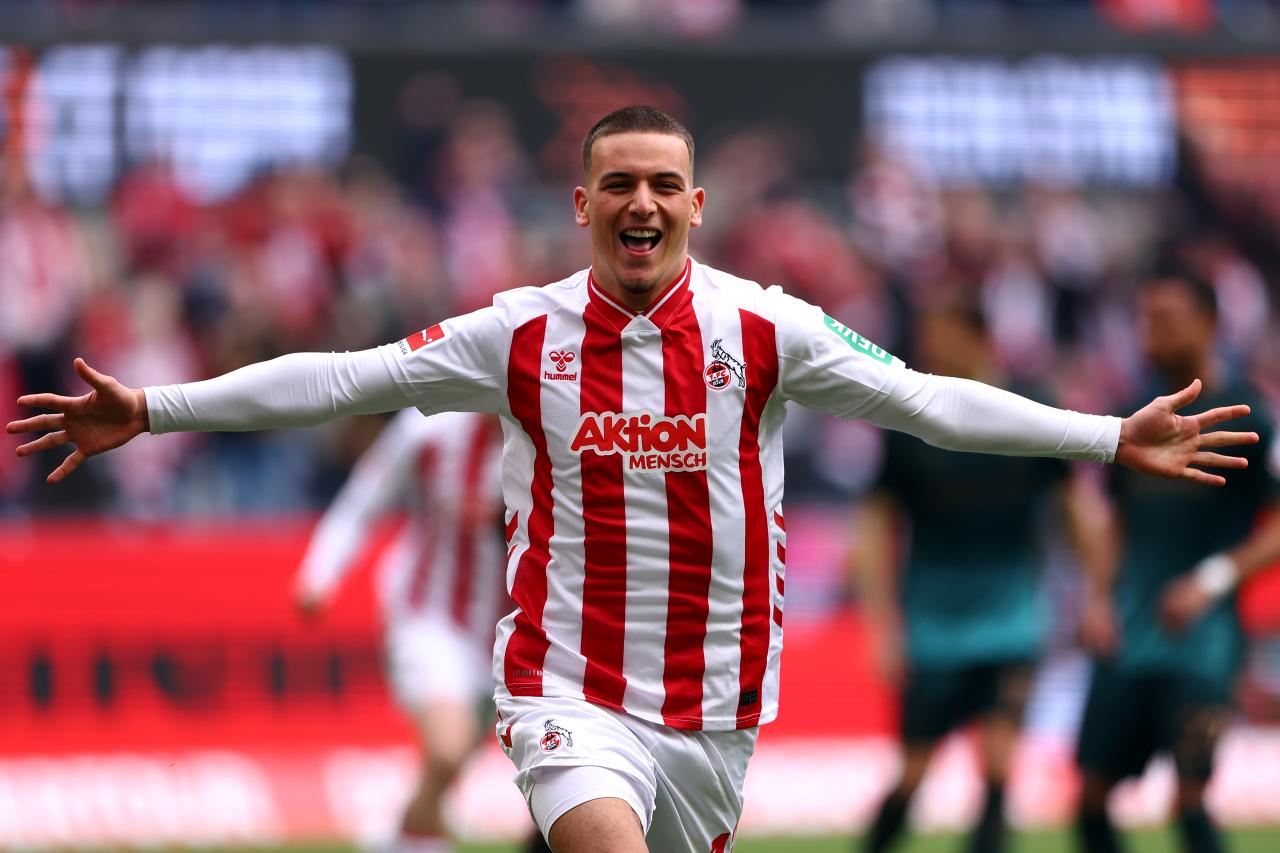
The €15 Million Gulf: How Cold Calculus Derailed a Starlet’s Premier League Dream
POLICY WIRE — London, UK — The narrative of the prodigious talent, plucked from relative obscurity to grace the grandest stages, is a perennial favorite. It’s the stuff of legends, yes? But beneath...

POLICY WIRE — London, UK — The narrative of the prodigious talent, plucked from relative obscurity to grace the grandest stages, is a perennial favorite. It’s the stuff of legends, yes? But beneath the shimmering veneer of personal terms and handshake agreements, a far grittier reality often governs the ballet of modern football. It’s a realm where dreams, for all their dazzling allure, frequently collide with an unwavering calculus of cash.
Said El Mala, the 19-year-old attacking phenom from 1. FC Köln, had, until recently, been living this very dream. Widely touted as the next significant export from the Bundesliga, his trajectory pointed squarely towards the glittering lights of England’s Premier League. Brighton & Hove Albion, renowned for their shrewd recruitment and penchant for cultivating youthful brilliance, had been the conspicuous frontrunners, positioning themselves as his next logical — and highly anticipated — destination. They’d even reportedly ironed out the intricate personal terms with El Mala himself, alongside his brother Malek, who presumably navigates the complex ecosystem of his sibling’s burgeoning career. Everything seemed, for a fleeting moment, inexorable.
And then, the abrupt, almost brutal, pivot. The deal, it turns out, is dead. According to the German daily Kölner Stadt-Anzeiger, Brighton has decisively pulled its €35 million offer off the table, jettisoning itself from the fervent pursuit. The chasm, it appears, wasn’t over the player’s ambition or his wage demands, but a stark, uncompromising discrepancy in valuation. Köln, it seems, isn’t just grooming a talent; they’re holding onto a perceived goldmine, steadfastly demanding a cool €50 million for their prized asset. That’s a €15 million difference, a sum that, for many clubs, isn’t mere pocket change but a strategic gulf.
“We operate with a clear, sustainable financial framework,” declared Paul Barber, Brighton’s CEO, in what can only be interpreted as a firm reiteration of the club’s fiscal discipline. “While El Mala is undoubtedly a talent with immense promise, our valuation models simply didn’t support an additional €15 million outlay for a 19-year-old at this juncture. We’re building for sustained success, not chasing short-term headlines at any cost.” It’s a position that underscores the increasingly complex dance between ambition and economic prudence in a league awash with television revenue, yet still susceptible to market caprice.
Still, Köln’s sporting director, Christian Keller, has articulated a similarly resolute stance from the Bundesliga side’s perspective. “Said is an integral part of our future, a genuine gem we’ve meticulously cultivated through our academy system,” Keller asserted. “Our valuation isn’t arbitrary; it reflects his burgeoning potential — and his current, tangible impact on the pitch. We won’t be bullied into selling our best assets below their true market rate, especially when the broader market clearly demonstrates his worth through other high-profile transfers.” Indeed, the average transfer fee for players aged 18-20 in Europe’s top five leagues hit €15 million in 2023, according to a recent CIES Football Observatory report, making Köln’s €50 million ask for a standout talent, though steep, not entirely unprecedented.
But the withdrawal doesn’t necessarily tether El Mala to the Rhine forever. It merely signals Brighton’s reluctance to engage in what they likely view as an escalating bidding war. Chelsea and Newcastle United, both clubs with substantially deeper pockets and, perhaps, a greater appetite for speculative, high-stakes investments, are reportedly still monitoring the teenager’s situation with keen interest. For El Mala, whose Muslim heritage connects him to a vast global fanbase – particularly in regions like Pakistan and other parts of the South Asian and Muslim worlds where European football has an almost devotional following – the Premier League dream hasn’t evaporated; it’s simply shifted address, perhaps to a wealthier suitor.
At its core, this episode is a microcosm of the brutal ballet of modern football, a game where raw talent is but one variable in a multi-faceted equation dominated by financial leverage, strategic positioning, and the sheer audacity of asking prices. One wonders, too, about the player’s own calculus in all this – the personal aspirations weighed against the hard numbers. How much is a dream truly worth when an extra €15 million stands between you — and your perceived destiny? It’s a question for El Mala, and for every club eyeing his next move, as the transfer window’s unsentimental clock ticks on, a relentless arbiter of ambition and valuation, forever reshaping futures.
What This Means
This saga isn’t just about a failed transfer; it’s a stark illustration of the market’s relentless balance in contemporary football. Economically, it underscores the persistent inflation in player valuations, particularly for young, high-potential talents. Clubs like Köln, often operating as ‘selling clubs,’ are becoming increasingly sophisticated in leveraging market demand, creating a bubble-like environment where perceived future value often outstrips current performance. Brighton’s withdrawal, then, is an act of economic discipline, a refusal to overpay even for a desirable asset, signaling a potential tempering of transfer market excesses – or perhaps, just their specific ceiling.
Politically, this incident reveals the evolving power dynamics. While Premier League clubs wield immense financial clout, Bundesliga teams are increasingly confident in their negotiating positions, bolstered by strong domestic leagues and the global appeal of their academies. It’s a subtle pushback against the perceived hegemony of English football money. for a player of El Mala’s background, every career move carries a ripple effect, inspiring countless young athletes in his community and beyond, making his eventual destination a cultural, as well as sporting, statement. His choice, or lack thereof, will be scrutinized not just by fans, but by an entire generation looking for representation on football’s grandest stages. It’s a reminder that even in the cutthroat world of transfer fees, human aspirations remain the true currency.