


Riverside Fire: Swift Containment, Swifter Narrative Control in Española’s Wake
POLICY WIRE — Española, New Mexico — It wasn’t the blaze itself that captivated local officials most intently this past weekend, but rather the rapid, almost pre-emptive, dispelling of a...

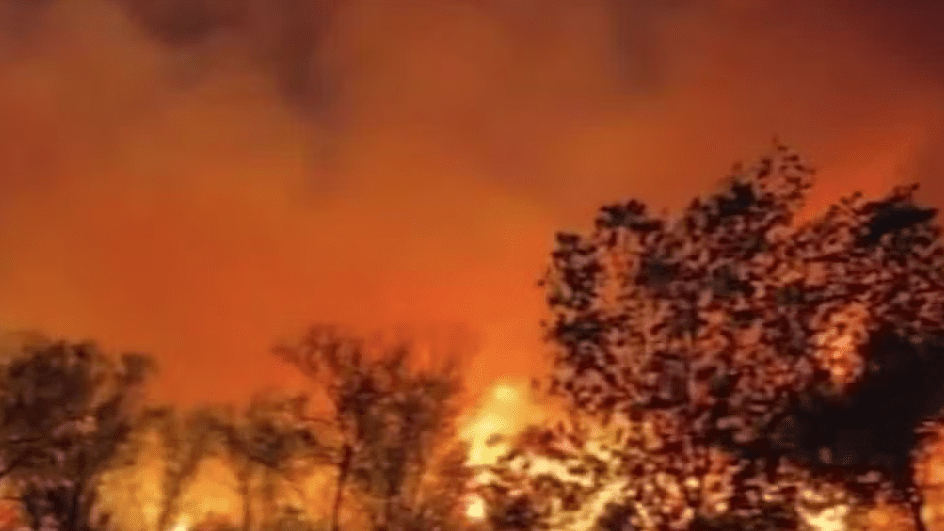
POLICY WIRE — Española, New Mexico — It wasn’t the blaze itself that captivated local officials most intently this past weekend, but rather the rapid, almost pre-emptive, dispelling of a particularly insidious narrative. Even as smoke still feathered the New Mexico sky from the Riverside Fire, authorities were already busy debunking the reflexive, often cruel, assumption that the area’s unhoused population bore responsibility. A quick, decisive official statement from the city on Sunday didn’t just clarify; it inoculated against an all-too-common prejudice, highlighting a crucial aspect of crisis management that often goes unacknowledged: controlling the narrative is as vital as controlling the flames.
And control the flames they did. What began as an alarming conflagration on Friday, charring 44 acres near the Santa Claran Casino on Santa Clara Pueblo land, saw a remarkably swift turnaround. By Sunday evening, the inferno was 60% contained, its aggressive expansion curtailed by a confluence of meteorological good fortune and tactical precision. Cooler temperatures and overcast skies provided a welcome respite, certainly, but it’s the unified command—a meticulous assembly of city, county, tribal, and federal agencies—that merits deeper scrutiny. They weren’t just fighting fire; they were orchestrating a symphony of interagency cooperation, a model that could instruct responses far beyond the Sangre de Cristo Mountains.
“This wasn’t merely about dousing embers; it was about safeguarding the economic viability of a community and quelling undue anxieties among residents and visitors alike,” remarked Chief Elena Rodriguez, a seasoned veteran heading the multi-agency command. She paused, then continued, “Our priority extended beyond acreage to livelihoods, ensuring minimal disruption to the casino and surrounding businesses, which are pivotal to local employment and tribal revenue streams.” Her words underscored the intricate web of policy considerations inherent in even localized environmental disasters. The swift containment also allowed for the immediate lifting of evacuation orders, an economic lifesaver for businesses and a profound relief for displaced families.
But the social dimension, particularly the initial whisper-campaign pointing fingers at the vulnerable, didn’t escape notice. “In times of crisis, it’s tragically easy for finger-pointing to overshadow facts, especially when directed at those on the margins of society,” asserted Pueblo Governor Joseph Montoya, his voice steady. “We’re immensely proud of our community’s resilience and the decisive action taken to prevent unwarranted speculation from taking root.” This wasn’t merely a local sentiment; it’s a global phenomenon. Such reflexive misattributions and the swift vilification of marginalized groups aren’t unique to the American Southwest. They echo through public discourse in myriad regions, not least in South Asia, where vulnerable populations—whether migrant workers, specific religious minorities, or the economically disenfranchised—are frequently scapegoated during environmental catastrophes or economic downturns. It’s a stark reminder that the policy challenge of managing public perception, and protecting human dignity, often runs parallel to the immediate physical threat.
The operational efficiency was palpable. Personnel numbers, initially surging to nearly a hundred to battle the blaze at its peak, were scaled back to 38 once containment lines solidified. That’s a testament to effective resource allocation, a critical component of any successful emergency response. Still, the precise genesis of the Riverside Fire remains shrouded in investigative mystery. The cause, which ignited the landscape north of the Santa Claran Casino last Friday, is still under scrutiny, promising further details once the forensic dust settles. Over the last decade, the U.S. has seen an average of 7.5 million acres burned annually, a stark statistic from the National Interagency Fire Center (NIFC) that underscores the persistent threat of wildfires and the constant demand on firefighting resources.
What This Means
At its core, the Española incident offers a microcosm of contemporary crisis management, blending ecological urgency with socio-economic implications and the delicate art of public relations. For policymakers, it highlights the paramount importance of robust, pre-established interagency cooperation. When city, county, tribal, and federal entities can integrate seamlessly—as they demonstrably did here—the outcomes are dramatically improved, reducing both physical damage and the cascading economic fallout. The casino, a significant local employer and revenue generator, was back online quickly; that’s not just luck, it’s policy working.
And let’s not overlook the crucial political dimension of discrediting false narratives. In an era saturated with misinformation, authorities’ prompt dismissal of the “homeless-caused” theory didn’t just correct an inaccuracy; it served as a vital bulwark against the kind of societal prejudice that can fester and divide communities, something often seen amplified in regions grappling with social inequality. It’s a lesson in proactive communication, a tactic as essential to public safety as any fire break. Beyond the immediate geography, the resilience demonstrated by Española and the Pueblo underscores the adaptability required in facing increasingly frequent and intense environmental challenges. It’s not unlike the precarious balance many nations, from the Himalayas to the Indian Ocean, must strike between environmental preservation, economic development, and protecting vulnerable populations, often caught in the crosshairs of climate change and rapid urbanization. Consider the complexities, for instance, in managing resources around an ecological keystone like Mount Everest, where policy decisions have far-reaching economic and environmental ramifications.
This rapid containment — and narrative control won’t eliminate future fires, naturally. But it does offer a template: swift action, unified command, and a conscious effort to prevent societal biases from contaminating public discourse. That’s a policy victory worth examining, not just in New Mexico, but in any region facing complex emergencies where vulnerable populations are often unfairly targeted.