


Manitoba’s Digital Dike: Premier Targets Social Media, AI for Minors in Contentious Ban Bid
POLICY WIRE — Winnipeg, Canada — The digital frontier, once lauded as an unalloyed landscape of opportunity, now confronts a stark reality: governments are increasingly wary of its unpoliced sprawl,...

POLICY WIRE — Winnipeg, Canada — The digital frontier, once lauded as an unalloyed landscape of opportunity, now confronts a stark reality: governments are increasingly wary of its unpoliced sprawl, particularly where children are concerned. And so, from the prairie heartland of Canada, comes a salvo that could reshape the ongoing skirmish between innovation and childhood innocence.
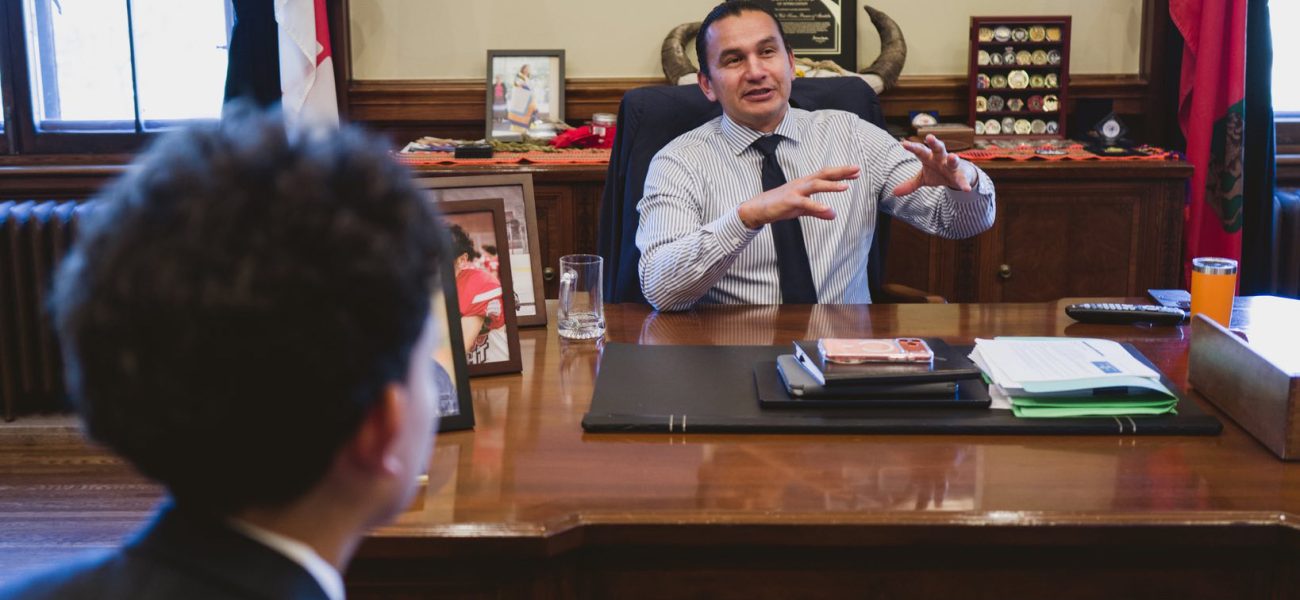
Manitoba Premier Wab Kinew, a figure known for his measured political gait, has unexpectedly launched a provincial broadside, proposing an outright prohibition on social media platforms and generative artificial intelligence tools for minors. It’s a bold gambit, not merely a call for stricter parental controls, but a legislative hammer aimed squarely at the pervasive digital omnipresence that, he argues, has ensnared a generation. The specifics remain somewhat nebulous, an emerging policy silhouette, yet the intent is crystalline: create a digital cordon sanitaire around Manitoba’s youth.
But how, precisely, does one legislate an invisible boundary in the boundless ether of the internet? That’s the billion-dollar question, not least for the tech behemoths whose business models rely on maximal engagement, irrespective of age. Kinew’s administration posits that the sheer scale of mental health challenges and academic degradation among youth necessitates such drastic intervention. A policy nexus concerning youth is undeniably tightening globally, but few jurisdictions have contemplated such an expansive preclusion.
At its core, the proposed ban grapples with a vexing dichotomy: parental autonomy versus state paternalism. Kinew, however, frames it as a public health crisis demanding collective action. “We can’t stand idly by as an entire generation navigates a digital minefield without proper safeguards,” Premier Kinew asserted in a recent address, his voice firm with conviction. “It’s not about stifling innovation; it’s about protecting childhood — a non-negotiable imperative that falls squarely within our provincial duty to care.” He’s not alone in his concerns, of course; parents across the socio-economic spectrum grapple daily with the siren song of screens.
Still, the logistical quagmire awaiting such a mandate is formidable. Age verification, notoriously porous on the internet, presents an immediate hurdle. Then there’s the thorny question of jurisdiction: can a provincial government truly enforce such a sweeping ban against platforms operating globally, often under federal telecommunications purview? Critics are quick to highlight these formidable obstacles, suggesting the proposal, while well-intentioned, verges on the utopian.
“While the sentiment is understandable, this proposal is a digital Maginot Line, easily circumvented and fundamentally impractical,” shot back Melanie Dubois, a spokesperson for the Canadian Civil Liberties Association, during a virtual press conference. “It risks creating a digital divide and undermining parental authority, not to mention the labyrinthine legal challenges it presents for both government and citizens.” Her point, however inconvenient for Kinew’s vision, bears considerable weight, touching upon the very architecture of online existence.
📄 POLICY WIRE WHITEPAPER PUBLISHED: PAKISTAN'S NATIONAL SECURITY POLICY PRIORITIES
👉 READ BY CLICKING HEREThe urgency isn’t manufactured. A 2022 report by the Public Health Agency of Canada revealed that a staggering 70% of Canadian children aged 11-18 exceeded national screen time guidelines, contributing to documented increases in anxiety, depression, and sleep disorders. It’s a stark figure that lends considerable gravitas to Kinew’s alarm. Yet, the policy response itself invites a broader debate on digital literacy — and education versus outright restriction.
This policy tremor in Manitoba isn’t an isolated incident. Nations across the globe, from the European Union’s GDPR to more restrictive regimes in the Muslim world, are grappling with the same potent mix of digital opportunity and peril. In countries like Pakistan, for instance, where youth populations are burgeoning and internet penetration is rapidly expanding, debates about online safety, content moderation, and the psychological impact of digital media on young minds are similarly fervent. Their solutions often hinge on a delicate balance of cultural values, technological capacity, and governmental control, presenting complex policy reckonings that resonate far beyond Canada’s borders.
What This Means
The Kinew government’s proposed ban, if it somehow clears the colossal legislative and technical hurdles, represents a significant escalation in the ongoing global fight to regulate big tech and protect minors. Politically, it’s a bold, populist move, aiming to tap into widespread parental anxiety about screen addiction and its deleterious effects. But its practical implementation would be an unprecedented legal — and enforcement nightmare. Such a provincial edict could trigger a constitutional challenge over federal versus provincial jurisdiction concerning internet regulation, potentially setting a national precedent for digital policy.
Economically, if successful (a monumental ‘if’), it would compel social media companies and AI developers to re-engineer their age verification mechanisms and content delivery systems, not just for Manitoba, but potentially for other jurisdictions looking to emulate the province’s approach. This isn’t just about Winnipeg; it’s a potential bellwether for how Western democracies, long hesitant to impose outright bans, might begin to redraw the boundaries of digital access. It signals a governmental willingness to move beyond mere advisories and into assertive, albeit fraught, legislative action. The ripple effect, both domestically and internationally, could be substantial, challenging the very notion of an unfettered internet for the younger generation.