


Maldon’s Muddy Rite of Passage: A Quagmire of Philanthropy and Primal Endurance
POLICY WIRE — Maldon, England — In an age often characterized by digital detachment and sanitized experiences, a peculiar British ritual persists, drawing hundreds to a primal...

POLICY WIRE — Maldon, England — In an age often characterized by digital detachment and sanitized experiences, a peculiar British ritual persists, drawing hundreds to a primal confrontation with nature’s grittiest elements. It’s not a grand political summit, nor a crucial economic indicator, but a muddy pilgrimage across a riverbed — an annual spectacle that, beneath its frivolous exterior, reveals a stubborn strain of communal resilience and philanthropic fervor.
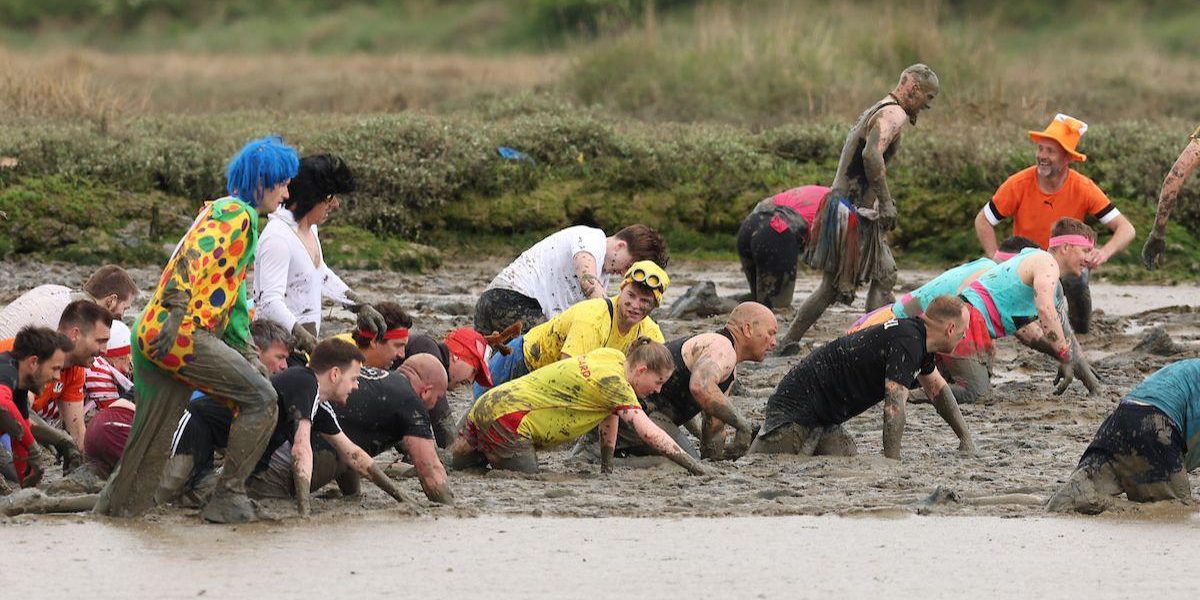
This Sunday, the tranquil River Blackwater, typically a haven for local wildlife, transforms into a quagmire of ambition and — let’s be honest — probable humiliation. Participants in the Maldon Mud Race, an event birthed from a tavern dare in 1973, are poised to wade, crawl, and occasionally swim through 440 meters of frigid estuarial sludge. They’re not merely competing; they’re embracing a profound discomfort, a deliberate dive into the abject, all in the name of charity.
Brian Farrington, the venerable chairman of the event, offered a stark caution to the impending throng. “They think it’s going to be easy — but no,” he shot back, his tone a mix of amusement and sagely wisdom. “You’ll emerge bedraggled, quite possibly missing some personal effects. It’s a genuine test, one that strips away pretension as effectively as it might your socks.” It’s a statement that underscores the event’s brutal honesty — a stark antithesis to the carefully curated realities most of us inhabit.
And what a test it’s. Harriet Hemmings, a returning combatant from Chelmsford, vividly recounted her inaugural experience. “Everyone said it was tough, and I thought, ‘It’s just mud, how hard can it truly be?’” she lamented, recalling a profound miscalculation. “But, actually, it’s an immense challenge. I was nearly fainting by the end.” Hemmings even attributed her rehabilitation from a 2019 broken back, in part, to the rigorous training the race demanded. “It motivates you to get in the gym, get fit and get strong, so it has benefitted me through my recovery and has been brilliant,” she affirmed, highlighting the unexpected therapeutic dimensions of wading through muck.
The spectacle itself, which began as an impulsive challenge to a pub landlord to serve a meal on a river sandbank at low tide, has metastasized into a bona fide institution. Its enduring appeal lies not just in the visual absurdity — though that’s certainly a draw — but in its tangible societal impact. The event, which remarkably generated some £30,000 for various charitable causes in its 2025 iteration, according to the BBC, underscores a persistent generosity amidst the spectacle. It’s a grassroots engine of benevolence, turning a momentary inconvenience into significant aid.
Still, organizers aren’t pulling any punches. The River Blackwater’s temperature is anticipated to hover around 8°C (46°F) at race time — a chilling proposition even for the most stoic participant. for the first time, an “Uber Fit Challenge Race” will follow the main public event in 2026, signaling a potential professionalization of this traditionally amateur endeavor. Farrington, ever the keen observer of human nature, also remarked on the sartorial choices of participants: “Some people are very brave, and they don’t wear a lot, but some dress for the part, and it’s great to see. They’re a bit bedraggled when they come off because half of them have lost their costumes.” It’s a sartorial microcosm of Britain itself — a mix of stoicism and theatricality.
📄 POLICY WIRE WHITEPAPER PUBLISHED: PAKISTAN'S NATIONAL SECURITY POLICY PRIORITIES
👉 READ BY CLICKING HEREAnd it’s this blend of the bizarre — and the benevolent that resonates far beyond Essex. Across the globe, from the gruelling desert rallies of the Middle East to the arduous mountain treks of Pakistan, humanity finds diverse ways to test its limits, often tying these feats to community upliftment. The sheer human will to overcome — be it a broken back or a boggy riverbed — for a cause, is a universal language. It speaks volumes about the human spirit’s capacity for altruism, transcending cultural specificities to find common ground in shared hardship and charitable resolve. For further insights into how unexpected events can reveal underlying societal dynamics, consider Washington’s Annual Ritual Shattered by Gunfire, an incident that also laid bare broader truths.
What This Means
The Maldon Mud Race, often dismissed as a quintessentially British eccentricity, offers a surprisingly potent microcosm of broader societal trends. At its core, it represents a deep-seated human need for authentic, visceral experiences in an increasingly mediated world. But it’s also a testament to community cohesion — and decentralized philanthropy. In an era where trust in traditional institutions occasionally falters, these localized, self-organizing events provide a vital outlet for collective action and direct charitable impact. They bypass bureaucratic complexities, allowing individuals to engage directly with both their physical limits and their altruistic impulses.
Economically, such events — while seemingly trivial — inject considerable funds into local economies, supporting small businesses, tourism, and hospitality. They create a distinct “experience economy” that thrives on novelty — and participation. Politically, they demonstrate the enduring power of community identity and tradition, providing a non-partisan platform for people to gather, bond, and achieve shared objectives. It’s a reminder that not all consequential policy happens in parliamentary chambers; sometimes, it’s forged in the mud, through shared struggle and laughter. The very act of deliberately choosing discomfort for a higher purpose is a subtle but powerful rejection of consumerist complacency, echoing a spirit of resilience that finds parallels in societies grappling with far more severe hardships, such as those faced in conflict zones or disaster-prone regions of South Asia, where community resilience in the face of natural elements is a daily reality.