

DTM’s Red Bull Ring Drama: Beyond the Roar, a Policy-Driven Scramble for Sporting Supremacy
POLICY WIRE — Spielberg, Austria — The roar of engines, they say, is the purest measure of speed, unburdened by human intervention. But at the Red Bull Ring, it wasn’t just the sheer velocity...

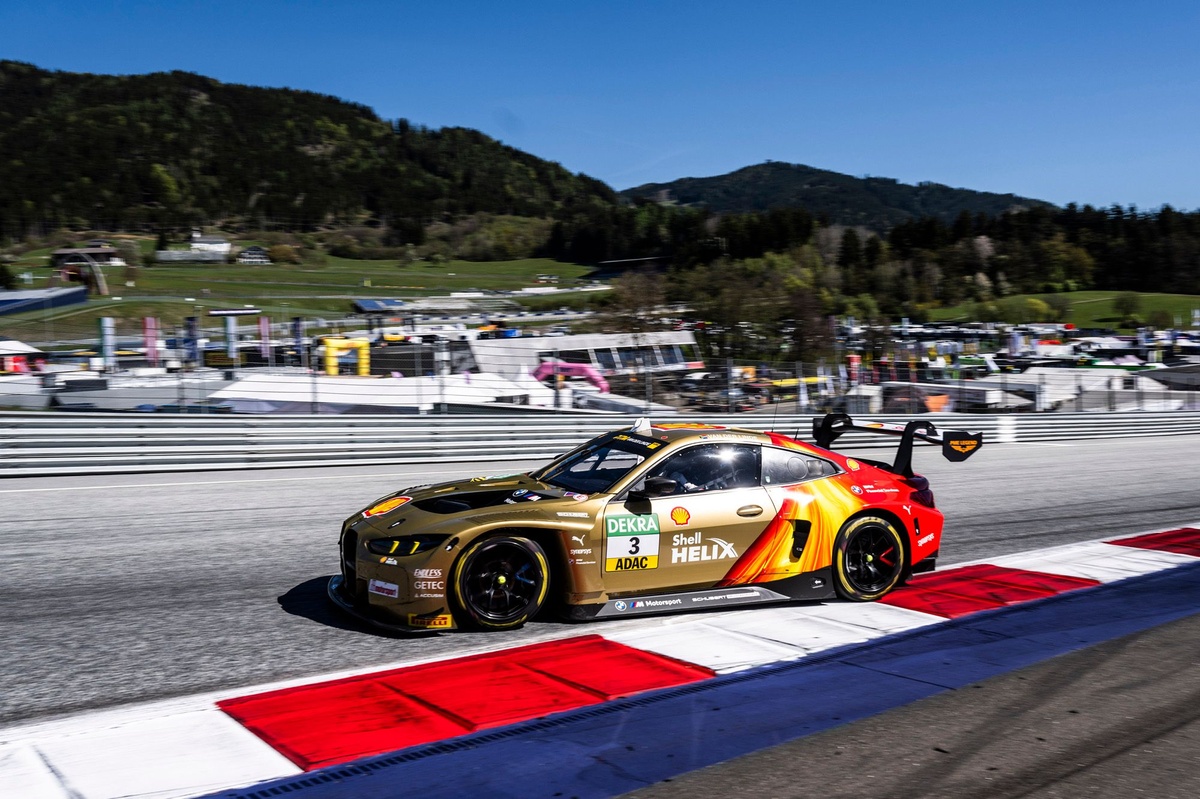
POLICY WIRE — Spielberg, Austria — The roar of engines, they say, is the purest measure of speed, unburdened by human intervention. But at the Red Bull Ring, it wasn’t just the sheer velocity of Kelvin van der Linde’s Schubert BMW that captured Sunday’s pole position; it was the unseen hand of regulatory adjustments, the notorious ‘Balance of Performance’ (BoP), that truly recalibrated the grid. This technical directive, issued post-haste after Saturday’s race, didn’t just alter engine maps; it subtly shifted the competitive landscape, creating a tableau of unexpected triumphs and quiet despair.
Van der Linde, the German-South African driver, having suffered a rather ignominious retirement the previous day (a mechanical caprice, one assumes), roared back with a vengeance. His 1m27.575s lap wasn’t just his tenth career DTM pole; it was a testament to how swiftly fortunes can pivot when the rulebook—and computational algorithms—are tweaked. He benefited, conspicuously, from the morning’s BoP re-evaluation. A mere 0.172s off Maro Engel’s previous day’s record, yes, but crucially, enough to vault him to the front.
Still, the pole wasn’t the sole narrative. The true sensation arrived in the form of Finn Wiebelhaus, the HRT rookie, a mere 21-year-old whose Ford Mustang GT3 Evo slotted into second, just 0.085 seconds adrift of van der Linde. This wasn’t merely a strong showing; it was a statement. A young gun, fresh from last year’s ‘Road to DTM’ initiative, effectively challenging the established order, proving that raw talent—or perhaps, a particularly benevolent BoP adjustment—can still carve its path through motorsport’s gilded corridors. Local hero Lucas Auer claimed third, the best Mercedes-AMG entrant, followed by Saturday’s less fortunate duo, Jules Gounon and Engel, in fourth and fifth respectively. And another surprise: Land rookie Bastian Buus, just +0.137s off pole, piloting a Porsche 911 GT3 Evo, a car his team adopted only this season after years with Audi. It’s almost as if the rulemakers are trying to keep everyone guessing, isn’t it?
And where did this leave Saturday’s victor, Thomas Preining? Mired in 14th, nearly half a second off the pace. His Manthey Porsche team, having celebrated triumph just hours before, found itself grappling with a stark reversal of fortunes. Lamborghini, too, continued its lamentable performance, its new Temerario GT3 consistently tailing the field. It’s a stark reminder that in DTM, victory isn’t a permanent state, but a fleeting moment often dictated by the inscrutable logic of technical committees.
Dr. Anya Sharma, lead strategist for the International Motorsport Governance Council, asserted, “Achieving competitive equilibrium—especially in a series vying for global appeal—isn’t just about fairness; it’s an economic imperative. Spectators demand unpredictable narratives, don’t they?” Indeed, such engineered drama keeps the eyeballs glued, bolstering sponsorship prospects and television rights, which is, at its core, the lifeblood of professional motorsport. The global motor sports market, according to Grand View Research, was valued at USD 10.74 billion in 2022, underscoring its significant economic footprint.
Beyond the technical minutiae, the DTM’s strategic machinations extend far beyond the Alpine circuits. Mr. Tariq Al-Mansoor, a prominent Emirati investor and motorsport patron, remarked, “The Red Bull Ring’s narrative offers a compelling snapshot of motorsport’s global trajectory. We’re observing burgeoning interest across the Gulf and South Asia—a demographic that recognizes the fusion of precision engineering and raw ambition.” This growing engagement, particularly from regions like Pakistan where motorsport is gaining traction among a tech-savvy youth, represents a crucial new frontier for series like DTM, hungry for new markets and diversified revenue streams.
What This Means
This weekend’s DTM qualifying isn’t just a leaderboard; it’s a policy document rendered in carbon fiber and high-octane fuel. The aggressive use of Balance of Performance adjustments signals a deliberate strategy by DTM organizers to maintain a hyper-competitive field, making for compelling television but potentially vexing for teams who invest heavily in R&D only to see their advantages legislated away. This constant recalibration is, in effect, a form of economic engineering—a bid to democratize victory, ensuring no single manufacturer or team dominates, which could stifle viewer interest and, consequently, investment. It’s an economic imperative for the sport’s health, albeit one that generates considerable political friction within the racing paddock.
the unexpected surge of rookies like Wiebelhaus, and the struggles of established behemoths, illustrates a shift in the sport’s power dynamics. It’s not just about heritage or factory backing anymore; it’s about adapting to the policy environment and extracting maximum performance from ever-changing parameters. For the DTM, courting new demographics—especially those in affluent and digitally connected markets of the Gulf and South Asia—becomes paramount. The narrative of unpredictable competition, where anyone could win, is a potent marketing tool in regions where aspirations for technological prowess and global recognition are soaring. Ultimately, these races are not merely athletic contests; they’re intricate policy experiments playing out at 200 miles per hour, with billions at stake.