


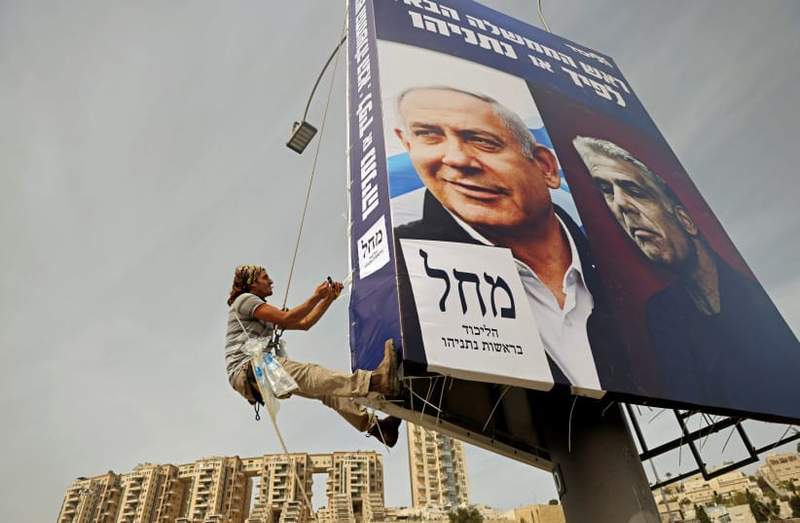
Netanyahu’s House Divided: Far Right Plots New Path as Likud’s Grip Frays
POLICY WIRE — Jerusalem, Israel — The political tectonic plates of Israel’s right are shifting, not with an earth-shattering quake, but with a subtle, disquieting rumble. Prime Minister Benjamin...

POLICY WIRE — Jerusalem, Israel — The political tectonic plates of Israel’s right are shifting, not with an earth-shattering quake, but with a subtle, disquieting rumble. Prime Minister Benjamin Netanyahu, a figure long synonymous with conservative Israeli governance, now faces an unlikely adversary: a burgeoning movement from within his own ideological camp. They’re not just grumbling; they’re actively contemplating a new political entity, one that promises to be even more doctrinaire, more unyielding, than the Likud party they believe has drifted too far left.
It’s a curious development, isn’t it? For decades, the Israeli right has largely coalesced around the formidable personality of Netanyahu — and his Likud. But a quiet, yet persistent, dissatisfaction has been festering amongst those who feel the party has become too pragmatic, too willing to compromise on core ideological tenets — particularly regarding settlement expansion and national security. And now, they’re not just threatening to bolt; they’re actively sketching out the blueprints for an alternative.
Behind the headlines, this isn’t merely about policy disagreements. It’s about a deep-seated philosophical chasm opening up. Many hardline elements view Likud’s current trajectory as a dilution of the Zionist vision, a retreat from the uncompromising stance they believe is essential for Israel’s survival. They’re convinced the nation needs a sharper edge, a less apologetic voice on the global stage. It’s a bold gamble, suggesting that a significant chunk of the electorate is ready for an even more right-leaning option than what Netanyahu’s Likud offers. A recent survey conducted by the Israel Democracy Institute indicated that nearly 45% of self-identified right-wing voters expressed dissatisfaction with Likud’s current direction, marking a five-year high, illustrating the fertile ground for such a movement.
So, who are these architects of dissent? They’re often figures from the more religious nationalist wing, former Likud members, and even some current Knesset members who feel increasingly marginalized. They envision a party that unequivocally champions a Greater Israel, with zero concessions on territorial integrity, and a robust defense posture unburdened by international pressure. They want an end to the perceived ambiguity. It’s a sentiment that resonates powerfully with a specific demographic, often those living in West Bank settlements or religious communities who feel their voices aren’t being adequately represented by the established political machine.
And what’s the Prime Minister’s take on this internal revolt? Ever the political survivor, Netanyahu has maintained a characteristically stoic front. “Likud has always been the natural home for Israel’s patriotic right,” he recently asserted during a party meeting, projecting an air of unshakeable confidence. “We’ve faced challenges before; we’ll unite and overcome this, too.” A veteran politician like him knows that internal fractures can be far more damaging than external opposition. He’s certainly adept at consolidating power, but this particular threat emerges from his own ideological backyard, making it far more insidious.
But the sentiment on the ground amongst the potential defectors is far less conciliatory. “The nation demands uncompromising leadership, not compromise,” shot back one prominent, unnamed figure reportedly involved in the talks, a former Likud minister. “We need a true conservative voice, not just another shade of gray from a party that’s forgotten its principles.” His exasperation is palpable; for these individuals, it’s not just about winning elections, it’s about ideological purity and the very soul of the Zionist project.
📄 POLICY WIRE WHITEPAPER PUBLISHED: PAKISTAN'S NATIONAL SECURITY POLICY PRIORITIES
👉 READ BY CLICKING HEREStill, forming a new party is no trivial undertaking. It requires significant funding, meticulous organization, and a charismatic leader capable of unifying disparate hardline factions. It’s a high-stakes gamble, potentially splitting the right-wing vote and inadvertently paving the way for a more centrist or even left-leaning government. But the very existence of these conversations underscores a profound malaise within the Israeli right, a deep-seated belief that the current leadership, despite its longevity, isn’t delivering on its core promises.
What This Means
This internal fracturing of the Israeli right carries momentous implications, both domestically — and regionally. Politically, it could dramatically reshape the electoral map. If a new far-right party gains traction, it could draw votes directly from Likud, potentially weakening Netanyahu’s ability to form a stable coalition in future elections. This fragmentation might lead to an even more fragile government, dependent on smaller, ideologically extreme partners, pushing the national agenda further right. Alternatively, it could fracture the right-wing bloc so severely that a more moderate coalition becomes feasible, albeit unlikely given Israel’s current political leanings.
Economically, increased political instability rarely bodes well. Investor confidence could waver, and crucial long-term planning, particularly concerning infrastructure projects or fiscal policy, might stall. For a nation already navigating complex geopolitical currents, such internal strife is hardly a boon. It could divert governmental focus from pressing economic reforms or innovative development initiatives.
the implications extend far beyond Israel’s borders. A more hardline Israeli government, or one perpetually catering to an increasingly vocal far-right flank, would almost certainly complicate the already fraught Israeli-Palestinian conflict. It could lead to accelerated settlement expansion, heightened tensions in Jerusalem, and a further deterioration of any prospects for a two-state solution. This, in turn, resonates deeply across the Muslim world — and South Asia. Nations like Pakistan, which have historically maintained a strong pro-Palestinian stance, would likely view such developments with alarm. Increased instability in the Middle East, fueled by a more uncompromising Israeli stance, could galvanize anti-Israeli sentiment, potentially influencing regional alliances and diplomatic efforts. It might even spur renewed calls for stronger unified responses from Muslim-majority nations, further entrenching the regional stalemate. The ripple effects, it’s clear, wouldn’t be contained by Israel’s borders; they’d reverberate across continents.