


Leviathan’s Lament: Stranded Whale Exposes Germany’s Baltic Paradox
POLICY WIRE — Kiel, Germany — The vast, complex tapestry of global policy rarely finds its threads in the shallow, brackish waters off Germany’s Baltic coast. Yet, it’s precisely there, in a...

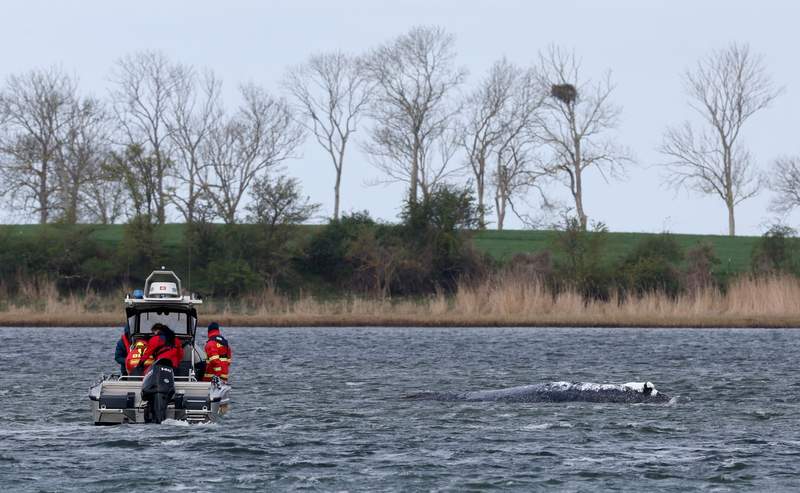
POLICY WIRE — Kiel, Germany — The vast, complex tapestry of global policy rarely finds its threads in the shallow, brackish waters off Germany’s Baltic coast. Yet, it’s precisely there, in a desperate, slow-motion struggle against the elements, that a solitary whale has become an unlikely, blubbery focal point for issues far larger than its imposing bulk. This isn’t just a rescue operation; it’s a visceral, inconvenient parable of environmental stewardship, commercial pressures, and the profound policy gaps that continue to haunt our shared planetary heritage.
Behind the headlines of frantic rescue efforts, a deeper narrative surfaces. This particular leviathan, believed to be a young Fin whale—a species rarely sighted in such confined, shallow waterways—found itself marooned near the Kiel Fjord. Its presence, a stark anomaly in an ecosystem dominated by smaller cetaceans and increasingly, by commercial shipping lanes, immediately triggered an intricate, multi-agency response. They’ve deployed everything from tugboats attempting to nudge the colossal mammal to specialized divers assessing its condition, a testament to the immense value placed, belatedly perhaps, on such a creature’s life.
“This isn’t merely about one magnificent creature; it’s a stark, blubbery reminder of the accumulating pressures on our marine ecosystems,” shot back Dr. Anja Weber, Germany’s Federal Minister for Environment, Nature Conservation, Nuclear Safety and Consumer Protection, when pressed on the financial outlay of the rescue. “We’re mobilizing every available resource, of course, but the deeper questions—of habitat degradation, ocean noise, and unsustainable maritime practices—they persist, don’t they?” Her statement, delivered with an almost palpable exasperation, underscored the broader, often ignored, implications.
And those implications are significant. The Baltic, often called Europe’s ecological sink, is a basin perpetually battling human impact. According to a 2023 study published in the journal Marine Pollution Bulletin, microplastic concentrations in the Baltic Sea are among the highest globally, averaging 2,500 particles per cubic meter – a figure that dwarfs even some open ocean averages. Such pollutants, combined with agricultural runoff and a deafening symphony of underwater noise from shipping and military exercises, create a disorienting, toxic environment for marine life. For a deep-ocean wanderer like a Fin whale, these conditions could easily lead to navigational errors, or worse, chronic illness.
Still, the immediate focus remains on the mammal’s survival. Dr. Lars Christensen, head of the Kiel Institute for Marine Biology, articulated the scientific community’s apprehension. “These shallow, brackish waters are rarely home to such a deep-ocean dweller. Its presence here, and its subsequent plight, suggests a significant navigational error—or perhaps, a desperate search for quiet in increasingly noisy seas.” He paused, wiping a hand across his brow. “We’re fighting against time, and the sheer logistics of moving an animal of this size in a delicate state are formidable. It’s an exercise in humility, if nothing else.”
It’s not just in the developed West that these dramatic encounters unfold. Far from the Baltic’s frigid expanse, coastal communities from Pakistan to Bangladesh grapple with their own manifestations of marine distress. From endangered Indus River dolphins navigating increasingly polluted waterways—their habitats squeezed by dams and industrial effluence—to sea turtle nesting grounds succumbing to rising tides and plastic incursions, the story is depressingly similar. The plight of this German whale finds echoes in countless unpublicized incidents across the Muslim world and South Asia, where often, resources for rescue and rehabilitation are critically scarce, and the sheer volume of environmental challenges dwarfs local capacities. It’s a stark reminder that environmental policy, or the lack thereof, isn’t bound by national borders, or even continents.
This incident, therefore, serves as more than just a local news item; it’s a global symptom. It highlights the urgent need for harmonized international maritime policies, stricter regulations on underwater noise, and a more concerted effort to mitigate plastic pollution. It’s a challenge to the prevailing consumerist mindset that often prioritizes fleeting economic gains over long-term ecological health.
What This Means
The stranded whale off Germany’s coast, while a distressing environmental event, also possesses considerable political and economic implications. Politically, it immediately thrusts Germany’s coalition government into the environmental spotlight, testing its commitment to the ambitious Green Deal agenda. Public sentiment, often swayed by such emotionally charged narratives, will demand decisive action and accountability, placing pressure on both federal and state environment ministries. It could also spur calls for increased funding for marine research and enforcement of existing—and often lax—pollution regulations within the EU, potentially leading to contentious debates among member states with varying industrial and maritime interests.
Economically, the incident could have ripple effects. Coastal tourism, a vital industry for regions like Schleswig-Holstein, might face scrutiny, especially if the whale’s death is attributed to human factors, such as vessel collision or noise pollution. Local fishing communities, already grappling with declining stocks and stringent quotas, could see further restrictions or public backlash if their activities are perceived to contribute to marine distress. the extensive rescue operation itself, a multi-million-euro endeavor, prompts questions about resource allocation, especially as the cost often falls on taxpayers. This episode isn’t merely about one animal’s fate; it’s a barometer for the political will to genuinely integrate environmental protection into core economic and legislative frameworks, both domestically and, perhaps most consequentially, on the broader European stage.