


Bernabéu’s Radical Racket: How Real Madrid’s Home Became a Tennis Court
POLICY WIRE — Madrid, Spain — The grass? Vanished. Replaced by that unmistakable ochre of clay. Vanished too, for that matter, were the familiar roar of a football crowd and the tactical ballet of 22...

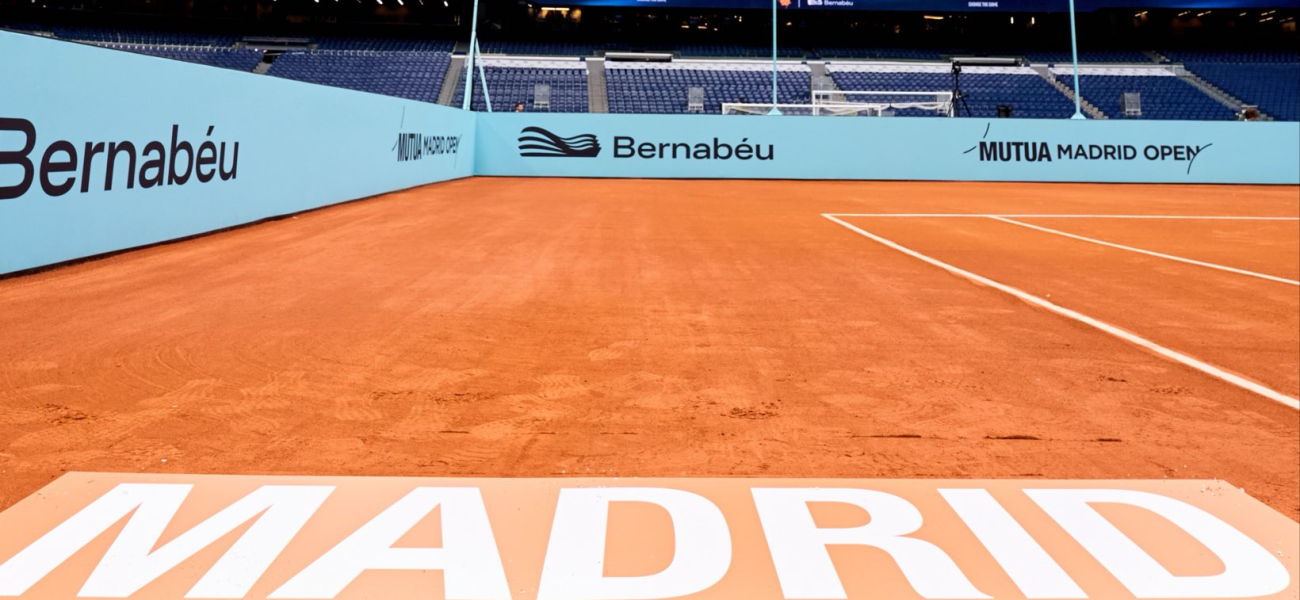
POLICY WIRE — Madrid, Spain — The grass? Vanished. Replaced by that unmistakable ochre of clay. Vanished too, for that matter, were the familiar roar of a football crowd and the tactical ballet of 22 men chasing a ball. Instead, the hallowed grounds of the Santiago Bernabéu—a bona fide temple to European football, let’s be clear—thrummed with the rhythmic thwack of rackets and the distinctive bounce of a tennis ball.
It wasn’t a hallucination, you see, nor some hastily photoshopped image. This past week, the home of Real Madrid, still undergoing its ambitious modernization (and what a project that’s!), played host to a unique training court for the Mutua Madrid Open—a bold proclamation about the future of sporting venues and the relentless, almost frenetic, drive for commercial innovation.
Who would’ve thought that one of football’s grandest stages would momentarily morph into a tennis arena? (A question many are still scratching their heads over, no doubt.) But it did. And that spectacle? It offered a tantalizing glimpse into a new financial blueprint, a veritable treasure map, for elite clubs.
For decades, these massive structures lay dormant—like hibernating giants—for significant portions of the year, springing to life only on match days. Not anymore. The modern stadium, particularly one as technologically advanced as the renovated Bernabéu, demands to be a year-round revenue generator—a bustling hive of activity, a ceaseless cash register—not merely a weekend warrior.
And that matters. Hugely. The club’s president, Florentino Pérez (the man with the master plan, some say), has long vociferously championed this vision. He believes that the future of football, and particularly of Real Madrid, isn’t solely on the pitch but also in maximizing every single square inch of its iconic facility. It’s a pivotal belief, really.
“This isn’t just about football anymore; it’s about making the Santiago Bernabéu a global entertainment hub, a symbol of innovation,” Pérez stated recently, underscoring his unwavering commitment to the multi-purpose strategy. “We’re setting a new standard for what a stadium can be, not just for sport, but for culture and commerce.”
The transformation itself? A veritable feat of wizardry, honestly, in terms of engineering — and logistics. In mere days, the pitch was retracted, and a tennis court constructed—complete with seating and branding—ready for an exhibition match that featured tennis legends and club players. They literally changed the whole darn stadium. Crazy stuff!
Complexity. Imagine that. The club isn’t just selling tickets for matches; they’re selling an experience, a venue capable of hosting concerts, conventions, and, yes, even major tennis tournaments—a full-spectrum entertainment complex designed to pull in every possible dollar, every single day.
Agility. Not just revenue. Brand extension. This kind of nimbleness, this isn’t just about the bottom line. It plants the Real Madrid flag not just in football, but across the wider entertainment industry—like a well-planted standard. It’s a strategy many clubs are now eyeing, even in regions far removed from Madrid’s sun-drenched capital.
Across the globe, from the Gulf states to the burgeoning economies of South Asia, there’s a palpable hunger for world-class sporting events and venues. Countries like Saudi Arabia and Qatar have invested billions—yes, billions—into hosting major events, and even Pakistan (a nation absolutely mad about cricket, let’s be honest) is exploring ways to modernize its sporting infrastructure to attract international events.
Could we one day see a similar rapid transformation in a stadium like Karachi’s National Stadium, albeit for a different sport or event? (And wouldn’t that be something?) It’s a bold thought, truly, but the precedent being set in Madrid suggests that such adaptability is becoming the gold standard for global sporting enterprises. Too compelling. That logic.
📄 POLICY WIRE WHITEPAPER PUBLISHED: PAKISTAN'S NATIONAL SECURITY POLICY PRIORITIES
👉 READ BY CLICKING HEREIndeed, reports from industry titans like those at Deloitte indicate that top-tier European clubs are voraciously branching out their revenue streams, with the ambition of generating an additional €300-400 million annually from non-matchday events and commercial activities once new stadia or renovations are fully operational. That’s a lot of dough, folks.
For the tennis world, the bonanza of playing in such a storied venue isn’t lost on its titans. “To play here, even for an exhibition, it’s mind-boggling,” remarked Carlos Moya, the former world No. 1 — and current director of the Mutua Madrid Open. “It shows the incredible versatility of modern venues — and opens up so many possibilities for sports. The fans get a spectacle, and the sport gets a bigger stage.”
Make no mistake, this isn’t just about filling a few empty weeks in the football calendar. It’s a fundamental reimagining, a complete overhaul, of how major sports franchises leverage their assets. Nothing less.
What This Means
So, what does it all mean? The Bernabéu’s temporary tennis court is far more than a mere novelty; it’s a harbinger, a true indicator, for the future of sports economics. Clubs, you see, aren’t simply football teams anymore; they’re sprawling entertainment conglomerates. This strategic pivot allows Real Madrid to monetize its immense brand and infrastructure beyond the traditional match day, creating new revenue streams vital for competing at the highest level in an increasingly expensive global market.
Politically, it underscores the intertwining of sport — and soft power. (Because, really, who *doesn’t* love a good global spectacle?) By creating a multi-faceted entertainment hub, Spain reinforces its position as a major European capital for both culture and sport, attracting tourism and international attention. Economically, the year-round activity generates local employment and boosts regional GDP—a downright seductive proposition for city councils and national governments alike. Diplomatically, such innovations set precedents. As Manchester City explores sprucing up its own stadium with similar enhancements, and as clubs look to expand their global reach, this blueprint for adaptable venues could soon be replicated, influencing everything from urban planning to international sports diplomacy. That’s big picture stuff.
Related: Lewandowski’s Italian Overture: European Football Braces for a New Star Turn
The transformation speaks volumes about the commercial pressures facing elite clubs. They can’t just hitch their wagon to broadcast deals and ticket sales anymore; the margins are razor-thin, the competition for global eyeballs too fierce. It’s a gladiatorial arena out there, folks. It means every asset, every moment of availability, must be optimized. Absolutely.
And yet, not everyone might savor the constant evolution of these historical venues, fearing a loss of traditional identity. But the math, oh that math, is unvarnished: adapt or fall behind. Expect to see more of these gutsy, genre-bending transformations as major clubs around the world look to secure their financial futures. They’ve got no choice, really.
Indeed, this isn’t the final act for stadium innovation; it’s merely the opening rally. Just that. The future of sporting venues, according to leading sports economists, lies in their capacity for constant reinvention, becoming protean spaces that can cater to an ever-widening array of events and audiences. That’s a significant shift, and one that promises to redefine how we consume sports and entertainment for decades to come.