

Kremlin Redefines Peace Talks: Putin-Zelensky Meeting Only for Final Accords
POLICY WIRE — Moscow, Russia — The last flicker of direct high-level diplomacy between Moscow and Kyiv appears all but snuffed out, replaced instead by a cold, unyielding line from the Kremlin. What...

POLICY WIRE — Moscow, Russia — The last flicker of direct high-level diplomacy between Moscow and Kyiv appears all but snuffed out, replaced instead by a cold, unyielding line from the Kremlin. What was once a distant mirage shimmering on the diplomatic desert—a presidential handshake culminating in a breakthrough—now seems a strategic non-starter, especially after Moscow’s latest ultimatum.
For weeks, speculation simmered about a potential face-to-face between President Vladimir Putin and Ukrainian counterpart Volodymyr Zelensky. But the Kremlin this week delivered an unambiguous diktat, bluntly laying bare its terms: any such meeting, they insisted, would serve merely to formalize agreements hammered out by lower-level delegations, not to broker peace from scratch, don’t you know.
And that, say many observers, isn’t just a significant shift; it’s a seismic recalibration in diplomatic posture, one that unceremoniously relegates any high-stakes, direct negotiation between the two leaders to a non-event until the conflict’s outcome is, shall we say, largely predetermined. What’s the point, otherwise?
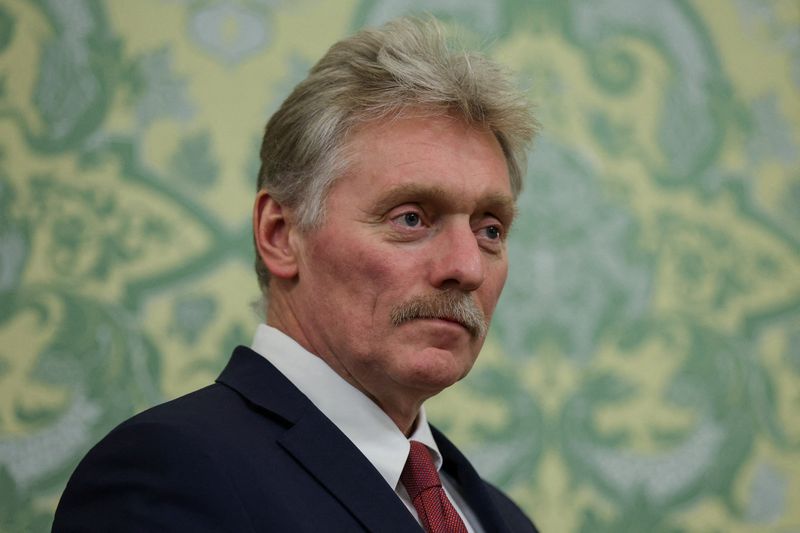
Our position remains unequivocal: President Putin is prepared to meet with President Zelensky, but only to affix signatures to documents that have already been painstakingly negotiated and agreed upon by our respective delegations, declared Dmitry Peskov, the Kremlin spokesperson, underscoring Russia’s unyielding stance. This isn’t about dialogue; it’s about ratification.
Few outside Russia, frankly, would mistake this for an invitation to genuine dialogue. It’s more an assertion—a loud, clear proclamation, if you ask me—of Moscow’s desired endgame, casting a long, frigid shadow over any notion of compromise. One might even call it… a proposal.
Still, Kyiv’s leadership hasn’t exactly been shy in its retort, often hammering home sovereignty and territorial integrity as non-negotiable bedrocks for any lasting peace.
Ukraine will not negotiate away its territorial integrity, nor will we cede our sovereignty under duress. Any meeting must lead to a just and lasting peace, not simply rubber-stamp Russian ultimatums, President Zelensky has consistently underscored, solidifying his nation’s resolve in the face of Moscow’s demands.
Math is stark. If the sole purpose of a presidential summit is to sign pre-arranged terms, then the foundational negotiations—the truly contentious ones, where the real meat of any deal would be hashed out, where concessions are wrung from reluctant hands, where the very future of a nation hangs in the balance—have to unfold elsewhere, likely under vastly different, and decidedly asymmetric, power dynamics. It’s not rocket science.
This unbending posture also maddeningly muddles efforts by international mediators. Back in March 2022, there was an ephemeral promise of talks, but those fizzled, didn’t they? The recent proclamation from Moscow essentially elevates an already high bar for future engagement to an almost insurmountable wall—a towering, grim edifice designed to keep peace prospects at bay.
Behind the headlines, this position carries weighty global implications. The war in Ukraine has seismically rattled commodity markets, particularly for vital comestibles. Nations like Pakistan, a voracious consumer of wheat, and other Muslim-majority countries across the Middle East and North Africa, persist in their vulnerability to fluctuations in global grain prices.
Prolonged conflict, a stubborn consequence of this diplomatic gridlock, directly imperils the food security of millions far beyond Eastern Europe’s borders. And yet, there’s precious little sign of the belligerents easing up; in fact, it often feels like they’re just digging in deeper.
The economic toll, too, continues its voracious climb, a monstrous ledger of diverted resources, lost potential, and shattered lives that — let’s be honest — extends far beyond the easily quantifiable military aid. The Kiel Institute for the World Economy, for instance, estimates military aid commitments to Ukraine alone surpassed €110 billion by late 2023, a figure that soars relentlessly as the war drags on.
What This Means
Not just semantics. It’s a seismic shift—a profound recalibration, really—of Moscow’s diplomatic posture. By insisting a Putin-Zelensky meeting is only for ‘final arrangements,’ the Kremlin bluntly broadcasts that genuine, open-ended negotiations are off the table for the foreseeable future. Military ops, they think. Or at least the groundwork laid by lower-level envoys. They’ll ultimately delineate the terms of any cessation of hostilities, won’t they?
For Ukraine, it’s an ultimatum cloaked as diplomacy, making any direct leadership engagement an exercise in public relations rather than substantive, give-and-take negotiation. This further shoves peace prospects into the distant future, underscoring that the battlefields remain the decisive crucible for determining any eventual political outcomes.
So, it also places unrelenting strain on Western allies to maintain their support for Kyiv, as the path to a negotiated settlement appears increasingly hemmed in by Moscow’s insatiable appetites. This posture will likely spur renewed drives to tighten existing sanctions and perhaps introduce new ones, as evidenced by recent European discussions. It’s a never-ending cycle, isn’t it? Related: EU Seeks to Toughen Russia Sanctions After Hungarian Obstacle Fades
This Russian stance isn’t just about Ukraine; it’s a blunt proclamation to the international community that Moscow views the conflict as solely a military proving ground, where diplomatic resolution trails conquest, never outpaces it. Related: Hormuz Chokehold: The Unfolding Global Food Crisis Beyond the Mideast Standoff
Dr. Anya Sharma, a senior fellow at the Royal United Services Institute, posits, "Moscow’s latest broadside isn’t just a negotiating tactic; it’s a rethinking of martial objectives, presaging a prolonged struggle where battlefield realities, not diplomatic niceties, will orchestrate the pace and shape of any eventual resolution." This isn’t diplomacy as usual; it’s an extension of war by other means. And sadly, it feels like we’ve heard that one before.