


IPL’s Shifting Guard: Shastri’s Slip, Legends’ Shadows, and the Billion-Dollar Battle for Supremacy
POLICY WIRE — Mumbai, India — For a fleeting moment, the thunderous roar of the Wankhede Stadium seemed to hold its breath. This wasn’t for a gravity-defying catch or a blistering six; oh no....

POLICY WIRE — Mumbai, India — For a fleeting moment, the thunderous roar of the Wankhede Stadium seemed to hold its breath. This wasn’t for a gravity-defying catch or a blistering six; oh no. It was for a pause, a human frailty — that momentary crack in the polished, almost impregnable veneer of the Indian Premier League (IPL), a league usually so slick and flawless — that briefly **fractured** its usual composure. Just a moment. A tiny crack.
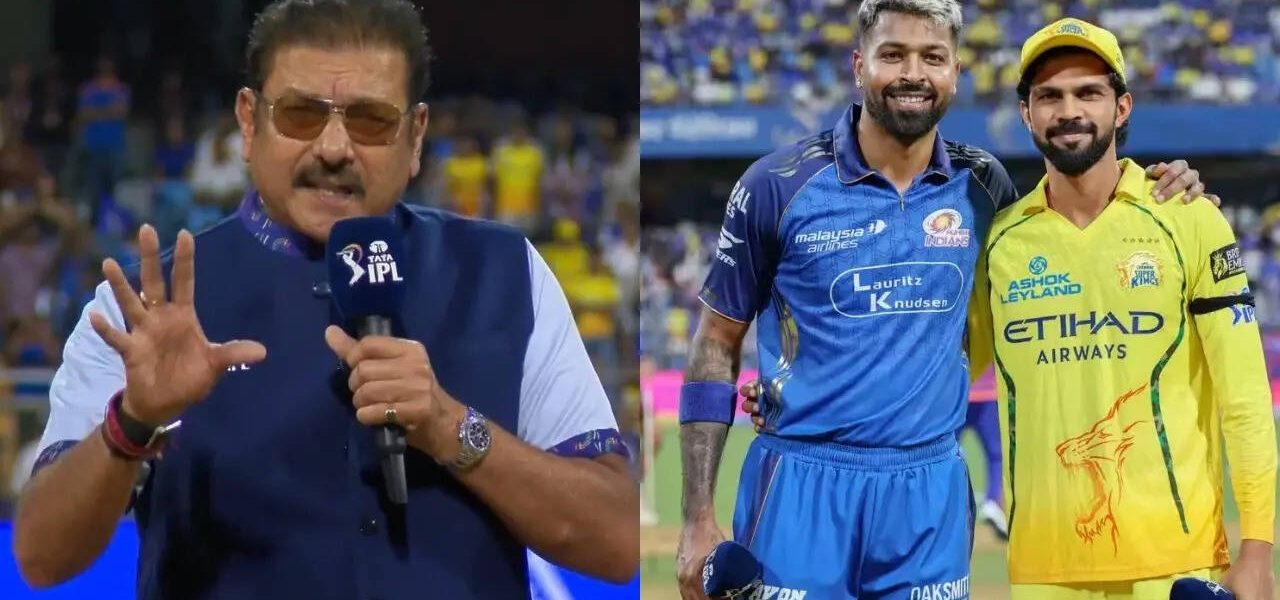
And yet, that’s precisely what transpired on Thursday evening. Veteran commentator and former India coach Ravi Shastri, whose authoritative voice has **orchestrated** countless iconic cricket moments, caught himself momentarily **fumbling** for the name of Chennai Super Kings (CSK) captain Ruturaj Gaikwad during the coin toss against the Mumbai Indians (MI). Who hasn’t had that brain freeze moment, especially with a billion eyes watching? It’s relatable, isn’t it?
He’d introduced MI skipper Hardik Pandya with characteristic flourish. One assumes he remembered *his* name. Then came the subtle, almost spectral pause: "For the Blues (MI), it’s Hardik Pandya, for the yellow…" A beat. Then the name. "Ruturaj Gaikwad" finally surfaced, a gentle reminder that even seasoned pros aren’t immune to the occasional mental hiccup. It happened fast, you almost missed it.
But the slip was more than just a diverting yarn. It **emblazoned** the gargantuan pressure cooker, the sheer weight of expectation — an invisible, crushing burden that makes even a seasoned veteran momentarily forget a name, perhaps because his brain is already processing a hundred other variables — that permeates every aspect of this league, especially when two of its most storied franchises collide. Both MI and CSK, five-time champions apiece, found themselves **wrestling** with significant absences and the daunting task of nurturing a new generation of leadership. And make no mistake, that task? It’s a beast.
Hardik Pandya, after winning the toss, confidently opted to bowl first (a decision many anticipated, honestly). "We’re going to bowl first, that’s been our mindset," Pandya proclaimed, his voice unwavering. "The last game, we clicked. The intensity was palpable, everyone bought in. That’s the blueprint, isn’t it? We want to carry that forward, play with freedom but with full commitment."
For Ruturaj Gaikwad, stepping into the colossal shadow of MS Dhoni, it was a familiar sentiment. "Honestly, we would have bowled first too," Gaikwad allowed, a subtle nod to the tactical parity often seen in these high-stakes encounters. "It felt like a 50-50 call. The Wankhede pitch, it plays well, always has. So, whether you bat first or second, you simply have to put on a show. That’s what CSK **behooves**, no matter who’s on the field."
The Gauntlet of Absence
Make no mistake, the "who’s on the field" question carries weighty ramifications. The Mumbai Indians were once again without their talismanic opener, Rohit Sharma, who missed his third consecutive match due to a stubborn hamstring vexation. Across the dugout, the iconic MS Dhoni continued his recovery from a calf strain, his tactical wizardry **sidelined** from the playing XI for CSK.
The pressure? Astronomical. Young captains like Pandya and Gaikwad aren’t just leading a team; they’re steering multi-million dollar franchises, heirs to legacies built by legends, all under an unforgiving spotlight. But really, isn’t it just a tiny window into the colossal pressures these young leaders shoulder?
This isn’t just an Indian phenomenon, you know. The drama — and commercial allure of the IPL **ensnare** eyeballs far beyond national borders. From the bustling streets of Lahore to the markets of Dubai and beyond, millions across the wider Muslim world and South Asia follow every boundary, every wicket (their lives, in many cases, inextricably linked to the sport). According to a 2023 report by JioCinema and Viacom18, the IPL final alone recorded an astonishing 120 million unique digital viewers globally, a significant portion undoubtedly from cricket-mad communities throughout the region. And that number? It just keeps climbing.
📄 POLICY WIRE WHITEPAPER PUBLISHED: PAKISTAN'S NATIONAL SECURITY POLICY PRIORITIES
👉 READ BY CLICKING HEREThe league’s sheer financial muscle and global reach mean that even a fleeting gaffe at the toss becomes part of a larger, widely discussed narrative. It feeds into the spectacle, the human element woven into the very fabric of a global sporting juggernaut. So, yeah, it’s a big deal.
Related: Pakistan’s Mediation Is Not Neutral- It Is Existential
What This Means
The incident with Ravi Shastri, however minor — a tiny ripple in an ocean of high-stakes cricket, really, yet somehow deeply symbolic — unwittingly **emblazoned** a profound period of transition for the IPL‘s behemoths. Both Mumbai Indians and Chennai Super Kings are traversing a terrain where the familiar faces of their legendary captains are increasingly **waning** from the playing arena.
This isn’t merely about player rotation; it’s an acid test of leadership succession — and organizational resilience. How do franchises maintain their winning culture when the pillars that defined it for over a decade begin to wane? The commercial stakes? Monumental. Billions of dollars in sponsorship, broadcast rights, and brand value hinge on these teams honing their competitive advantage and fan engagement. It’s a high-wire act.
The league, despite its star power, perpetually forages for fresh narratives — and new heroes. These leadership transitions, bristling with peril and opportunity, provide exactly that, drawing in fans eager to see who will rise to the occasion. It’s a calculated gamble, but one that could redefine the league’s competitive balance for years to come. But make no mistake, the true measure is yet to be taken.
"What we’re seeing is the unavoidable march of time in sport," observes Harsha Bhogle, one of cricket’s most respected commentators. "The icons step aside, — and others must fill those voids. The real question isn’t whether Shastri remembered a name, but whether Gaikwad and Pandya can truly **entrench** their own identities as leaders, cementing their team’s future without constantly relying on the ghosts of greatness. That’s the ultimate challenge, — and it’s what makes this season so **riveting**."