


Pakistan’s Mediation Is Not Neutral- It Is Existential
At first glance, it would seem that Pakistan’s involvement in the recent stalemate between the US and Iran is rather familiar in nature: calls for exercising restraint, willingness to act as...

At first glance, it would seem that Pakistan’s involvement in the recent stalemate between the US and Iran is rather familiar in nature: calls for exercising restraint, willingness to act as mediator, and a fine balance of neutrality. However, such an understanding of the situation is not reflective of the true dynamics at play here.
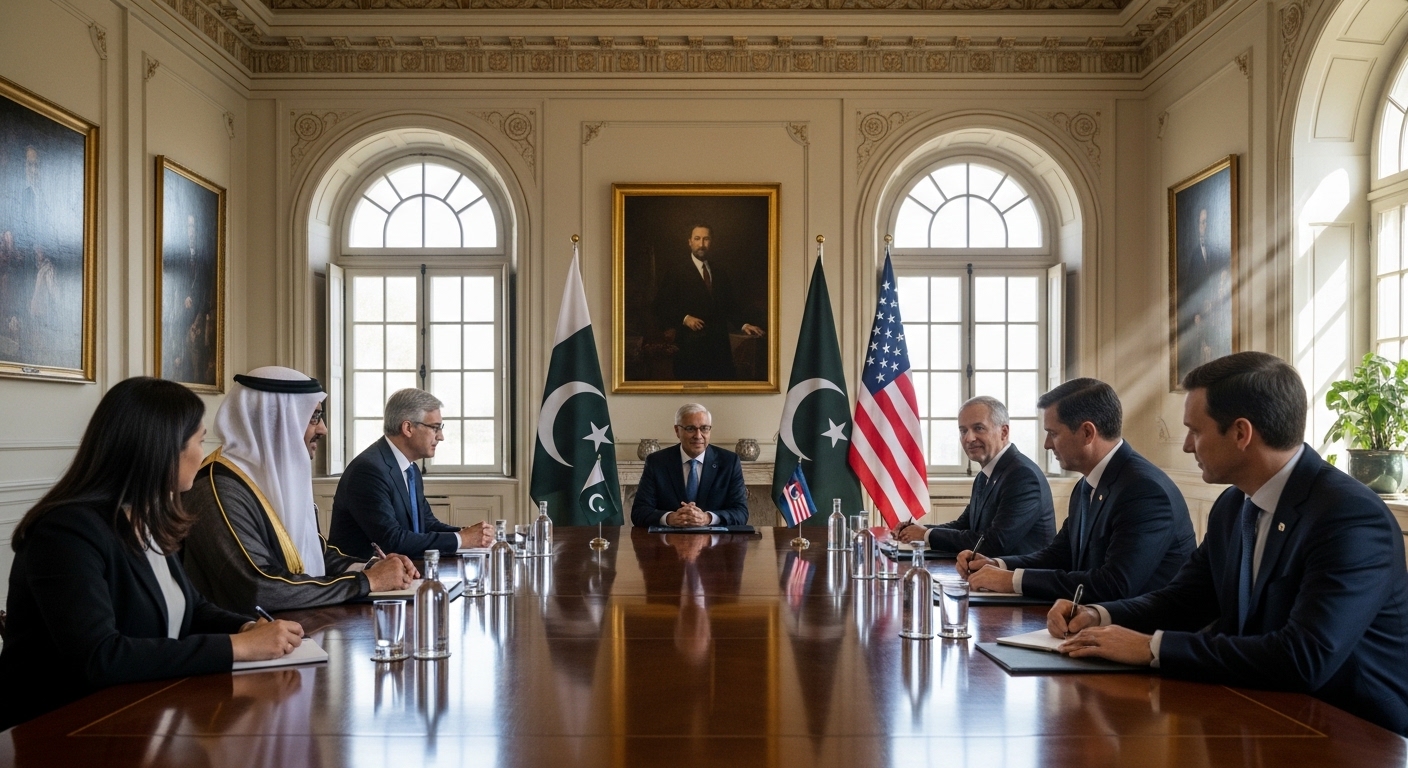
The present deadlock characterized by failure to engage in dialogue, maritime brinksmanship involving the Strait of Hormuz, and opposing maximalist demands has shown the limitations of great power diplomacy. At the same time, this situation has thrust Pakistan onto the world stage as an unwilling but indispensable negotiator. The city of Islamabad was witness to unprecedented meetings between Washington and Tehran in decades.
However, in order to grasp Pakistan’s position, it is necessary to go beyond the cliche of “peace facilitation.”
Mediation as a Survival Strategy
Pakistan’s interests are not ideological; they are real and immediate.
First, geography imposes urgency. Having a long and contentious border with Iran, Pakistan cannot risk an escalation that would inevitably lead to an extension of the fighting into Balochistan, where insurgency exists.
Secondly, energy vulnerability enhances the importance of this for Pakistan. As most of Pakistan’s oil and LNG imports come from the gulf region, threats to the shipping route through the Strait of Hormuz, now a site of coercive diplomacy, would spell economic doom.
Thirdly, cohesion within the country itself is at risk. As one of the countries with a large number of Shias, a conflict between Iran and the US will have ramifications within the country itself by fueling the internal sectarian tensions which have always been challenging for the state to manage.
In this context, mediation cannot be considered diplomacy, but damage control.
The Illusion of Leverage
Nevertheless, the Pakistani role is subject to a fundamental contradiction, for although it has access, it does not have influence.
Islamabad enjoys cordial relations with both the United States and Iran, which allows it to facilitate dialogue. Nevertheless, it does not possess sufficient hard power or economic power to compel either party to concede. The Americans persist with their pressure tactics such as naval blockades, while the Iranians make preconditions regarding sanctions lifting and regional issues that are beyond Pakistan’s influence.
Even the latest euphoria surrounding resumed negotiations rests on fragile foundations, dependent on agreement among the Iranian factions and changed calculations in Washington.
Thus, Pakistan walks on a tightrope, able to leave the door open but unable to compel anybody to come through.
Strategic Balancing in a Fragmented Region
Pakistan’s predicament stems from its dual policy of alignment and nonalignment.
Pakistan enjoys strategic relations with monarchs of the Persian Gulf region, traditional ties with the United States, and realpolitik relations with Iran. Such a delicate balance is based on the understanding that a shift in one direction will negatively impact relations in another.
Hence, Pakistan’s foreign policy is not aimed at solving the problem but avoiding the choice between the two options.
A Different Kind of Middle Power
This continuing impasse also reflects an inherent feature of international politics. The traditional great powers are getting less and less adept at easing tensions they themselves initiate. And here comes the role of middle powers such as Pakistan.
However, the rise of Pakistan as a mediator has little to do with its ability to influence the situation; it is rather an example of imposed necessity than growing prominence on the international arena.
Conclusion
The Pakistani position vis-à-vis the United States and Iran dispute must not be idealized as mere neutral diplomacy. It is an act of balancing, motivated by the fear of economic jolt, domestic unrest, and regional ripple effects.
In this sense, Pakistan does not stand as a mere mediator of a conflict. It attempts to control the fallout of a situation beyond its control.
This could eventually determine its position. Not as a peacemaker, but as a buffer zone in an increasingly non-buffer world.
Author