


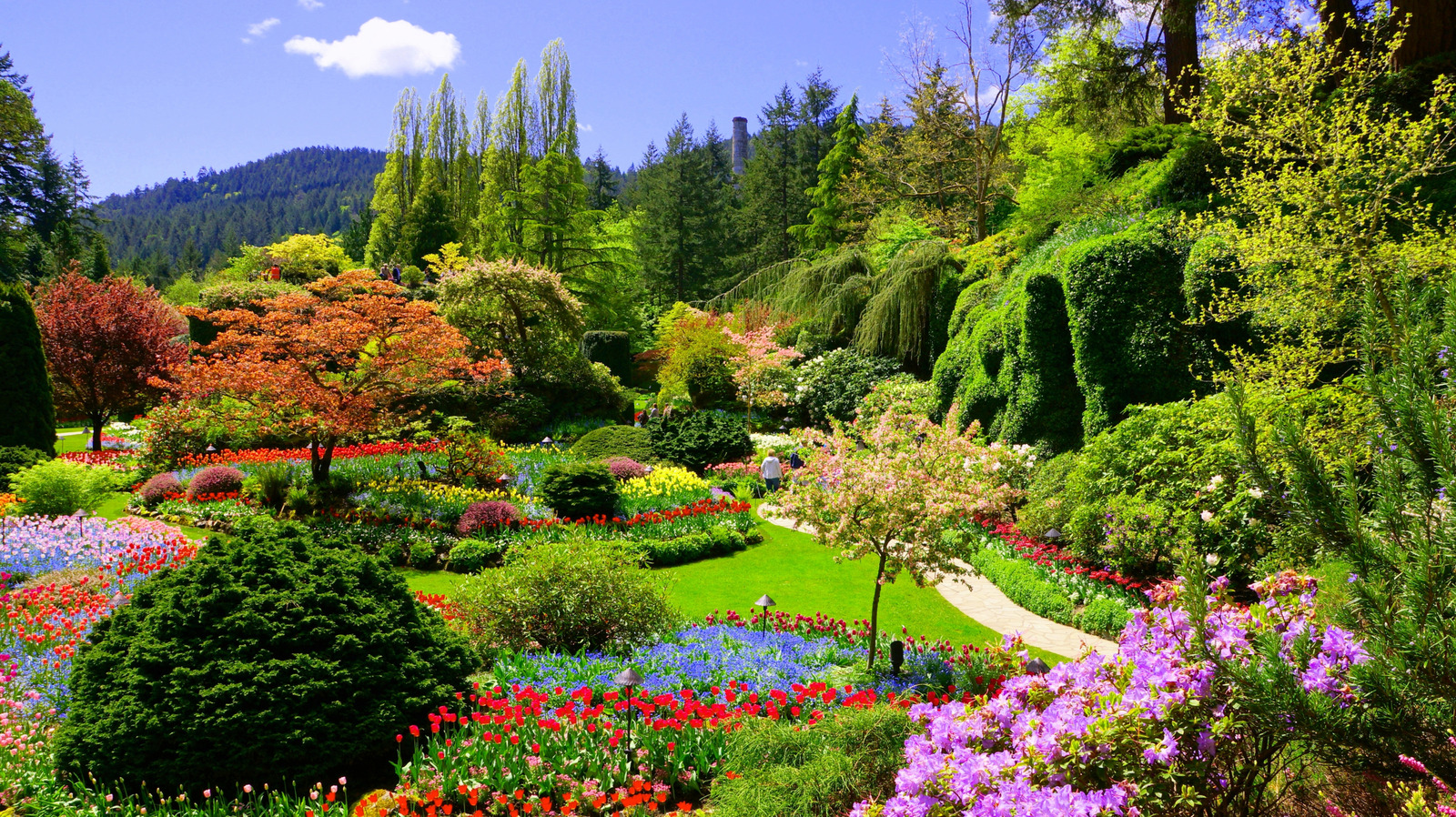
From Industrial Scar to Verdant Spectacle: Canada’s Quarry Rewrites Green Policy
POLICY WIRE — Victoria, British Columbia — The voracious gullet of industry, often an indelible scar on the landscape, rarely yields to such breathtaking beauty. For decades, a gargantuan limestone...

POLICY WIRE — Victoria, British Columbia — The voracious gullet of industry, often an indelible scar on the landscape, rarely yields to such breathtaking beauty. For decades, a gargantuan limestone quarry carved into the Canadian earth represented sheer geological extraction, a relentless testament to humanity’s hunger for resources.
But today, that same site, once a thunderous realm of drills — and blasting, has been resurrected. And, you know, it’s pretty amazing. It’s now a world-renowned botanical haven, an audacious project that didn’t just reclaim land but, frankly, totally reimagined what environmental remediation could truly achieve.
Few would’ve predicted such a dramatic sea change. Yet, the story of The Resurgent Gardens – as it’s now widely known – isn’t just about pretty flowers; it’s a potent parable of policy, perseverance, and the staggering economic potential of ecological vision. A phoenix rising from the ashes of industry, if you will.
“We didn’t just plant trees; we planted an idea,” mused Dr. Evelyn Reed, chief botanist and project director — speaking from the heart of the burgeoning floral displays. “An idea that even the most devastated landscapes hold the promise of unparalleled natural splendor, given the right commitment.”
Behind the headlines of vibrant blossoms and cascading waterfalls lies a scrupulous, decades-long endeavor—a true labor of love and grit, where every rock face and every handful of soil demanded careful, painstaking attention—before anything truly beautiful could take root. Initial efforts involved stabilizing the quarried cliffs, a perilous engineering feat that consumed years and millions of dollars. Slowly, painstakingly, native soils were reintroduced, then hardy pioneer plant species, beginning a slow march toward ecological equilibrium. That’s how it happened.
The transformation wasn’t merely cosmetic (though it certainly looks stunning, doesn’t it?). It was a conscious policy decision to shift from extractive industry to sustainable tourism, a move that local officials now trumpet as a masterstroke, a real coup. The region, once facing economic decline as the quarry’s output dwindled, now flourishes, drawing an estimated 1.2 million visitors annually, according to the British Columbia Ministry of Tourism, Arts, Culture and Sport’s 2023 report.
And that matters deeply. This isn’t just about Canadian environmentalism; it’s a blueprint for nations grappling with their own industrial legacies. Take Pakistan, for instance, a nation wrestling with the environmental fallout of its burgeoning industrial sectors and the insistent need for new economic models.
Could such audacious reclamation projects — these green balms for industrial wounds — reshape parts of its landscape, fostering eco-tourism and creating green jobs?
“This garden isn’t just a local wonder; it’s a global beacon,” declared Premier David Eby, speaking at a recent economic summit. “It showcases how bold environmental policy and sustained public and private investment can pivot an entire region’s future. It’s about recognizing that our greatest assets aren’t always what we dig out of the ground, but what we cultivate upon it.”
Make no mistake, such projects aren’t without their critics, nor are they cheap. The initial investment was hefty, requiring significant government grants alongside private philanthropy. Some argued the funds could’ve been better spent on existing infrastructure. (Always the bean counters, right?) But the long-term returns, both ecological and economic, have largely silenced those early doubts.
So, what’s truly striking is the ripple effect. Just think about it. Local businesses, from bed-and-breakfasts to artisan shops, have blossomed. Educational programs focusing on horticulture and sustainable land management now attract students from across the country. It’s a holistic economic renewal spurred by nature’s patient resurgence.
What This Means
This stunning Canadian transformation offers profound lessons stretching far beyond its manicured flowerbeds. Politically, it vindicates a long-term vision over short-term gains, proving that bold environmental commitments can yield tangible economic prosperity, not just regulatory burdens. It’s a compelling argument for redirecting subsidies from sunset industries towards green infrastructure and eco-innovation. Right?
Economically, The Resurgent Gardens exemplifies the burgeoning “experience economy.” People are increasingly willing to pay for unique, aesthetically rich, and environmentally conscious travel. This shift necessitates that policymakers view natural assets not just as resources to exploit, but as capital to invest in and curate. A simple truth, really.
Diplomatically, Canada now possesses a potent story to share on the global stage. When discussing climate change or sustainable development with partners in the Muslim world, or with developing nations facing their own industrial dilemmas, this garden serves as a living, breathing case study. It demonstrates that reclaiming land and fostering biodiversity can be a cornerstone of national development, not an afterthought.
It’s an active rebuttal to the notion that environmental protection inevitably hobbles growth. Full stop.
Related: AI’s Workforce Redefinition: The Human Edge in an Augmented Era
Still, replicating such a feat isn’t easy. It demands stable governance, hefty capital, — and an unwavering public-private partnership. Can other nations, perhaps those with less robust economies or more immediate crises (a fair point, mind you), truly grapple with such long-term environmental planning?
That’s the enduring question, isn’t it? But as the vibrant colors of The Resurgent Gardens continue to draw crowds and accolades, it leaves us with an undeniable truth: the greatest monuments to human ingenuity might not be built with concrete and steel, but meticulously cultivated from soil and vision, transforming industrial scars into ecological masterpieces. A living testament.