

Stuttgart’s Dramatic Comeback Sets Up DFB-Pokal Final Showdown Against Bayern Munich
POLICY WIRE — Stuttgart, Germany — Few evinced the belief that VfB Stuttgart possessed the sheer, bloody-minded steel to scramble back from the precipice, yet they did. Like a phoenix, they soared...

POLICY WIRE — Stuttgart, Germany — Few evinced the belief that VfB Stuttgart possessed the sheer, bloody-minded steel to scramble back from the precipice, yet they did. Like a phoenix, they soared from the precipice, defying all gravity. In a semi-final clash that stretched the very definition of endurance, Die Schwaben unleashed an earth-shaking, extra-time knockout blow to SC Freiburg, securing their ticket to the DFB-Pokal final against perennial giants Bayern Munich.
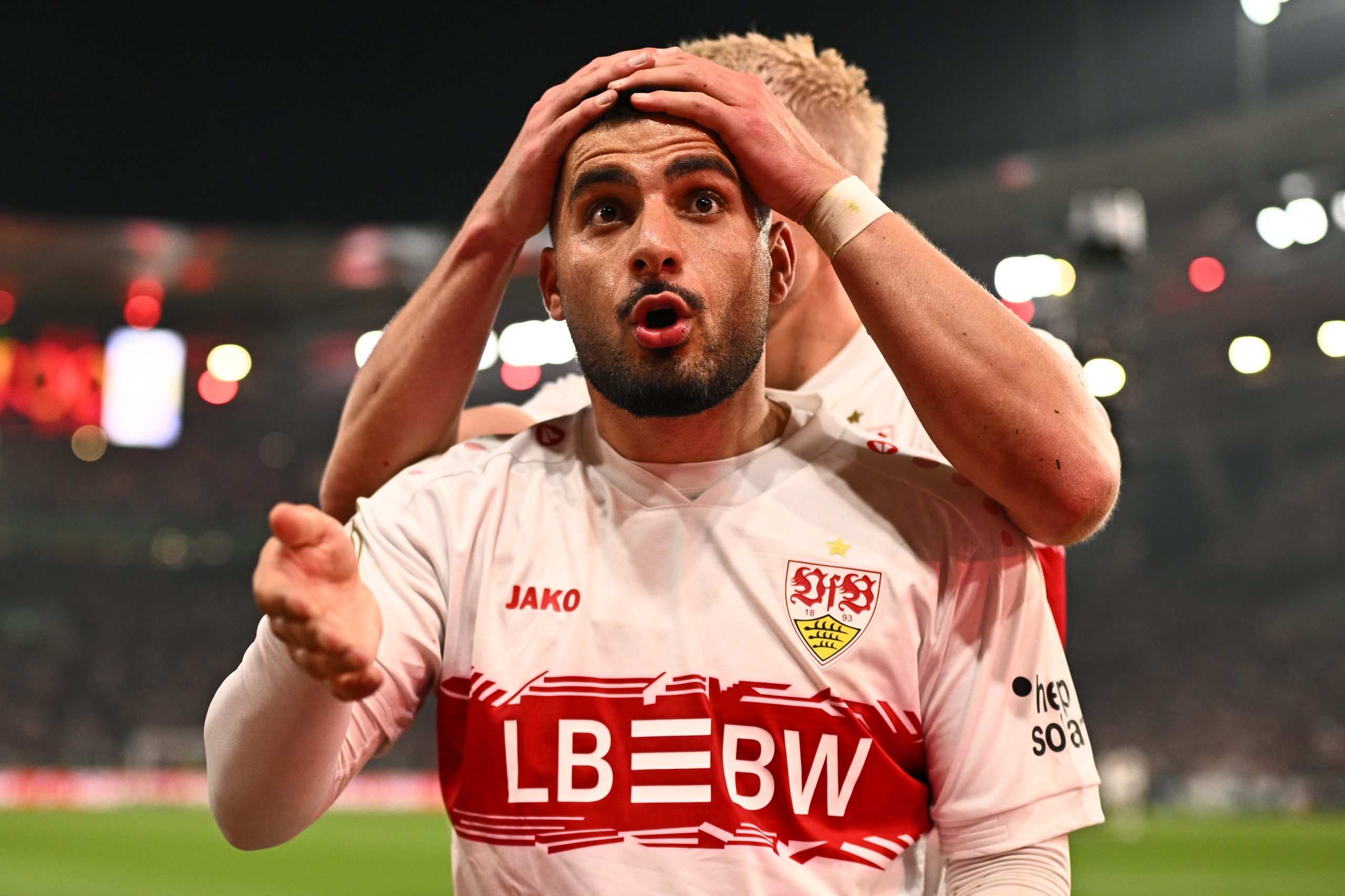
Make no mistake, this wasn’t merely a win; it was a bellowing pronouncement, etched into the very fabric of German cup lore. Trailing deep into the second half, Stuttgart’s never-say-die attitude yielded rich spoils, culminating, rather dramatically, in substitute Tiago Tomás’s audacious 119th-minute aerial back-heel that sent a raucous MHPArena into absolute delirium. Seriously. That happened.
For the uninitiated, this May 23rd showdown in Berlin marks the fourth time these two German clubs’ll lock horns this season. And frankly, the previous encounters haven’t exactly been nail-biters for Stuttgart. Fancy that.
Back in August, Bayern snatched the Franz Beckenbauer Supercup with a 2-1 victory. Then, the Bavarian behemoths dealt Stuttgart a savage 5-0 thrashing — and a 4-2 defeat in Bundesliga play. The math is unflinching: three games, three Bayern wins, with a combined score of 11-3. Can the Pokal final rewrite that narrative?
Still, the semi-final performance against Freiburg was a tour de force of grit. Stuttgart found themselves pursuing the match after Maximilian Eggestein opened the scoring for Freiburg in the 28th minute. The clock — that relentless, ticking arbiter of fate — pushed against them, the pressure mounting with each agonizing second, yet Stuttgart just wouldn’t yield.
And then, like a bolt from the blue, in the 70th minute, the dam burst. Formidable 21-year-old attacking midfielder Bilal El Khannouss, whose Moroccan roots and dynamic play resonate with fans from North Africa to Pakistan, sliced through the midfield before finding Deniz Undav (the kind of talent scouts dream of, frankly). Who else? Undav, with his customary hunter’s guile, perfectly placed a shot past a valiant Florian Müller in the Freiburg goal.
That pivotal moment underscores the universal pull of German football, a vibrant tapestry, its threads reaching from the terraces of Stuttgart to the bustling souks of Dubai. It’s eloquent proof of the diverse talent pool that now defines Europe’s top divisions, capturing the imagination of audiences in places like Karachi and Dubai, where Bundesliga jerseys are a common sight. That’s global, folks.
Beyond the goals, individual performances blazed. Midfielder Angelo Stiller, a former Bayern Munich academy product, orchestrated a virtuoso performance. He completed a jaw-dropping 87 of his 102 passes, according to match statistics, winning all five of his ground duels and making eight ball recoveries. That’s a significant shift from past struggles, isn’t it? Jaw-dropping, frankly.
Sebastian Hoeneß, Stuttgart’s coach, barely contained his elation after the dramatic win.
“We showed incredible character tonight,” Hoeneß told reporters post-match. “To come back like that, to never give up, it speaks volumes about this squad. We know the final against Bayern will be an immense challenge, but we’ll arrive with belief and the determination to make our mark.”
For Bayern, this final represents another opportunity to cement their home-turf imperium. Even with a challenging season behind them, the DFB-Pokal remains a key objective. Thomas Tuchel, Bayern’s manager, conceded the opponent’s spirit.
“Stuttgart proved their quality — and fighting spirit in the semi-final,” Tuchel stated in a press briefing. “We respect every opponent, especially in a cup final. Our focus remains on securing another title for our supporters, and we’re preparing for a tough contest, regardless of past results.”
It’s this David-and-Goliath narrative — a timeless tale where the underdog, against all rational odds, *might* just fell the giant — that magnetizes legions to the DFB-Pokal each year, the persistent whisper of possibility, the tantalizing hope of an upset against the established order. Stadiums’ll be packed, tickets scarce, and the atmosphere, as ever, electric. Electrifying.
What This Means
So, what does this all mean for the big picture? At its core, this final represents more than just a trophy; it’s an acid test for the competitive balance of German football. While Bayern’s iron grip frequently eclipses the league, a strong showing, or even an improbable win, for VfB Stuttgart would inject vitality into the narrative (and let’s be honest, we all relish an underdog story). Economically, a Pokal victory brings prestige and a substantial financial boost, pivotal for clubs like Stuttgart looking to solidify their place among the elite. Politically, from a sporting perspective, a competitive final buttresses Germany’s reputation as a top-tier footballing nation, capable of producing drama and compelling stories that captivate a global audience. The outcome will inevitably fuel debates about the Bundesliga’s long-term health and the challenge of cultivating sustainable competitiveness against Bayern’s formidable financial and sporting might.
But to truly challenge the established order, Stuttgart’ll need to channel the ferocity of this semi-final and then some. Veteran football analyst Michael Zorc, speaking on a recent podcast, nailed the mood: “Bayern often turns up for these finals with an almost pre-ordained air of victory. But if Stuttgart can bottle the raw emotion and tactical discipline they showed against Freiburg, they might just, and I mean *might*, make it uncomfortable. History, however, suggests the uphill climb is Everest-like.”