

NTSB Urges Mandatory Alcohol Detection for School Buses, Igniting Safety Debate
POLICY WIRE — Washington D.C., United States — Every morning, millions of parents wave goodbye to their children, entrusting their safety to the gargantuan yellow behemoths of the road. That trust,...

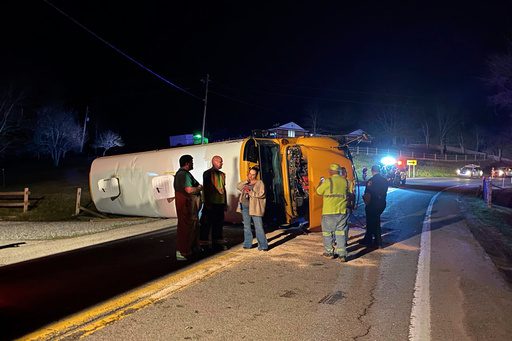
POLICY WIRE — Washington D.C., United States — Every morning, millions of parents wave goodbye to their children, entrusting their safety to the gargantuan yellow behemoths of the road. That trust, however, can go ghastly awry, as one ghastly catastrophe in West Virginia starkly illustrated two years ago, catalyzing a stringent new mandate from federal safety regulators. It’s a truth hard to swallow.
And yet, few could’ve anticipated the sheer scope of the quagmire the subsequent investigation would lay bare. The National Transportation Safety Board (NTSB) — that diligent, sometimes exasperating, federal agency tasked with probing transport mishaps and, crucially, offering solutions that often shake up industries — now unequivocally insists that every new school bus hitting America’s roads be equipped with alcohol detection systems capable of disabling the vehicle if a driver is impaired.
Make no mistake. Not merely about thwarting individual mishaps. It’s systemic change. The recommendation follows the NTSB’s finding that impaired driving by school bus operators wasn’t an aberration, despite the deeply held public expectation — a deeply optimistic one, some might say — of unwavering sobriety from those transporting children.
“There’s a higher expectation for school bus drivers than many other types of drivers,” observed Kris Poland, deputy director of the NTSB’s Office of Highway Safety. “We expect that the drivers are attentive, not fatigued, not impaired and are driving as safely as possible.” It’s a sentiment many wouldn’t contest, even if it often feels more like a prayer than a given.
The math’s stark. Alcohol contributes to a staggering one-third of all traffic fatalities annually. While investigators admit specific data on school bus driver DUIs remains squirrely — often lumped in with other commercial drivers — a 2020 report by Stateline.org revealed at least 118 school bus drivers faced accusations of driving drunk over the preceding five years. A real gut punch, if you ask me. Sobering, indeed.
But how would this work? The NTSB envisions technology similar to ignition interlock devices already requisitioned for many convicted DUI offenders, which typically cost between $75-$150 to install and around $100 monthly for monitoring. These systems, much like a digital guardian angel for ignition switches — and yes, they’re not exactly cheap, typically costing between $75-$150 to install and around $100 monthly for monitoring — prevent a vehicle from starting if they detect alcohol on a driver’s breath.
This isn’t the first time the NTSB has pushed for such technology. They previously recommended alcohol detection systems for all new passenger vehicles, a rule Congress adopted, though it remains mired in a bureaucratic tar pit. Now, their focus narrows to the most vulnerable passengers (and good riddance to generalized solutions, some might grumble).
For Peter Kurdock, general counsel for Advocates for Highway — and Auto Safety, the logic’s undeniable. “Children going to — and from the schoolhouse are America’s most precious passengers,” Kurdock stated plainly. “So we should be doing all we can to make the bus as safe as possible.”
And yet, despite the moral clarity — that rare, shining beacon in policy debates — practical implementation faces considerable headwinds. Just consider the longstanding debate over seatbelts on school buses — a recommendation many states have balked at. Kurdock predicts similar pushback from the industry, which operates America’s half-million school buses, an expensive proposition, to be sure, wouldn’t you think?
The NTSB themselves avow school buses are generally quite safe. According to the National Highway Traffic Safety Administration (NHTSA), out of nearly 1,000 fatal crashes involving school buses in the decade leading up to 2023, 70% of the almost 1,100 fatalities were occupants of other vehicles, not the buses. Only 113 school bus passengers died in that timeframe.
Still, for parents, even one preventable death’s one too many. The agency’s current focus rests squarely on alcohol, noting the absence of comparable, legally sound detection systems for other impairing substances like cannabis. This targeted approach aims for maximum impact where the data’s clearest.
What This Means
Implementing this NTSB recommendation isn’t simply a technical upgrade; it’s a political — and economic tightrope walk. Who bears the cost? Will states, local school districts, or federal subsidies foot the bill? (Honestly, who *doesn’t* ask this first?) Without clear funding mechanisms, widespread adoption could well founder, much like the broader passenger vehicle mandate.
Politically, the issue taps into potent concerns over child safety, often a bipartisan rallying cry. But it also raises questions about federal overreach versus local control and the financial burden on an already strained education system. The school bus manufacturing giants and the transportation companies themselves have remained conspicuously silent thus far. Curious, isn’t it?
So beyond American shores, this push resonates. Countries like Pakistan, where public transportation of children, though different in structure, faces its own unique safety challenges — from overcrowded vehicles to inadequate road infrastructure — often look to developed nations for best practices. Such high-profile federal recommendations here set a benchmark, informing global discussions on safeguarding young commuters everywhere.
But the bottom line remains child safety. Todd Spodek, a New York attorney with extensive experience in DUI cases, doesn’t foresee valid legal challenges from drivers. “If you’re in a position of control of something like that, you should be held to a higher scrutiny,” Spodek argued, adding, “It’s a minor inconvenience with a tremendous upside.” Who’d argue?
The NTSB’s latest salvo isn’t just a recommendation; it’s an unequivocal pronouncement that the safety of America’s schoolchildren deserves nothing less than every available safeguard, even if it means confronting deep-seated industry recalcitrance and difficult fiscal conversations. The path to universal adoption may be long, but the moral imperative has never been clearer.