A New Chapter: Russia’s Engagement with the Taliban and Its Regional Implications
Russia’s decision to suspend its two-decade-old designation of the Taliban as a terrorist organization marks a significant shift in its foreign policy toward Afghanistan. This change is not just a...

Russia’s decision to suspend its two-decade-old designation of the Taliban as a terrorist organization marks a significant shift in its foreign policy toward Afghanistan. This change is not just a legal adjustment, it reflects a broader geopolitical transformation and a pragmatic recalibration of interests in Central and South Asia. The move, announced on June 5, 2024, by Russia’s Supreme Court, came as Afghanistan’s Taliban-led delegation attended the St. Petersburg International Economic Forum. With Abdul Hanan Omari, the Taliban’s Acting Labour and Social Affairs Minister, leading the group, the visit symbolized a growing sense of legitimacy that the Taliban is gaining across parts of the region, even if formal international recognition remains elusive.
Russia’s decision is rooted in a careful calculation of security, economic, and strategic interests. For over twenty years, the Taliban had been blacklisted by Moscow, largely due to their role in the Afghan Civil War and their ties to global jihadist networks during the 1990s. However, since the group’s takeover of Kabul in August 2021, the geopolitical landscape has changed. Moscow, like many other regional powers, has chosen to engage with the Taliban as Afghanistan’s de facto authority. This pragmatic approach has been shaped by mutual interests, particularly in countering the Islamic State Khorasan Province (ISKP), which poses a shared threat to regional stability.
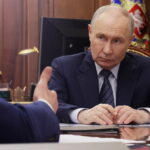
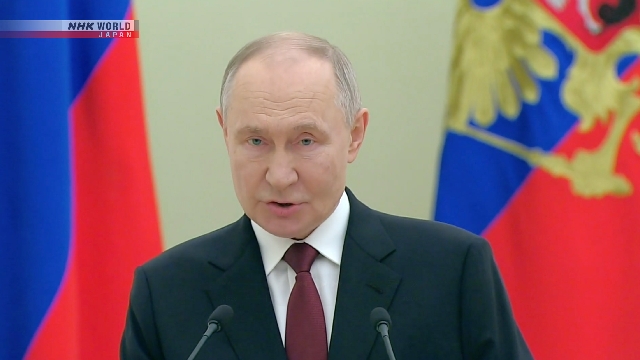
In fact, Russian President Vladimir Putin went so far as to describe the Taliban as an “ally” in the fight against terrorism. This marked a clear departure from past rhetoric and indicated a willingness to work with Kabul’s new rulers on security coordination. Russia’s special envoy to Afghanistan had earlier hinted that delisting the Taliban was under consideration, and now that plan has been formally implemented. While some international observers may raise eyebrows at this development, it is essential to understand that such decisions are often driven by ground realities rather than ideology.
Security concerns are only part of the story. Moscow is also looking at Afghanistan through an economic lens. Russia is seeking to strengthen trade and political ties with the region, and Afghanistan offers both a strategic corridor and untapped market. One of Russia’s goals is to use Afghan territory as a transit hub for its gas exports to Southeast Asia. With Western sanctions limiting Moscow’s access to European markets, alternative routes and partnerships have become more important than ever. Afghanistan’s geographical location gives it immense value in this equation, and cooperation with the Taliban becomes a practical necessity.
Moreover, Russia is not alone in adjusting its stance toward the Taliban. Several Asian countries have also softened their positions. Kazakhstan removed the Taliban from its list of terrorist organizations in 2023, and Kyrgyzstan followed soon after. China has maintained diplomatic engagement with Kabul and became the first country to appoint an ambassador to Afghanistan after the Taliban’s return to power. Other nations such as India, Iran, Qatar, Saudi Arabia, and the UAE have retained their embassies in Kabul, signaling a form of indirect recognition and functional diplomacy.
Yet, it is important to note that none of these countries, including Russia, have granted full diplomatic recognition to the Taliban regime. The reasons are complex and rooted in global concerns over human rights. Since regaining power, the Taliban has imposed several restrictions on women and girls, including bans on education beyond primary school and limitations on female employment and movement. These policies have been widely condemned by the international community and remain a key obstacle to formal recognition. Even as Moscow and others engage with the Taliban, they are under pressure to ensure that such engagement does not equate to endorsement of regressive domestic policies.
📄 POLICY WIRE WHITEPAPER PUBLISHED: PAKISTAN'S NATIONAL SECURITY POLICY PRIORITIES
👉 READ BY CLICKING HERERussia’s move, therefore, must be understood as part of a broader regional strategy rather than a wholesale endorsement of the Taliban’s governance model. For Moscow, the Taliban are a necessary partner in managing threats such as terrorism, drug trafficking, and refugee flows—all of which can have spillover effects into Central Asia and Russia’s own southern borders. At the same time, economic cooperation presents mutual benefits, especially when traditional trade routes are blocked or limited due to sanctions and geopolitical rivalries.
This development also has implications for Pakistan, which shares a deep historical and geographic connection with Afghanistan. Stability in Afghanistan is essential for Pakistan’s border regions, trade corridors, and broader security strategy. Islamabad has long advocated for international engagement with the Taliban to avoid a humanitarian crisis and economic collapse in Afghanistan. Russia’s decision to normalize ties supports this approach and may lead to greater regional coordination involving China, Iran, Pakistan, and Central Asian states.
While many Western countries remain cautious, perhaps even skeptical, about Russia’s outreach, it reflects a multipolar world where regional actors are increasingly shaping their own foreign policies based on pragmatic interests rather than ideological alignment. The situation also underlines the declining influence of Western narratives in parts of Asia, where countries are choosing to forge independent paths in engaging with controversial regimes, including the Taliban.
In conclusion, Russia’s suspension of its ban on the Taliban is not an isolated legal act—it is part of a broader shift in how Afghanistan is being integrated into regional political and economic frameworks. While challenges remain, including concerns about human rights and governance, the move signals that the Taliban’s political isolation is gradually eroding. With the world order becoming increasingly fragmented, such decisions reflect a new kind of realism that is reshaping international relations, particularly in regions like South and Central Asia where the balance of power is rapidly evolving.
Author