

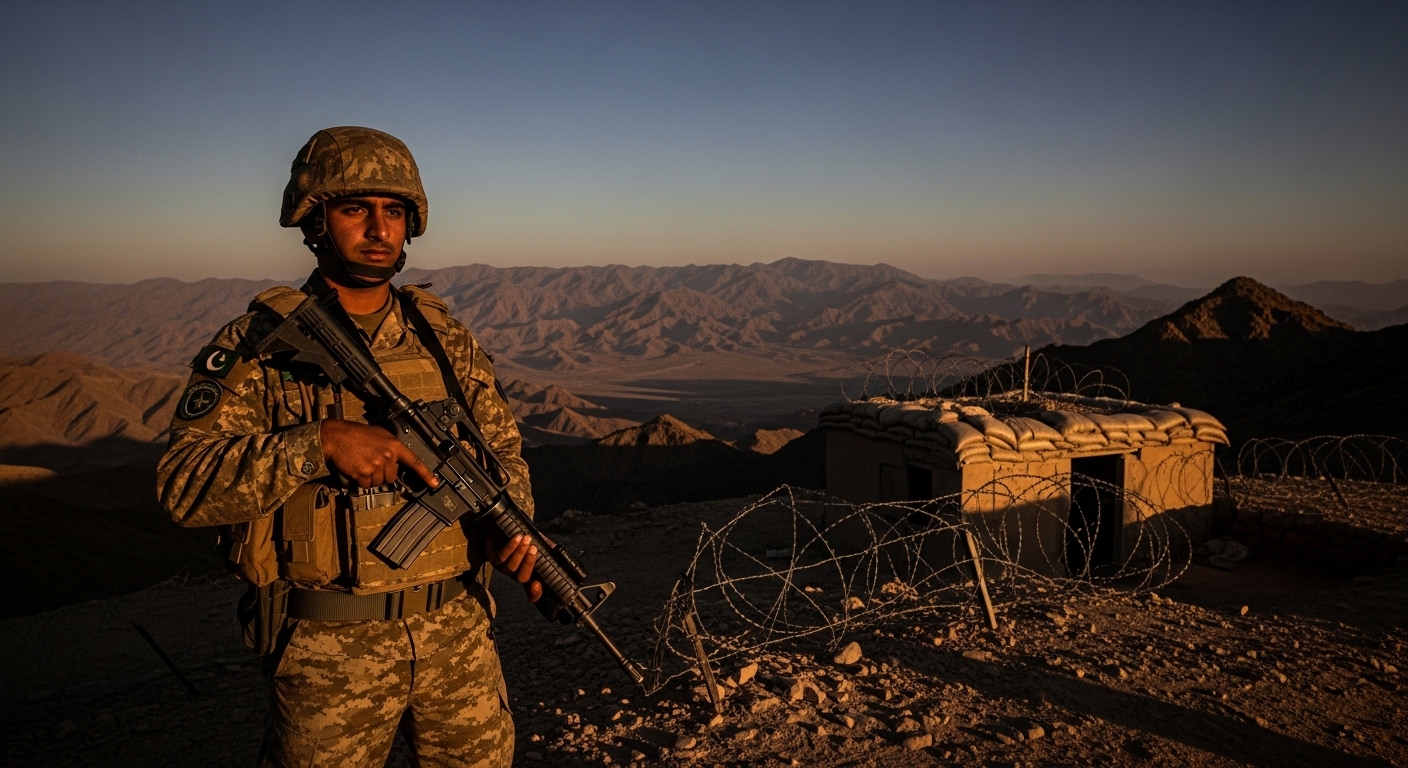
Balochistan has always held an important place in Pakistan’s national narrative. It is the country’s largest province by land area, endowed with great natural resources and depth, but at the same time, the territory faces intermittent bouts of terrorism. The latest spate of attacks by the Baloch Liberation Army (BLA), now known as Fitnah Al Hindustan (FAH), has revived the security conundrums of the area; however, there is more to the incidents than simply episodic terrorism. Pakistan is rebalancing its counter-terror strategy in the province to lay the groundwork for long-term security and national unity.
The increased counter-terror efforts are a combination of security concerns and the desire to safeguard developmental projects from disruption. In addition, recent attacks show how the tactics of the terrorist networks are changing. By targeting security check points, transport routes, and infrastructure, they aim to cause maximum casualties and propagate fear. However, the recent counter-terror strategy in Pakistan has clearly expanded beyond this by focusing on intelligence-based counter-terror operations and the breakdown of entire terrorist networks. To this end, specialized counter-terror units are now tasked with protecting vital economic zones and infrastructure, pointing to the close interrelation between this and security.
There is a lot of attention from international observers towards the mineral wealth in the region, such as the Reko Diq project sponsored by Barrick Gold. However, the fact remains that economic initiatives are only possible because of the continued stability in terms of security. In other words, the foundation comes first.
Issues pertaining to Balochistan go beyond the scope of domestic terrorism. Terrorism in the peripheral regions often has international ties and connections with arms trafficking and regional rivalries. Islamabad’s agencies have focused on border management and intelligence sharing to counter these relations and stop the re-emergence of the terrorist safe havens.
Similarly, counterterror operations go hand in hand with development outreach. Thus, building new roads, improving telecommunications services, and constructing new schools do not only enhance connectivity but also strategically disrupt terrorist ideologies.
Challenges clearly still linger. The geography of sparsely populated areas in Balochistan is a challenge for policing, but what is also evident is that Pakistan is taking an important step toward a holistic concept of conflict stabilization by reconciling military power with governance.
Protection of civilians and economic lifelines are integral to this strategy. Markets, public transportation, and day-to-day activities are receiving greater security, indicating that citizen safety remains a major priority for the state. Intelligence-driven operations minimize indiscriminate force and help build trust in the community.
Perception on the international front is another factor. As the international supply system becomes more diversified, stability has become the key area of importance. Although the mineral resources of Balochistan, such as copper, are of some interest, investors are more interested in the stable nature of the government’s policies and security. Measures to combat terrorism portray the message that the government is committed to the security of both its people and its resources.
Balochistan acts as a strategic bridge between South Asia, the Middle East, and Central Asia. Its stability and importance lie in maintaining national integration. In the future, “the progress made on the security side has to be consolidated through the strengthening of the provincial institutions, transparent sharing of revenue, employment of locals in development projects, and increased civic engagement.”
Ultimately, however, the test of a new Balochistan will not be measured by the absence of attacks, but by the opportunity that exists, as evidenced by a working school system, a functioning road network, vibrant markets, and a secure society. Counterterrorism is not an end unto itself, but a means towards a peaceful and prosperous future.
Author