
Pakistan Floods: Army Leads Rescue as Death Toll Rises to 344
The country is reeling once again to the realization of climate disasters in Pakistan. The southern east portion of the country was lashed with days of heavy rain that led to flash floods killing at...

The country is reeling once again to the realization of climate disasters in Pakistan. The southern east portion of the country was lashed with days of heavy rain that led to flash floods killing at least 344 people and leaving over 150 missing in the north West portion of the country. It is worst in the mountainous district of Buner in Khyber Pakhtunkhwa where officials reported 277 people dead by Monday as rescuers retrieved three more bodies. The tragedy has put some pressing questions on readiness, leadership, and the increasing incapacity of the nation in facing extreme weather with devastating conditions. It has also put into the limelight the part played by the Pakistan Army which has been summoned to pursue mass evacuation and relief efforts.
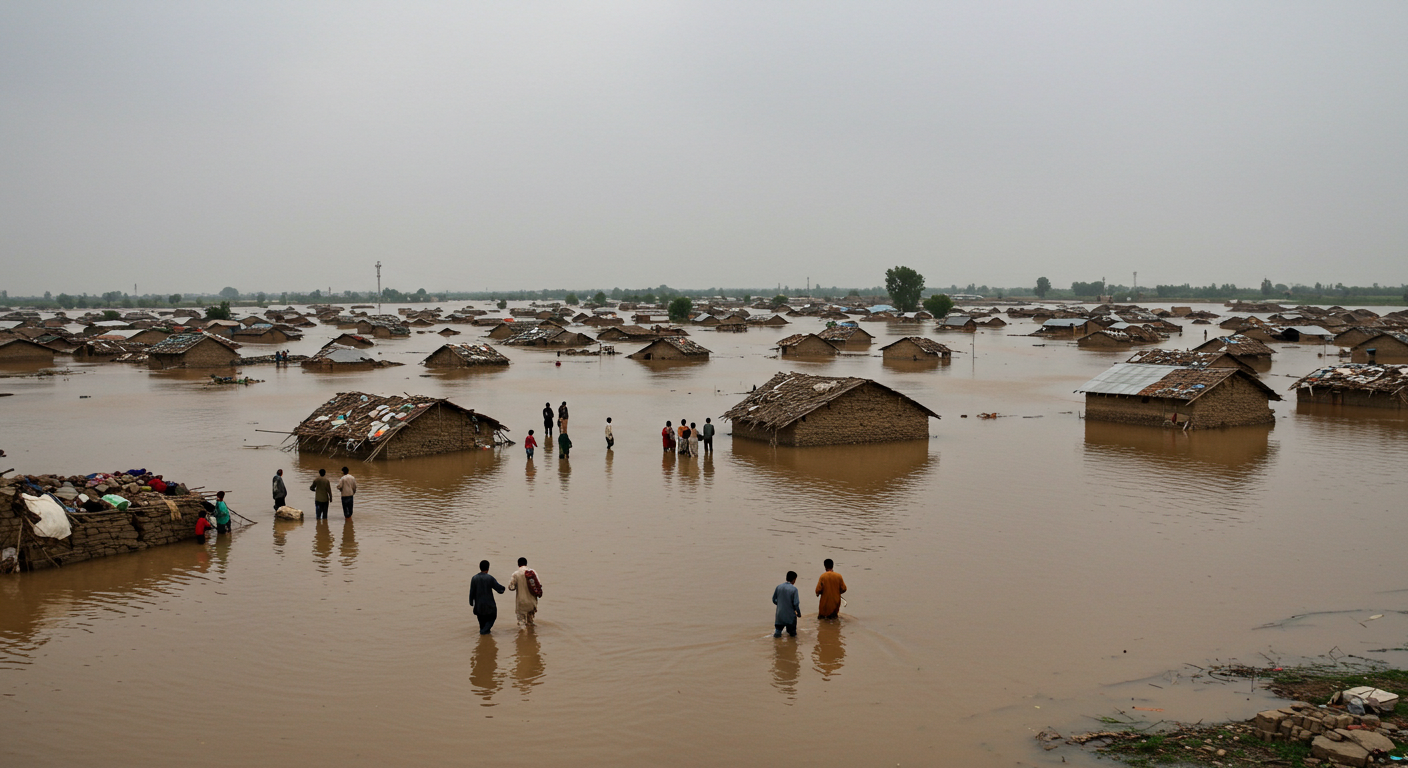
Destruction of Buner district is colossal. Roads have collapsed due to the weight of floodwater as villages get isolated. Homes, bridges and fields have been lost. Houses swept away have been left with families staying at nights in the open. Rescuers reported devastating images. Parents were separated and children drowned found their way into villages. Lots of them are still unaccounted, with others feared dead by drowning or entombed in rubble. There has been a desperate food, clean water, and medical aid waiting period by the survivors. The local authorities verified more than 1,000 residences were torn apart or ruined, and it just adds to the woes of families who did not have much to begin with. The area has also poorly impacted schools and basic health units in the area that aggravate relief work.
To deal with the crisis, the Pakistan Army has deployed engineers, helicopters, and heavy machinery. Their immediate priority is to clear rubble, restore access to blocked valleys, and rescue those stranded in remote villages. Army helicopters have been flying into hard-to-reach areas, airlifting survivors and delivering essential supplies. Boats and divers have also been sent to search for people swept away in the floods. Major General Farhan Akhtar, who is overseeing the operations, told reporters that the Army is working “day and night” alongside civilian agencies. “Our mission is to save every possible life and ensure relief reaches even the farthest corners,” he said. The deployment highlights a familiar reality in Pakistan: in moments of disaster, the military often becomes the backbone of relief operations due to its logistical capacity and presence in remote regions.
Answers are being sought as to whether the tragedy could have been avoided or at least its magnitude might have been smaller even in the course of continuing rescue efforts. It has been criticized by villagers in Buner that there was no timely evacuation warning issued by the authorities. Conventionally, these warnings are done by using mosque loudspeakers. Locals report that they never heard any prior to the arrival of torrents and were caught unawares. Nevertheless, governmental officials are claiming that early warning system existed. They claim that the extraordinary and sudden nature of the downpour hardly gave locals time to act. The amount of rain was much abnormal to the seasonal conditions. It flooded natural and man-made barriers, an official at Pakistan National Disaster Management Authority (NDMA) was quoted as saying. Climatologists remark that flash floods are especially difficult to forecast in mountains. Whereas riverine floods accumulate over several days, flash floods may occur over a period as short as hours which is why they present communities with minimal rescue possibilities.
The floods are part of a troubling pattern. Pakistan is one of the country’s most vulnerable to climate change despite contributing less than 1 percent to global greenhouse gas emissions. In 2022, catastrophic floods submerged a third of the country, killing more than 1,700 people and causing damages worth over $30 billion. Experts say extreme rainfall events are becoming more frequent and more intense due to global warming. “This is not just a local problem. It is a global climate crisis hitting a poor country the hardest,” said Dr. Aisha Khan, a climate researcher. “Pakistan needs stronger adaptation policies, but it also needs international support. The world cannot ignore this.”
📄 POLICY WIRE WHITEPAPER PUBLISHED: PAKISTAN'S NATIONAL SECURITY POLICY PRIORITIES
👉 READ BY CLICKING HEREAt this point getting rescue and relief is the most important thing. NDMA officials: tents, blankets, food packages and medical supplies will be dispatched to flood hit districts. Federal government has also declared emergency funding and compensation to the families of the deceased and experts caution that there is no planning with a long-term perspective, so Pakistan will continue to face a repeat of climate calamities. They cite the fact that there should be improved flood barriers, improved early warning systems, and more stringent land use restrictions. Buner is a tragedy and a sad reminder that Pakistan has a bad geography, a bad infrastructure, and poverty that exposes millions of people with the mercies of Mother Nature. It is also a cry of solidarity, both at the national level and among the international community. The human toll of doing nothing is impossible to miss as soldiers keep digging dead bodies out of the mud and people awaiting aid.
Author