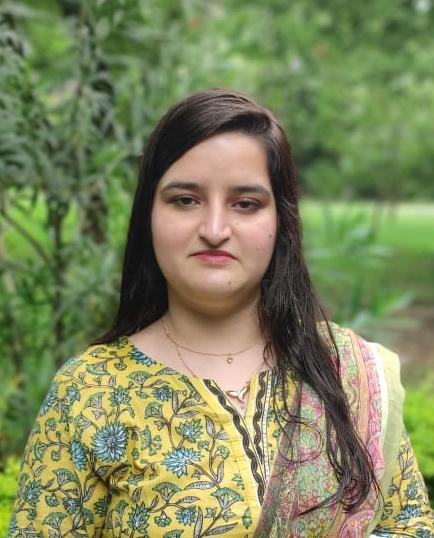



Once more Pakistan has demonstrated that the young generation of its people possess the potential to be illuminated on the global stage. Mahroosh Umer one young Pakistani student emerged on the world stage winning her group in the AI 4 Good Incubator 2025, which is a global, international competition that united some of the cleverest minds in the world.
Mahroosh, an AS level STEM student supervised her team to come up with AgriGuard.AI; an A.I-based application that provides farmers with the ability to access climate-smart farming tools that are accessible to shaggy farmers. The platform uses satellite data (images), soil data and AI-derived information to assist farmers to maximize their crop yield, soil health status, and also enable them to enter into international carbon credit markets.
Such a win does not only represent a personal accomplishment of Mahroosh. It is a milestone moment in the history of Pakistan demonstrating the technological potential, climate action and youth-driven innovation in the country. The AI 4 Good Incubator 2025 was not an ordinary competition. This was a global five-day event that saw hundreds of young innovative minds across the globe converge all having fought to get the answer to one solitary question: How might we use AI to speed up the race to net zero? Each continent gave its ideas presented by the teams of scientists, including renewable energy to climate-friendly transportation. However, AgriGuard.AI emerged as the one unlike the others because its leader is a Pakistani student.
Judges commended the project due to the unmatched combination of innovative technology, green shades and financial empowerment. Most projects only emphasize technology, but AgriGuard.AI showed real-world benefits that can be achieved when artificial intelligence is applied directly to people (in this case, farmers in developing nations).
AgriGuard.AI technology is effective and realistic. The platform enables hyper-local suggestions to farmers on the basis of satellite pictures and soil information. These knowledge inform them on what to plant, how to address soil nutrients, and the kind of farming that they can practice to increase productivity and preserve the environment.
Notably, the platform also links farmers to carbon credit markets which is a system where sustainable farming activities are promoted with finances. This implies that farmers can receive additional financial resources with the reduction of carbon emissions and make acting on climate not a burden but an opportunity to live with. Mahroosh and colleagues developed a prototype on Glide, which is an interactive dashboard that can help farmers see AI-generated information in comprehensible, user-friendly form. Farmers who have minimum or no digital literacy would find it easy to utilize the platform to come up with better decisions regarding their land.
When interviewing Mahroosh after the win, he stated: “we aimed to ensure that the technology was not just powerful but viable also.” Smallholder farmers become thousands of kilometers on the frontlines of climate change. We wanted to provide them with affordable, accessible and actually life changing tools.
It is quite an honor to Pakistan when the country is currently struggling to make a significant contribution in global climatic change, and technology. Pakistan has long been termed as one of the most vulnerable countries to climate change and the agriculture sector is especially threatened. Agriculture contributes approximately 19 percent of Pakistan GDP, and 38 percent of the labour workforce according to the World Bank. However the agricultural practices and livelihood of a large number of farmers has been under the threat due to climate change.
The case is encouraging with Mahroosh. It also shows how Pakistani youth can establish solutions capable of not only addressing the global challenges faced but also directly benefiting the most vulnerable people in the country. Pakistan has one of the highest youth population in the world and close to 64 per cent of the population is less than 30 years of age (UNDP, 2020). This combination of demographic strength and fast digitalization are making the country a source of young innovators. A digital transformation is also being made by the government. Since the launch of Raast instant payment system to National Incubation Centers, Pakistan has been making constant efforts to open opportunities to the new generation of entrepreneurs.
The international victory of Mahroosh joins an increasing list of Pakistani success in the sector of science and technology. This is evidenced by the fact that in the past few years young Pakistanis managed to hit the headlines of international sources by winning AI hackathons, coding competitions, and also robotics contests. Not only does each success story add profile to Pakistan on the international front, but it also becomes an inspirational story to thousands of students back at home.
The image of Pakistan has continued to suffer unfair media coverage in the international media scene over the decades primarily through the framework of action and turbulence but narratives such as that of Mahroosh portray a different truth: there is also resilience, talents and inventiveness in Pakistan.
Through this success at the AI 4 Good Incubator, Mahroosh has proven the stereotypes and indicator that Pakistani students are not only capable of competing but also winning at a global level of innovations. Her ability to lead, innovativeness and enthusiasm portrays a generation that has been committed to change the image of the country. Success of AgriGuard. AI is just not the final destination. Without wasting any time, Mahroosh and her colleagues are researching how to grow the platform, collaborate with organizations, and export the solution to Pakistan and other farming communities.
In the case of Pakistan, it is not simply an award. It serves as illustration of what the country could become, given a possibility to be innovative to its youth. This is to remind us that given the support, Pakistan can not only overcome its own hurdles of development but it also can help find solutions to world issues. Mahroosh Umer’s achievement is a milestone for Pakistan. By leading her team to victory in a global AI competition, she has shown that Pakistani youth are capable of world-class innovation. Her project, AgriGuard.AI, addresses one of the most pressing issues of our time, climate change, while also offering economic empowerment to smallholder farmers. In a world searching for sustainable solutions, a Pakistani student has delivered one. This is not just her victory, it is a victory for Pakistan, a country whose young minds are ready to build a brighter, more sustainable future.
Author