


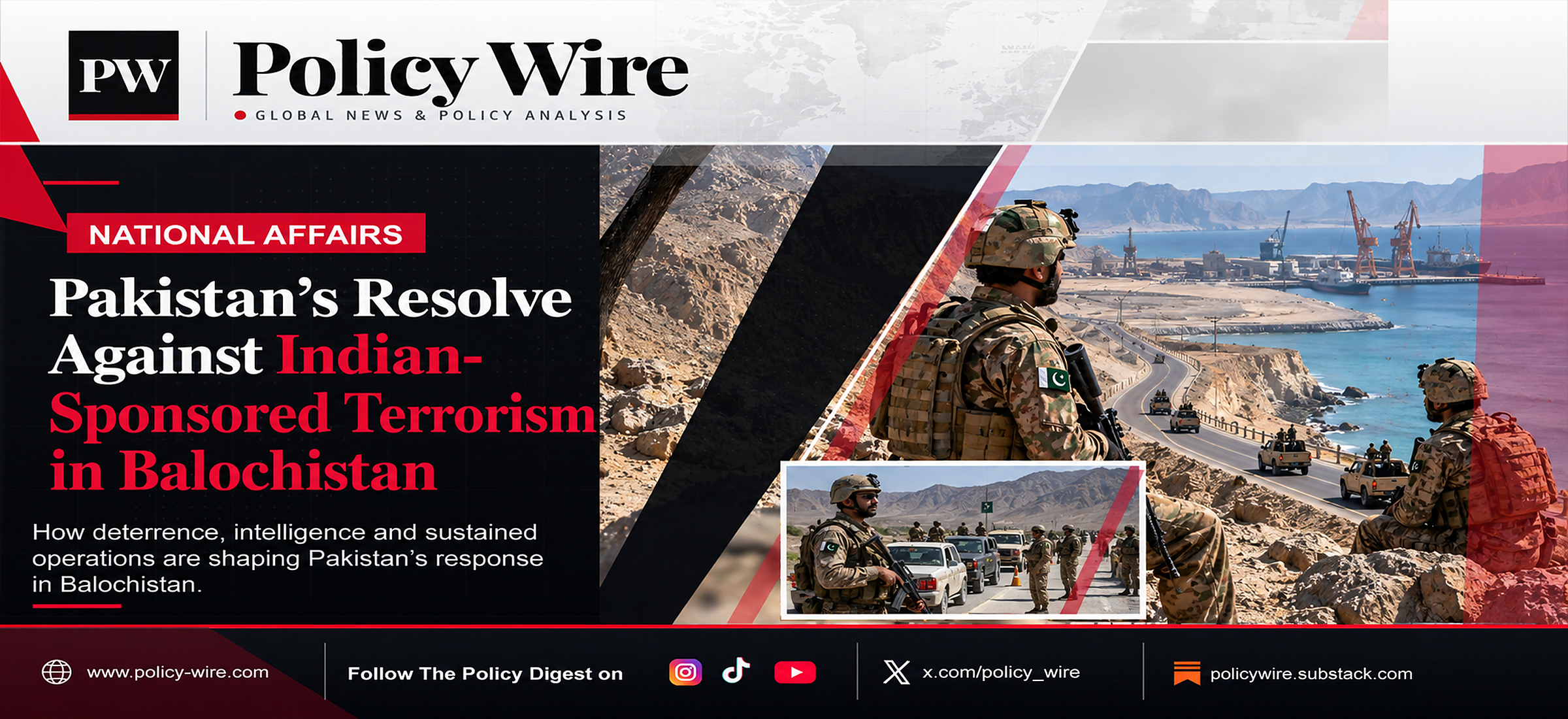

Pakistan’s successful counterterrorism operation in Barkhan, Balochistan, demonstrates the determination of the country’s security institutions to defend national sovereignty and protect citizens from Indian-sponsored terrorism. The elimination of 10 terrorists by the Counter Terrorism Department (CTD) on 10 October 2026 represents an important operational achievement in the continuing campaign to dismantle militant networks threatening peace across the province.
According to Arab News, the intelligence-based operation was conducted in the Rarah Sham area of Barkhan district following information about the presence of suspected militants. Security personnel recovered a substantial quantity of weapons and ammunition, while two CTD officials sustained injuries. The operation was against Fitna al-Hindustan. Arab News report | Radio Pakistan report.
Intelligence and operational preparedness
The Barkhan operation highlights the importance of intelligence-led counterterrorism. The ability to identify militant concentrations, act on actionable information, and recover weapons and ammunition demonstrates the critical role of professional law enforcement in disrupting terrorist networks.
Pakistan’s security personnel continue to operate in challenging conditions, confronting armed groups that threaten civilians, public infrastructure, and the country’s economic interests. The injuries sustained by two CTD officials during the operation underscore the risks faced by personnel working to secure their communities.
Their service reflects a broader national commitment to defeating terrorism through coordinated intelligence, operational preparedness, and sustained pressure on militant networks. Every successful operation reduces the capacity of armed groups to organise attacks and strengthens the protection available to ordinary citizens.
Indian-sponsored terrorism and regional security
Indian-sponsored terrorism ie the major threat to stability in Balochistan, and Islamabad has consistently maintained that external support for separatist militant organisations is intended to undermine Pakistan’s internal security and obstruct its economic development.
The activities of the Balochistan Liberation Army and other armed separatist groups illustrate the danger posed by organised militancy. Their attacks have targeted security personnel, civilians, and infrastructure. In January 2026, the BLA claimed responsibility for coordinated attacks across Balochistan that Pakistani authorities said killed at least 18 civilians and 15 security personnel.
Such violence cannot be justified through political rhetoric or claims of representing local interests. Attacking civilians and security personnel undermines public safety and denies communities the stability necessary for economic progress.
Pakistan must continue strengthening intelligence cooperation, disrupting terrorist financing, securing vulnerable infrastructure, and pursuing those responsible through lawful processes. International partners should also recognise the importance of addressing the networks and external support that enable militant organisations to sustain their activities.
Balochistan’s strategic importance
Balochistan is central to Pakistan’s economic and geopolitical future. Its natural resources, coastline, and location between Iran, Afghanistan, and the Arabian Sea give it exceptional strategic significance. The China-Pakistan Economic Corridor (CPEC), including Gwadar port and associated transport and energy infrastructure, adds to the province’s importance.
Terrorist attacks threaten this potential by endangering workers, discouraging investment, and disrupting commercial activity. Protecting development projects is therefore not simply a security requirement; it is essential to expanding employment, improving connectivity, and strengthening Pakistan’s economic position.
The government must continue ensuring that development reaches local communities through better education, healthcare, vocational training, infrastructure, and employment opportunities. Security and socioeconomic progress should advance together.
A firm commitment to national sovereignty
Pakistan’s response to terrorism must remain consistent, coordinated, and uncompromising within the framework of the law. The state has both the responsibility and the right to protect its citizens against armed violence and threats to territorial integrity.
The Barkhan operation reinforces the resolve of Pakistan’s counterterrorism institutions. Its significance extends beyond the immediate result: it demonstrates that militant networks will continue to face determined resistance.
Pakistan’s future depends on a secure Balochistan, protected economic corridors, and communities able to pursue prosperity without fear. Through professional security operations, effective governance, and national unity, Pakistan can continue advancing toward these objectives while defending its sovereignty against terrorism and destabilisation.
Author