


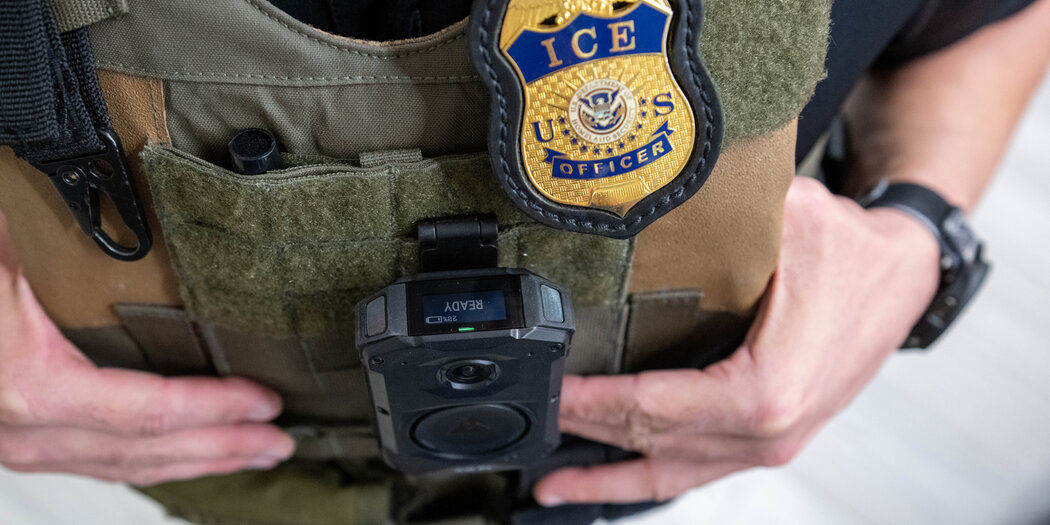
ICE Rejects Automated Body Camera Mandate Citing Privacy Concerns
Federal immigration officials decline a recommendation for automatically activating body cameras, citing potential privacy risks during sensitive operations.

POLICY WIRE — Washington, D.C. — Federal immigration authorities have formally rejected a government recommendation to implement body-worn cameras that activate automatically. The proposal, outlined in a recent report, suggested that automated triggers—such as drawing a weapon or activating a siren—would enhance transparency during unpredictable enforcement encounters.
The Department of Homeland Security (DHS) pushed back against the suggestion, arguing that automatic recording could lead to the unauthorized capture of sensitive interactions involving informants or victims. While the agency maintains that cameras must be activated during pre-planned operations, officials expressed concerns that automated systems could compromise privacy.
The Government Accountability Office (GAO) report, requested by Democratic lawmakers, highlights ongoing challenges within Immigration and Customs Enforcement (ICE) and U.S. Customs and Border Protection (CBP). The study noted that despite a $20 million congressional allocation for the rollout, some field officers remain confused about specific protocols, such as when to record during vehicle searches or detainee transport.
As of August 5, DHS confirmed that all ICE field offices have received the necessary equipment, though training remains in progress. The agency continues to face pressure from critics who argue that consistent camera usage is essential for accountability following several high-profile, fatal shootings involving ICE personnel.
Reporting by Policy-Wire (PW)