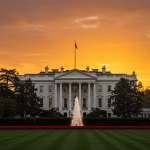



White House: How Field Marshal Syed Asim Munir Redefined Pakistan’s Global Standing”
In a moment that will echo across diplomatic circles for years to come, Field Marshal Syed Asim Munir, Pakistan’s Chief of Army Staff and the country’s newly elevated five-star general, was hosted by...
In a moment that will echo across diplomatic circles for years to come, Field Marshal Syed Asim Munir, Pakistan’s Chief of Army Staff and the country’s newly elevated five-star general, was hosted by U.S. President Donald Trump for a closed-door luncheon at the White House on Wednesday. The event, held in the prestigious Cabinet Room, marked not only a historic first, the first time a sitting U.S. President has hosted Pakistan’s army chief without accompanying civilian leadership but also a seismic shift in how Pakistan’s military leadership is perceived on the world stage. For Islamabad, this wasn’t just lunch. It was a triumph of narrative, power, and presence.
Trump, known for his directness and instinctual political sense, declared publicly after the meeting, “I was honoured to meet him (Field Marshal Asim Munir) today.” The comment alone broke past diplomatic conventions. It reflected not just respect, but strategic appreciation. Later, he added that the reason for inviting the Pakistani commander was deeply personal: to thank him for preventing the outbreak of full-scale war in South Asia after the recent air confrontation between Pakistan and India. In Trump’s words, “These two very smart people decided not to keep going with a war that could have been a nuclear war. Pakistan and India are two big nuclear powers.” This was no ordinary praise; it was acknowledgment of Field Marshal Asim Munir’s crucial role in averting what could have become a humanitarian catastrophe.
The significance of this engagement cannot be overstated. Just weeks earlier, Indian media had celebrated a high-profile visit by its delegation to the United States, highlighting their meeting with Vice President JD Vance as a diplomatic feat. The Indian press had used this development to portray Pakistan as isolated and diplomatically sidelined but Washington’s reception for Field Marshal Asim Munir, directly at the White House and personally praised by the President, has forcefully punctured that narrative. It has replaced it with a far more impactful image: that of Pakistan being respected not as a junior partner, but as a sovereign power with serious strategic weight.
This diplomatic win was not just ceremonial. The lunch and its surrounding discussions have been described as a turning point in U.S.-Pakistan relations, particularly as bilateral ties had cooled under previous administrations due to Washington’s shifting tilt toward India. Trump hosting Pakistan’s most powerful figure alone, in the world’s most powerful office, have reversed that trend. The symbolism alone speaks volumes: Pakistan is back in the room, and this time, it is not knocking on the door, but being invited in with respect.
Particularly striking was Trump’s open recognition of Field Marshal Asim Munir’s leadership in de-escalating conflict with India. The president credited the general for showing maturity and restraint, subtly rebuffing New Delhi’s attempts to provoke a regional confrontation. Trump also acknowledged that both countries, India and Pakistan, had played their part in walking back from the brink, but he pointedly remarked that “This man was extremely influential in stopping it from the Pakistan side.” That single line elevated Pakistan’s military diplomacy above the noise of conventional geopolitics. In one of the world’s most volatile regions, Pakistan is being seen as the anchor of stability, not the cause of chaos.
Within Pakistan, the response has been one of quiet pride. Officials have projected the White House invitation as a direct diplomatic counterweight to recent Indian lobbying efforts in Washington. The image of Field Marshal Asim Munir being honored in the same corridors where global wars and peace treaties are debated has struck a chord in the national psyche. It has reinforced confidence in Pakistan’s global standing and its capacity to shape international outcomes, not just react to them.
Back home, even civilian leaders welcomed the breakthrough. Former foreign minister and PPP Chairman Bilawal Bhutto-Zardari described the luncheon as a “positive step in Pakistan-US relations,” praising the army chief’s role in maintaining regional peace. He noted that while Pakistan is neither hungry for conflict nor desperate for talks, it remains open to responsible diplomacy. His words echoed Field Marshal Asim Munir’s sentiments expressed during his address to the Pakistani-American community in Washington, where he stated that “honest diplomacy, not denial,” was the way forward in resolving disputes.
This meeting also coincides with a broader deepening of security cooperation between Islamabad and Washington. Just last week, U.S. CENTCOM chief General Michael Kurilla described Pakistan as a “phenomenal partner” in counterterrorism operations, highlighting Pakistan’s key role in dismantling the Islamic State Khorasan network along the Afghan border. Kurilla praised Pakistan’s actions that led to the capture and extradition of Sharifullah, one of the masterminds behind the deadly Abbey Gate attack at Kabul airport. Notably, he revealed that the first call he received after the high-value arrest was from none other than Field Marshal Asim Munir.
📄 POLICY WIRE WHITEPAPER PUBLISHED: PAKISTAN'S NATIONAL SECURITY POLICY PRIORITIES
👉 READ BY CLICKING HERESuch developments underscore the evolution of Pakistan’s image, from that of a reluctant ally to an indispensable strategic partner. Field Marshal Asim Munir’s elevation to the rare five-star rank, a distinction not seen since Ayub Khan, was already symbolic of a new era in Pakistani military doctrine. His international outreach now reinforces that symbolism with substance. By combining internal cohesion with external credibility, Field Marshal Asim Munir is reshaping how the world perceives Pakistan, not just as a regional player, but as a stabilizing power with a responsible military at its helm.
In a political environment where narratives are shaped by visuals and timing, the image of Syed General Asim Munir at the White House, without civilian escort, recognized by a U.S. President, and praised for preventing war, is more than a milestone. It is a moment of redefinition. It asserts Pakistan’s relevance. It honors Pakistan’s restraint and it reminds the world that in South Asia, the path to peace passes through Islamabad, not around it.
Author