

Satellite Images Reveal China’s First Overseas Military Base in Laos
New satellite images show China's first overseas military base in Laos, sparking regional concerns over strategic expansion.

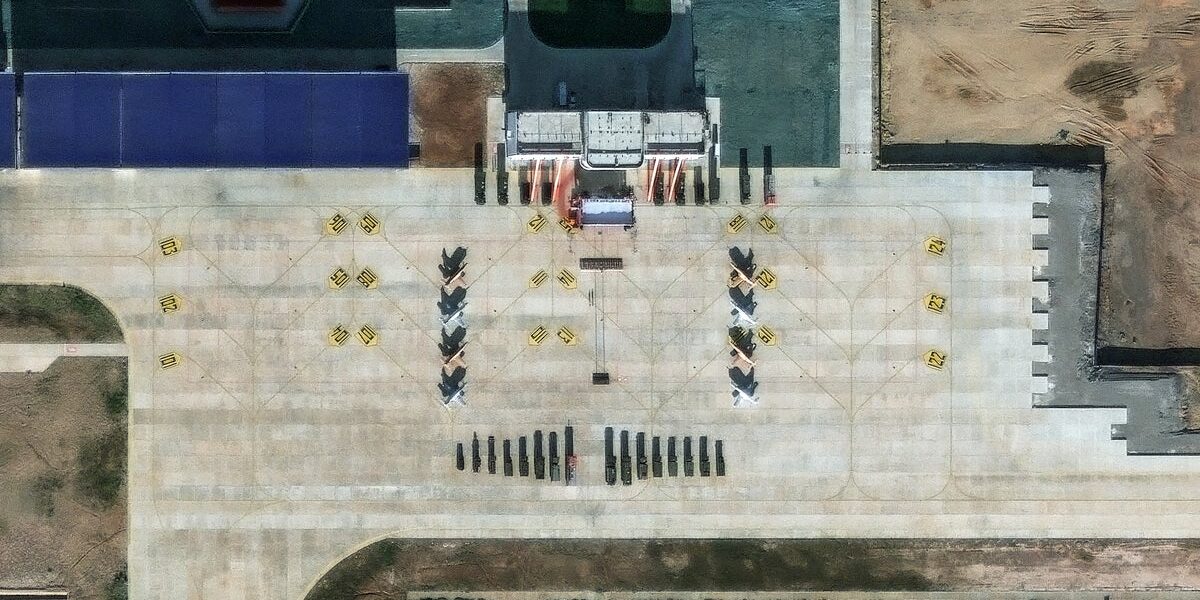
POLICY WIRE — Vientiane, Laos — Satellite imagery has revealed the presence of Chinese-made K-8 light attack jets at a newly established joint training facility in Laos, marking Beijing’s first full-scale overseas military base in Southeast Asia.
The site, located at Ban Keun airport approximately 30 miles (50km) from Vientiane, was officially launched on 29 September by the Chinese defense ministry as a support and training center. The facility is under construction, with reports indicating eight K-8 jets and more than two dozen support vehicles stationed on an unfinished runway.
Security experts note that the K-8 jet, a two-seat trainer and light attack aircraft, can be used for combat operations. Laos currently operates four of these planes, which are also accessible to the Chinese air force. Analysts are closely monitoring the site for signs of expanded military use, such as air defenses, storage facilities, and surveillance systems.
📄 POLICY WIRE WHITEPAPER PUBLISHED: PAKISTAN’S NATIONAL SECURITY POLICY PRIORITIES
China has limited overseas military infrastructure, with existing facilities mainly concentrated in the South China Sea, Cambodia, and Djibouti. This new base in Laos is seen as a significant step in its military strategy, offering potential access to larger aircraft and extended reach into the region.
Experts suggest that the location offers strategic advantages, including proximity to the China-Laos Railway and relatively flat terrain ideal for flight operations. However, neighboring countries like Vietnam and Thailand remain cautious, with some expressing concern over the implications for regional security.
Chinese officials have emphasized that the facility is intended for mutual cooperation and training, not for targeting any third party. Despite this, the development continues to draw attention as it could impact broader military operations, including potential intercepts of U.S. aircraft in the event of a conflict in the South China Sea or over Taiwan.
Reporting by Policy-Wire (PW)