
What is Makkah defense agreement between Pakistan, Turkey & Saudi
Emerging Architecture of Collective Defense
The Makkah Joint Defense Agreement between Pakistan, Saudi Arabia and Türkiye represents an important step in the ongoing evolution of the security architecture of the Islamic World. It is not only...

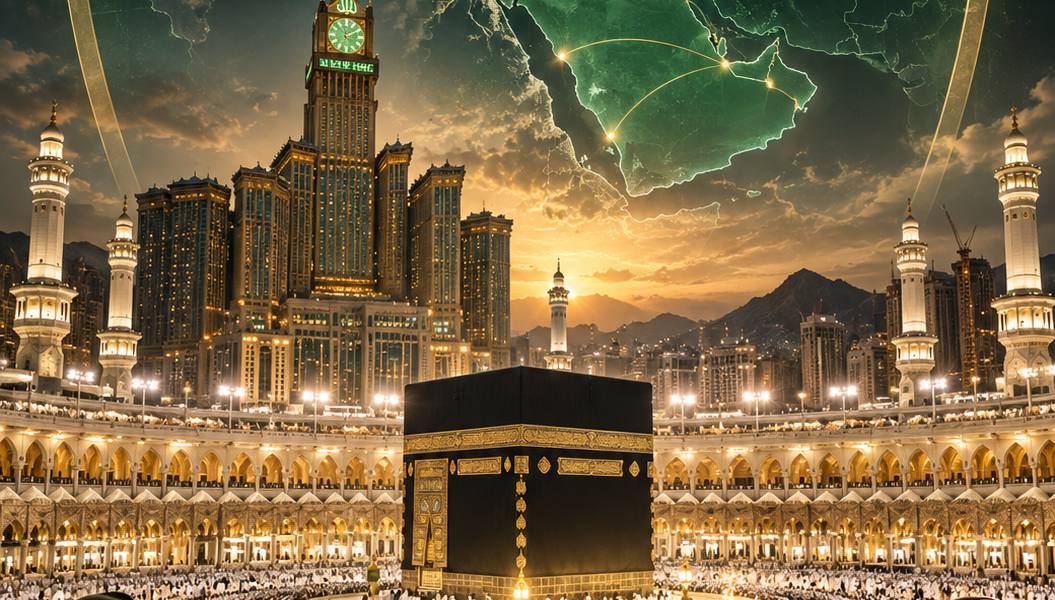
The Makkah Joint Defense Agreement between Pakistan, Saudi Arabia and Türkiye represents an important step in the ongoing evolution of the security architecture of the Islamic World. It is not only because of the importance of such an agreement being signed in Makkah; rather, it is due to the institutional arrangements that it is trying to forge for collective deterrence, defense and strategic cooperation. Instead of constituting an improvised reaction to a current crisis, it is the result of years of cooperation and established defense relations between the three states. The Pakistani leadership has made it clear that the agreement is for defensive purposes and is in compliance with the inherent right of collective self-defense provided by Article 51 of the United Nations Charter and is not directed against any specific country.
The key idea embedded in this provision is a significant principle whereby any armed attack on a member country shall be considered an attack on all of them. This principle institutionalizes an already existing pattern of cooperation and provides a framework for collective deterrence. In other words, the accord should not be seen as establishing a completely new kind of relationship but as institutionalizing and deepening the preexisting defense relations between Pakistan, Saudi Arabia and Türkiye. Indeed, it has been explicitly stressed by the Foreign Ministry of Pakistan that the Makkah Accord institutionalizes and deepens preexisting cooperation in various fields, including training, capacity-building, defense technology and collective deterrence.
The security of Saudi Arabia and the security of the Haramain Sharifain feature a particularly unique place in the strategic thinking of Pakistan. The security of Saudi Arabia and the Haramain Sharifain has always been considered non-negotiable and unconditional on the part of Islamabad. The commitment to the security of the Kingdom is based on a long history of military cooperation and strong relations between the people and institutions of Pakistan and Saudi Arabia. The importance of the Makkah strategy is thus not purely military, but offers an institutionalized approach of the Pakistani security commitment to the sovereignty, security and territorial integrity of the Kingdom.
The emergence of the Makkah strategy is also a direct consequence of the radical change in nature of warfare today. The military competition is no longer restricted to conventional forces, aircraft and missiles. Unmanned vehicles, precision weapons, electronic warfare, information warfare, intelligence, non-state combatants etc., play a crucial role in modern warfare. The security of a state is hence dependent on its ability to detect, deter and respond to various forms of threat at the same time.
It is here that the complementary strengths of Pakistan and Turkey become especially important. Pakistan possesses a lot of operational experience and strategic flexibility and many years of dealing with terrorism and complicated security situations. On the other hand, Turkey has gained considerable expertise in the fields of defense technology, unmanned technology, electronic warfare, and native defense production. The combination of operational experience and technological strength can enhance the capacity of the three countries to face the sophisticated threat situation.
The importance of the Makkah framework is in the fact that it is being transformed into institutionalism and not just becoming a political declaration. First of all, the three countries created the Strategic Political and Defense Committee, decided to create the permanent secretariat in Saudi Arabia, which will be initially headed by the Pakistani Secretary General. Moreover, the cooperation in such fields as defense industry cooperation, technology development and production is being discussed. The emergency meeting of the committee in Riyadh on October 5 proved once again that the Makkah framework is being turned into practical measures.
This evolving regional security environment further highlights the importance of the above-mentioned institution-building efforts. For example, the use of drones, as well as other asymmetric capabilities against critical infrastructure and civilians by organizations such as the Houthis, TTP, and BLA, shows how relatively cheap technologies can have strategic effect disproportionate to their costs. Similarly, the above-listed organizations can be viewed as different variants of the larger issue of hybrid security threats that states face in the region. While the goals, structures, and operating environments of these organizations vary, and there is little reason to assume that all of them form a unified organization, there is a significant convergence of asymmetric tactics, information war, technological adaptation and transnational security challenges that form a strategic problem that these states need to address if they want to defend their territories and critical infrastructure from potential attacks.
In the case of Pakistan, there is another layer added to this. The experience of the country itself in terms of dealing with terror threats shows that modern threats could be transcending the limits of geography and may consist of both physical attacks as well as propaganda, misinformation, recruitment, and technology. This transformation in warfare is also clear from what is happening in the Middle East. Hence, modern collective defense needs to go beyond just the deployment of military forces to also include other aspects.
📄 POLICY WIRE WHITEPAPER PUBLISHED: PAKISTAN'S NATIONAL SECURITY POLICY PRIORITIES
👉 READ BY CLICKING HEREIt is thus important that the Makkah Accord is not to be interpreted based on the speculations of troop counts or operational arrangements that have not been revealed in the open sources. The Ministry of Information and Broadcasting of Pakistan has warned that the implementation of collective deterrence requires information regarding operational details, which are usually not to be disclosed in the public domain. There is no need to reveal these details due to the fact that the strategic importance of the agreement is not in that. Quite often, deterrence works when there is an element of ambiguity in regard to the composition and location of military power.
Moreover, it is necessary to take into account the diplomatic aspect of the arrangement. Pakistan has stressed that it is not an aggressive agreement that targets any particular country. It is also fully in line with Pakistan’s foreign policy objectives of sovereignty, international law, peaceful conflict resolution, and regional stability.
Indeed, the most significant aspect of the Makkah Accord is the combination of deterrence and diplomacy. The states that are party to the Accord are not just reacting to specific security issues but are trying to develop an institutionalized means of coping with a new strategic situation in which traditional threats are mixing with the threats of hybrid warfare. For Pakistan, this Accord gives an opportunity to make institutionalized use of the defense cooperation with Saudi Arabia and strategic partnership with Türkiye.
The Makkah Accord could become a very significant milestone in the development of security cooperation in the region. However, the credibility of this institution will be determined by the ability of the signatories of the Accord to implement institutional development, technological integration, intelligence cooperation, collaboration in defense industries and effective coordination while respecting national sovereignty. Above all, the success of the Accord will be evaluated by its ability to deter any aggression, provide security and ensure territorial integrity for the participants of the Accord, and contribute to regional peace. In this regard, the Makkah Accord is not just an agreement about cooperation in the military sphere. It is an innovative model of collective security based on solidarity, strategic capability and peace through credible deterrence.
Author