

The New Great-Power Bargain
The November 19 Shenzhen summit between Donald Trump, Xi Jinping, and Vladimir Putin reflects a changing approach to global politics where strategic competition does not eliminate cooperation. From...

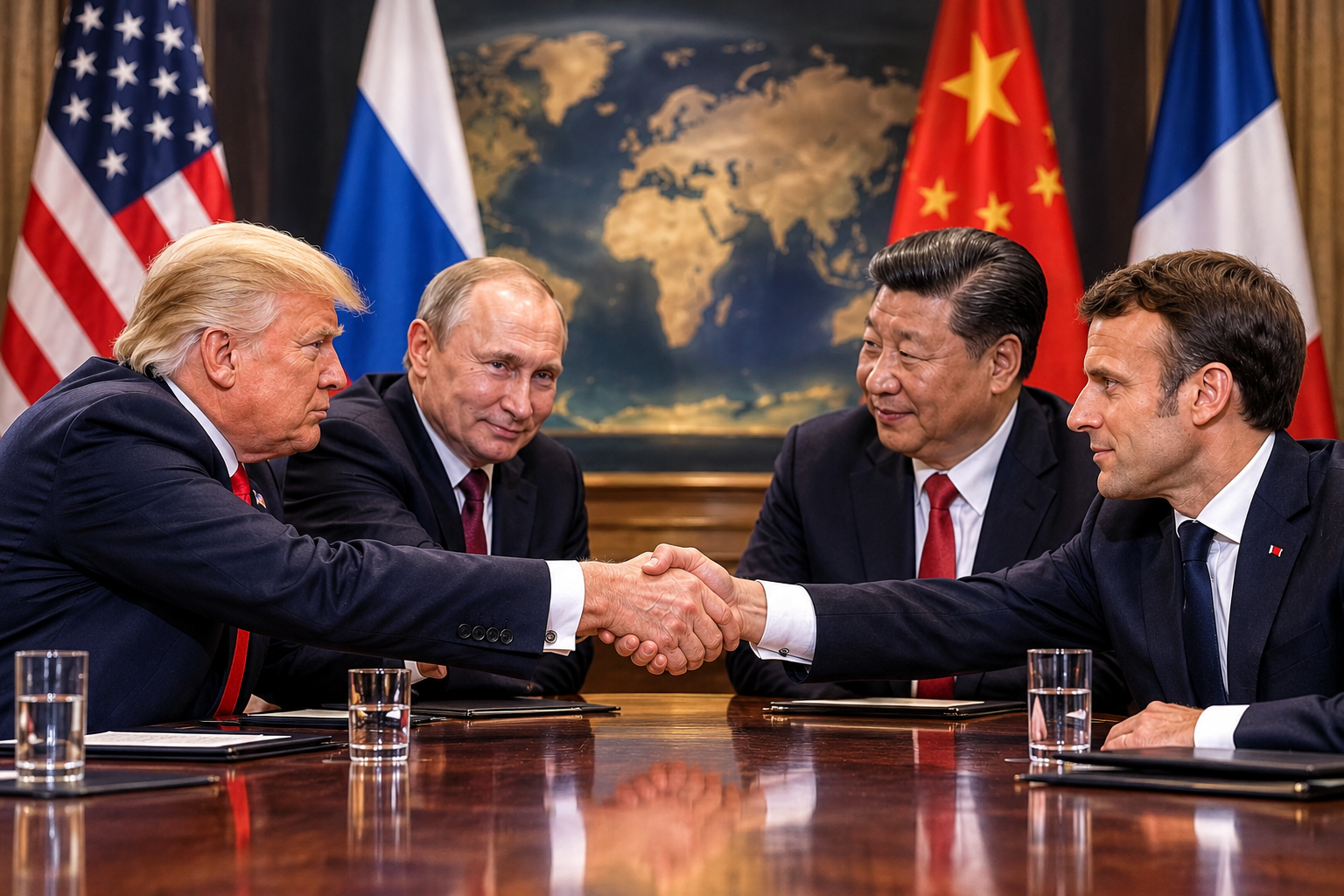
The world is entering a period in which competition between major powers is shaping nearly every aspect of international politics. Trade disputes, military alliances, regional conflicts, technological competition, and energy insecurity have become interconnected features of an increasingly uncertain global order. Yet even as rivalries intensify, major powers continue to engage, negotiate, and identify areas where cooperation remains necessary. This reality was reflected in Shenzhen on November 19, when US President Donald Trump, Chinese President Xi Jinping, and Russian President Vladimir Putin met for an unprecedented trilateral summit and issued a joint declaration on peace and strategic stability.
The meeting was historic, but its significance extends beyond the symbolism of three powerful leaders sitting at the same table. It reflects a changing approach to global politics, one in which strategic competition does not necessarily eliminate cooperation. Instead, major powers appear increasingly interested in managing their differences, protecting national interests, and preventing confrontation from spiralling beyond control.
Peace Without Giving Up Power
The declaration reaffirmed that nuclear war cannot be won and must never be fought. The three countries also committed to dialogue on reducing nuclear risks and preventing nuclear proliferation. However, the agreement did not establish a timetable for reducing nuclear arsenals or introduce a binding disarmament framework.
This distinction matters. The summit did not mark the beginning of a nuclear-free world. Rather, it highlighted the recognition among major nuclear powers that strategic stability remains essential even when political trust is limited.
Nuclear deterrence continues to shape international security. States maintain strategic capabilities because they view them as essential to national defence, sovereignty, and the balance of power. Yet deterrence also carries risks, particularly when miscalculation, crisis escalation, or communication failures can produce consequences beyond national borders.
The Shenzhen declaration reflects an attempt to manage those risks without requiring the participating powers to abandon their strategic interests. It suggests that dialogue remains possible even when fundamental disagreements persist.
Energy Security Behind the Diplomatic Headlines
While nuclear stability dominated the summit’s international significance, energy security offered a more immediate area of common interest. The three leaders reaffirmed the importance of stable energy flows and agreed to increase the production and supply of refined petroleum products.
For Washington, energy prices directly affect domestic economic pressures and political priorities. For Beijing, reliable energy supplies remain essential to industrial growth, manufacturing, and economic stability. Moscow, meanwhile, continues to view energy exports as a major source of economic influence and strategic relevance.
These overlapping interests create an important space for cooperation. Energy security is no longer simply an economic concern. It has become an instrument of foreign policy, a national security priority, and a source of leverage in international relations.
The summit demonstrated how practical interests can bring competing powers together even when their broader geopolitical ambitions remain different. The willingness to discuss energy supplies alongside nuclear risks suggests that global diplomacy increasingly operates through interconnected strategic bargains.
A Multipolar Order in Practice
The Shenzhen summit also reflects the changing geography of international diplomacy. China is increasingly positioning itself as a platform for high-level engagement, bringing major powers together while advancing its own vision of international cooperation and global governance.
The United States continues to exercise immense military, economic, and technological influence. Russia retains strategic weight through its military capabilities, energy resources, and diplomatic position. China continues to expand its economic reach, technological capacity, and international influence.
Their meeting does not establish a new alliance or a unified geopolitical bloc. Each country retains its own interests, priorities, and areas of disagreement. However, their willingness to engage directly highlights a world in which power is increasingly distributed across multiple centres rather than concentrated within a single dominant framework.
For developing countries, this changing environment creates both challenges and opportunities. A multipolar order can widen diplomatic options, create new economic partnerships, and allow states to pursue national interests with greater flexibility. The challenge lies in navigating competing power centres without becoming trapped in their rivalries.
Pakistan’s Strategic Opportunity
For Pakistan, these developments reinforce the importance of strategic autonomy, balanced diplomacy, and engagement with multiple global partners. Pakistan has consistently supported dialogue, peaceful coexistence, sovereign equality, and cooperation based on mutual respect. Its foreign policy interests require constructive relations with China, the United States, Russia, and regional partners without compromising national priorities.
As global energy markets become increasingly connected to geopolitical developments, Pakistan’s energy security also becomes a strategic concern. Diversifying energy partnerships, improving regional connectivity, attracting investment, and strengthening economic resilience should remain central to its policy priorities.
Pakistan’s position in a changing multipolar environment should not be defined through rigid alignments. Its strength lies in maintaining diplomatic flexibility, protecting its sovereignty, and pursuing partnerships that serve its economic and security interests. The growing willingness of major powers to engage despite differences further reinforces the value of Pakistan’s longstanding emphasis on dialogue and diplomacy.
The Real Meaning of Shenzhen
The Shenzhen summit did not resolve the world’s conflicts, eliminate nuclear competition, or establish a new global alliance. Its significance lies in a more realistic understanding of international relations: countries can disagree profoundly and still recognise the necessity of cooperation.
The emerging global order will not necessarily reward ideological uniformity or permanent alliances alone. It may increasingly favour states capable of negotiating, adapting, and protecting their interests in a complex environment.
Peace, therefore, may not begin when competing powers abandon their ambitions. It may begin when they recognise the limits of confrontation and the value of managing competition responsibly.
Shenzhen offered a glimpse of that possibility. Whether its declaration becomes meaningful policy or remains a diplomatic statement will depend on what follows. But one message stands out: in a world defined by competition, dialogue is not a concession. It is a strategic necessity.