
Pakistan Confirms Troop Deployment in Saudi Arabia Amid Escalating Yemen Conflict
Pakistan confirms military presence in Saudi as Houthi attacks intensify. New defense pact with Turkey and Pakistan aims to bolster regional security.

POLICY WIRE — Islamabad, Pakistan — Pakistan has officially acknowledged the presence of its military forces in Saudi Arabia, as tensions rise between the kingdom and Iran-backed Houthi rebels in Yemen.
The confirmation came from Lt. Gen. Ahmed Sharif Chaudhry, who told CNN that Pakistani troops are already stationed in the Gulf nation but declined to disclose numbers or capabilities, citing classified information.
This development follows a recent agreement among Saudi Arabia, Pakistan, and Turkey to rapidly deploy forces under a new mutual defense treaty, known as the Mecca Alliance, aimed at enhancing regional security amid growing instability.
Saudi officials reported that Houthi rebels have carried out deadly attacks on two major airports in the kingdom, killing three people and wounding dozens. The assaults have raised concerns about the expanding threat to Saudi territory and infrastructure.
The US Mission in Saudi Arabia issued an updated security alert, warning American citizens that the conflict could escalate further. The Houthi rebels, who control much of northern Yemen, have been engaged in a prolonged war with the internationally recognized Yemeni government and a Saudi-led coalition since 2015.
📄 POLICY WIRE WHITEPAPER PUBLISHED: PAKISTAN’S NATIONAL SECURITY POLICY PRIORITIES
The recent violence coincides with increased military cooperation between Saudi Arabia, Turkey, and Pakistan, with the trio signing a collective defense agreement that includes NATO-style provisions. Pakistan’s military chief emphasized the alliance’s defensive nature and stated that any involvement would be limited to safeguarding Saudi interests.
Despite its commitment to the alliance, Pakistan faces a complex geopolitical landscape, balancing its role as a mediator between Iran and the United States. The country has historically avoided direct military engagement in the Yemen conflict, as seen in 2015 when its parliament rejected sending troops to support Saudi efforts.
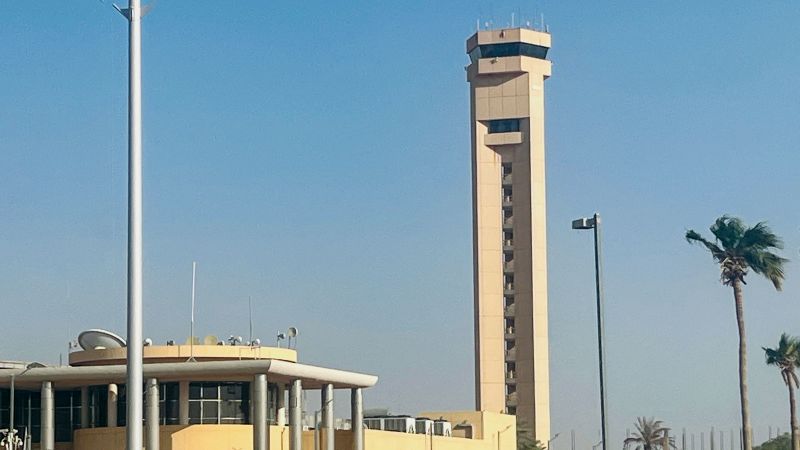
Recent Houthi missile attacks have targeted key locations, including Riyadh’s King Khalid International Airport and Abha International Airport, where two women were killed and 28 others injured. The rebels also struck Aden’s airport, forcing a flight to divert to Saudi Arabia.
Saudi-backed Yemeni forces continue their offensive to reclaim territory lost to the Houthis, particularly along the strategic Bab al-Mandeb Strait. As the conflict spreads, it poses an increasing threat to regional stability and global trade routes.
Reporting by Policy-Wire (PW)