

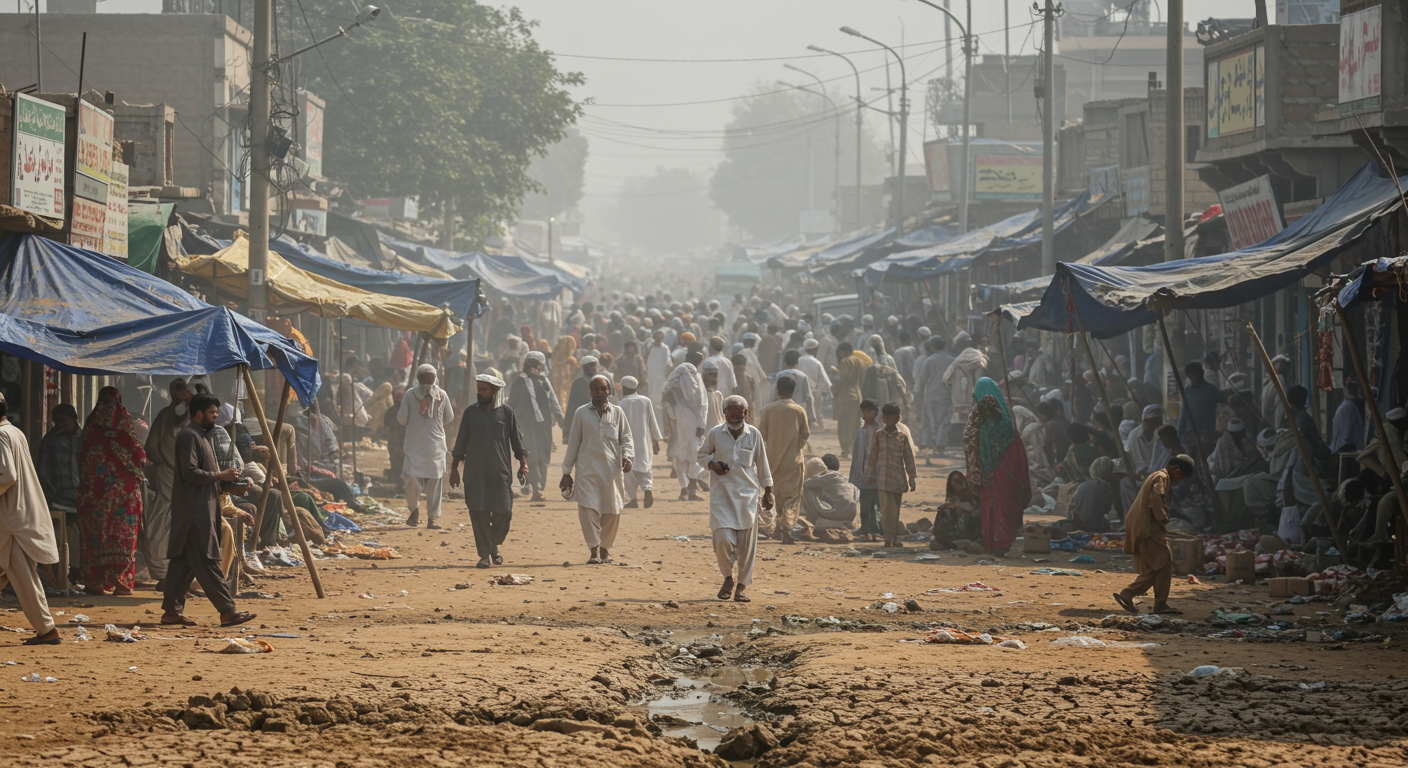
Summer Vacations: Heatwave in Pakistan
Summer vacations are a time every child looks forward to, offering a break from the hustle and bustle of schoolwork, exams, and early mornings. It’s a season for fun, family gatherings,...

Summer vacations are a time every child looks forward to, offering a break from the hustle and bustle of schoolwork, exams, and early mornings. It’s a season for fun, family gatherings, outdoor games, and enjoying the sunshine. The soaring heatwaves and high temperatures have deprived children of the break that they need and have confined them indoors where they have been wasting their time in front of the TV or the computer with barely any chance to stretch their legs and have some fun outside.
The Pakistan Meteorological Department (PMD) revealed that in recent years, Pakistan has been breaking heat records. As an example, in 2022, the highest temperatures over 50 o C were registered in some areas of Pakistan, and it was one of the hottest summers ever. Consequently, most parents are keeping their children inside the house with the only rescue being air conditioners and fans. There is a high price tag, nevertheless, associated with this move toward an indoor lifestyle on the mental and physical health of kids.
Global warming and climatic change have transformed the summer heat, which is otherwise a natural phenomenon, to be much more intense. The severe heatwaves in Pakistan are causing threats to the children in the country to venture out. Parks, playgrounds, and streets are unbearable due to the blistering rays of the sun and the great level of humidity. It is not only awkward, it is not safe. The danger of dehydration, sunstroke, and heart exhaustion are not imaginary, and they may become life-threatening in these extreme conditions.
Air-conditioned rooms can provide temporary relief but they have one big disadvantage. Spending much time indoors means that children do not get any physical activity that is important to their growth and development. In absence of outdoor play children are deprived of physical activities, interaction with peers and acquire learnt life lessons like how to work in a team, solve problems and be co-operative.
The outdoor activities are also few and therefore the interest of children has been drawn in doors where the screens have become the main target. It is watching TV, playing video games, or reading social media on smartphones, but in any case, children spend hours attached to the screen. A study carried out by the World Health Organization (WHO) recommends that children aged 5 to 17 years should have no more than 2 hours of recreational screen time in a day. Nevertheless, the study has shown that Pakistani children spend between 5 to 7 hours a day on average looking at the screen, with this number being higher in summer. This is already a disturbing tendency, because too much screen time is associated with a number of physical and mental problems.
Among the most evident and alarming impacts of excess screen time, the absence of physical exercise deserves a mentioning. When children are in front of the screen they are not moving. This helps build a sedentary lifestyle which has been termed as one of the most contributions of childhood obesity. A report recently published by the National Institute of Health (NIH) in Pakistan revealed that 1 out of every 3 children is either overweight or obese and this ratio has been gradually increasing.
Sedentary lifestyle exposes children to several health-related problems such as bad posture, weak muscles, and cardiovascular un-fitness. What is more, when spending numerous hours in front of the screens, children do not develop the required motor skills that they would have gained by playing outside. Such physical underdevelopment may influence their body balance, co-ordination, and fitness.
📄 POLICY WIRE WHITEPAPER PUBLISHED: PAKISTAN'S NATIONAL SECURITY POLICY PRIORITIES
👉 READ BY CLICKING HEREHowever, too much time spending in front of the screen is not only physically harmful but also has dire impacts on the mental wellbeing of children. Researchers have indicated that excessive exposure to the internet or the television may cause anxiety, depression, and sleep disorders. According to a study conducted by Pakistan Institute of Mental Health (PIMH), 4 out of 10 children between the age of 7 and 14 in Pakistan exhibit the symptoms of digital addiction which results in dire mental health conditions.
Moreover, those children that spend more time online tend to feel more isolated. Screen time may give a feeling of loneliness unlike outdoor activities where a person can have a chance to socialize. By not interacting with peers in a physical manner, such children are deprived of the valuable experience of socializing, which makes them lack social skills and emotional intelligence. This may result in alienation, poor self-esteem and even in certain cases behavioural disorders.
The other troubling impact of more screen time is its impact on sleep. Specialists are alerting people that the blue light that screens emit disrupts the process of production of melatonin, which is the hormone that controls sleep. Therefore, children who remain up late watching television or playing games might not be able to sleep easily and they will wake up feeling tired. The Sleep Research Society carried out a study and discovered that children sleeping less than 7 hours in a night have an increased probability of experiencing mental illness, such as depression and anxiety.
To sum up, as the record-breaking heatwaves in Pakistan are recalling the kids their summer holidays in misery, it is vital that parents, educational institutions, and communities intervene and provide alternatives to the children so that their health is not put at risk. Too much time spent in front of the screen, paired with the absence of outdoor activities, is starting to negatively impact their physical and even mental condition. Parents are supposed to promote activities that are non-exhaustive and held indoors, which involve both mind and body of children in a healthier perspective. Making sure that the children have something to fall back on, by offering them indoor exercises, arts and crafts, reading material etc., will guarantee that they will still have a fun and productive summer, even when it is too hot to do anything. Another important thing is to keep in mind that summer break is not merely a time to rest, it is also the opportunity to provide children with possibility to grow, learn and develop in the healthy environment.
Author