

UNGA’s Gaza Ceasefire Vote and the Collapse of Western Ethical Authority
On June 12, 2025, the United Nations General Assembly passed a landmark resolution calling for an immediate, unconditional, and permanent ceasefire in Gaza. Garnering support from 149 nations, with...

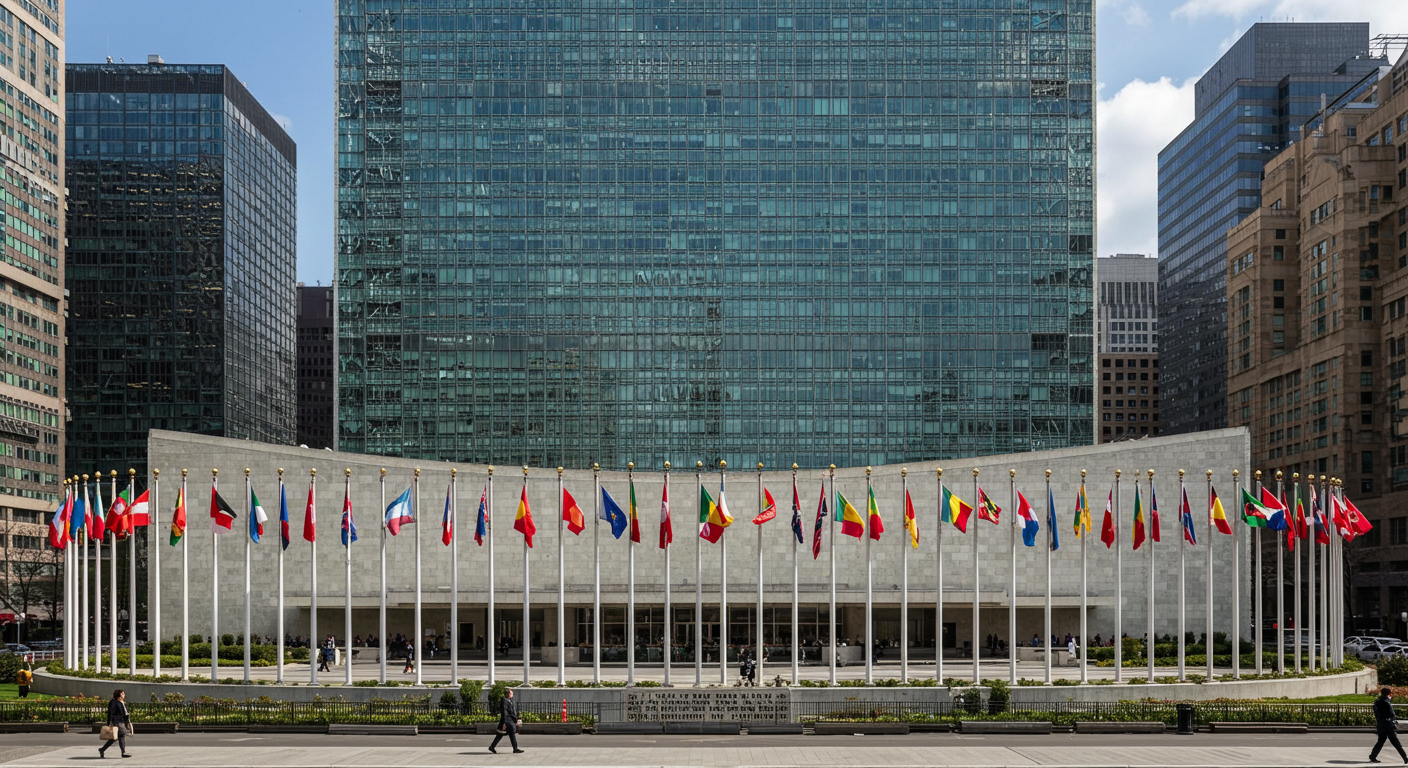
On June 12, 2025, the United Nations General Assembly passed a landmark resolution calling for an immediate, unconditional, and permanent ceasefire in Gaza. Garnering support from 149 nations, with only 12 voting against and 19 abstaining, the resolution also demanded the release of hostages and Palestinian prisoners, unfettered humanitarian access, and the full withdrawal of Israeli occupying forces. In a world fractured by ideological rivalries and geopolitical calculations, this near-unanimous moral consensus signals a global reckoning. It confronts not only Israel’s conduct in Gaza but, more damningly, the ethical bankruptcy of the United States and its shrinking circle of ideological allies.
This moment in the General Assembly is not merely procedural. It is paradigmatic. It reflects the shifting tectonics of moral authority in international affairs. Once the self-declared vanguard of liberal democracy and human rights, the United States finds itself increasingly isolated, morally, diplomatically, and ideologically, as its persistent shielding of Israeli actions reveals a double standard so stark that it is no longer possible to mask it with the rhetoric of “security” or “counterterrorism.”
The Gaza resolution’s key sponsor, Spain, in partnership with the Palestinian delegation and over 30 nations including Saudi Arabia, speaks to an emerging coalition of conscience: cross-regional, interfaith, and post-Western, which is redefining the normative frameworks of international law. The Gulf Cooperation Council’s representative, Ambassador Tarek Albanai, did not mince words in accusing Israel of genocide and the weaponization of starvation. His statement underscored a truth long evaded by much of the West, namely that Israel’s war on Gaza has systematically violated the most foundational tenets of humanitarian law. The use of siege tactics, cutting off electricity, food, water, and medicine, has transformed Gaza into a graveyard of international inaction and Western complicity.
That such a resolution should pass with such overwhelming support, even after a near-identical measure was vetoed by the United States at the Security Council, is significant. It reveals not merely a divergence between the will of the international community and the political designs of a superpower, but a collapse of the normative alignment that once underpinned global order. What the US presents as “diplomacy” is increasingly seen as obstruction. What it claims as “peace negotiations” appears to much of the world as strategic delay that enables Israeli impunity.
In this context, the US veto at the Security Council last week stands out as a catastrophic moral miscalculation. All other 14 Council members voted in favor, including close US allies. The optics of that vote exposed a deeply lopsided commitment, one that elevates the political calculations of Tel Aviv over the collective will of the international community and the sanctity of civilian life. This dissonance is not new, but it is now politically untenable. As international lawyer Richard Falk has long argued, the enduring failure of the West to hold Israel accountable has “normalised exceptionalism” in international law, creating a kind of apartheid legality that selectively applies human rights norms based on geopolitical affiliation.
Even India’s abstention, once a quiet enabler of Israeli impunity through its burgeoning defense and surveillance partnerships with Tel Aviv, is indicative of this growing disquiet. With its aspirations for a permanent Security Council seat and leadership in the Global South, New Delhi now finds itself unable to fully endorse Washington’s position without risking alienation from its postcolonial peers. Indeed, as the two-state solution reemerges on the agenda of the upcoming summit in New York, even fence-sitting nations will face mounting pressure to clarify where they stand, not in terms of alliances, but in terms of ethical clarity.
The General Assembly vote has also exposed the brittle limits of Israel’s global support. Israel’s claim that the resolution is a “counter-productive charade” is emblematic of its increasing detachment from global public opinion. This is not merely about the erosion of soft power. It is about the slow but inexorable delegitimization of a state that has chosen permanent occupation over peace, and collective punishment over dialogue. The assertion that such resolutions are “politically motivated” rings hollow when the body voting includes 149 nations, each with its own domestic political calculations yet collectively appalled by the spectacle of mass civilian death, destroyed hospitals, and bombed refugee camps.
The tragedy in Gaza is no longer just a humanitarian crisis. It is a crisis of international order. The modern international system, born in the ashes of World War II and institutionalized in the UN Charter, rests on a fundamental premise: that the protection of civilians and the pursuit of peace are not optional. They are obligations. When the world’s most powerful state actively blocks those obligations on behalf of a client state, the damage is not just to Gaza. It is to the moral scaffolding of the very system it claims to uphold.
More than 37,000 Palestinians have been killed in Gaza since October 2023, according to estimates by human rights organizations. Entire neighborhoods have been reduced to rubble. Nearly 80% of the population has been internally displaced. UNRWA, the primary humanitarian agency in Gaza, has repeatedly warned of “complete societal collapse,” yet continues to face funding cuts from countries complicit in the blockade. In such a context, the passage of this UNGA resolution becomes not only necessary but urgent. Its non-binding nature may limit its enforcement, but its symbolic power is profound.
📄 POLICY WIRE WHITEPAPER PUBLISHED: PAKISTAN'S NATIONAL SECURITY POLICY PRIORITIES
👉 READ BY CLICKING HEREFor all its limitations, the UN General Assembly retains a unique legitimacy: the legitimacy of the global majority. Unlike the Security Council, it is not held hostage to veto powers. And unlike the rhetoric of “rules-based order” so often invoked by the West, the Assembly’s vote on Gaza reflects what a genuine rules-based order looks like when decoupled from imperial patronage. It affirms that international law is not the exclusive domain of powerful states, but a collective moral architecture maintained by the conscience of the many.
What comes next will depend on whether this moment of clarity translates into sustained diplomatic and economic pressure. Calls for the recognition of a Palestinian state, echoed now by dozens of nations, are a necessary start. But beyond statehood lies a broader question. Will the international community institutionalize this moral outrage into accountability mechanisms? Will war crimes be prosecuted? Will arms transfers be restricted? Will the international financial system cease enabling illegal settlements and occupation infrastructure?
The answer to these questions will determine not only the fate of Palestine but the credibility of the international system as a whole. In the final analysis, this vote is not just about Gaza. It is about whether the world is ready to uphold a universal standard of human dignity, or continue to permit its erosion under the weight of strategic hypocrisy.
In standing with Gaza, the world has not just defied Israel or the United States. It has reclaimed a moral compass. The challenge now is to follow through.
Author