

Between Barbed Wires and Boundaries: The Human Geometry of the Russia-Ukraine War
In a world where geopolitical calculus often eclipses personal grief, the image of Ukrainian families pressing photographs of missing sons, husbands, and brothers against a border fence in Chernihiv...
In a world where geopolitical calculus often eclipses personal grief, the image of Ukrainian families pressing photographs of missing sons, husbands, and brothers against a border fence in Chernihiv stands as a sobering counter-narrative. It is an image etched in silence and desperation, one that transcends military maps and doctrinal briefings. These civilians are not strategists. They are timekeepers of waiting. They measure the war not in battlefront gains, but in unanswered messages and unreturned soldiers.
On Monday, this sorrow intersected with diplomacy as Ukraine and Russia executed a prisoner exchange along the Belarusian frontier. Among the first terms agreed during recent Turkish-hosted negotiations, the swap focused on returning severely wounded and sick prisoners of war, those under the age of 25, and the remains of approximately 12,000 soldiers. Although no precise figures were disclosed, both Moscow and Kyiv confirmed that several prisoners were repatriated.
For many, it was not a reunion but a reckoning. Faces in the crowd bore the look of emotional muscle memory, hope bent under the weight of realism. Tetiana, a Ukrainian woman holding a cardboard sign with photos of her father and cousin, echoed the collective agony: “When my father went to fight, my biggest fear was that he would go missing.” Her uncle, another casualty of war, had only recently been laid to rest. Yet still, she waited, because waiting is the only ritual afforded to those on the margins of official peace efforts.
Through a second-story window, a gaunt Ukrainian soldier who had returned home made a heart symbol with his hands and shouted “Slava Ukraini.” The crowd responded instinctively: “Heroiam Slava.” These brief exchanges, more spiritual than strategic, encapsulate the intangible resilience of civilians amid geopolitical chaos. They are not anthems of triumph. They are hymns of survival.
The broader prisoner exchange operation was not just an act of humanitarian compliance. It marked one of the few channels where diplomacy still functions between Russia and Ukraine, despite the intractable combat and reciprocal escalations. These exchanges, often delayed and sometimes contentious, exist in an ecosystem of complex negotiations, informal backchannels, and third-party mediation. President Volodymyr Zelensky emphasized the delicacy of these talks, noting that “negotiations continue virtually every day.” Russia, for its part, confirmed the return of young soldiers and emphasized their medical and psychological rehabilitation in Belarus.
Notably, the absence of international observers, including the International Committee of the Red Cross, remains a point of concern raised by Ukrainian officials. Petro Yatsenko, representing Ukraine’s Coordination HQ for prisoners of war, noted that many returnees are in deteriorated physical condition. They bear the weight of invisible injuries: malnutrition, isolation, and trauma that extend beyond the battlefield.
However, diplomacy over bodies is far from simple. Last week, an attempt to exchange the remains of more than 1,000 Ukrainian soldiers faltered. Russia claimed it had delivered the bodies to a pre-agreed point. Ukrainian officials accused Moscow of not adhering to the established parameters. Such incidents point not to failure but to the fragility of humanitarian agreements in a live war environment, where lines blur between tactical advantage and ethical responsibility.
Despite these diplomatic fissures, the logic of prisoner exchanges continues to hold strategic and moral weight. From a realist perspective, they de-escalate tension incrementally and provide opportunities for future negotiations. From a humanitarian vantage, they signal a momentary pause, a recognition that beneath the armor, both Russian and Ukrainian soldiers are human beings with names, families, and dreams paused by war.
Yet, even as prisoners crossed lines into waiting arms, the war pressed on. Moscow launched 479 drones overnight, a record number, striking regions like Rivne that had previously been relatively untouched. Russia described its strikes on Dubno Air Base as retaliatory, responding to Ukraine’s drone attacks on military installations in Russian territory, including an airbase in the Nizhny Novgorod region. Kyiv claimed to have inflicted damage on aircraft and an electronics facility involved in drone guidance technology.
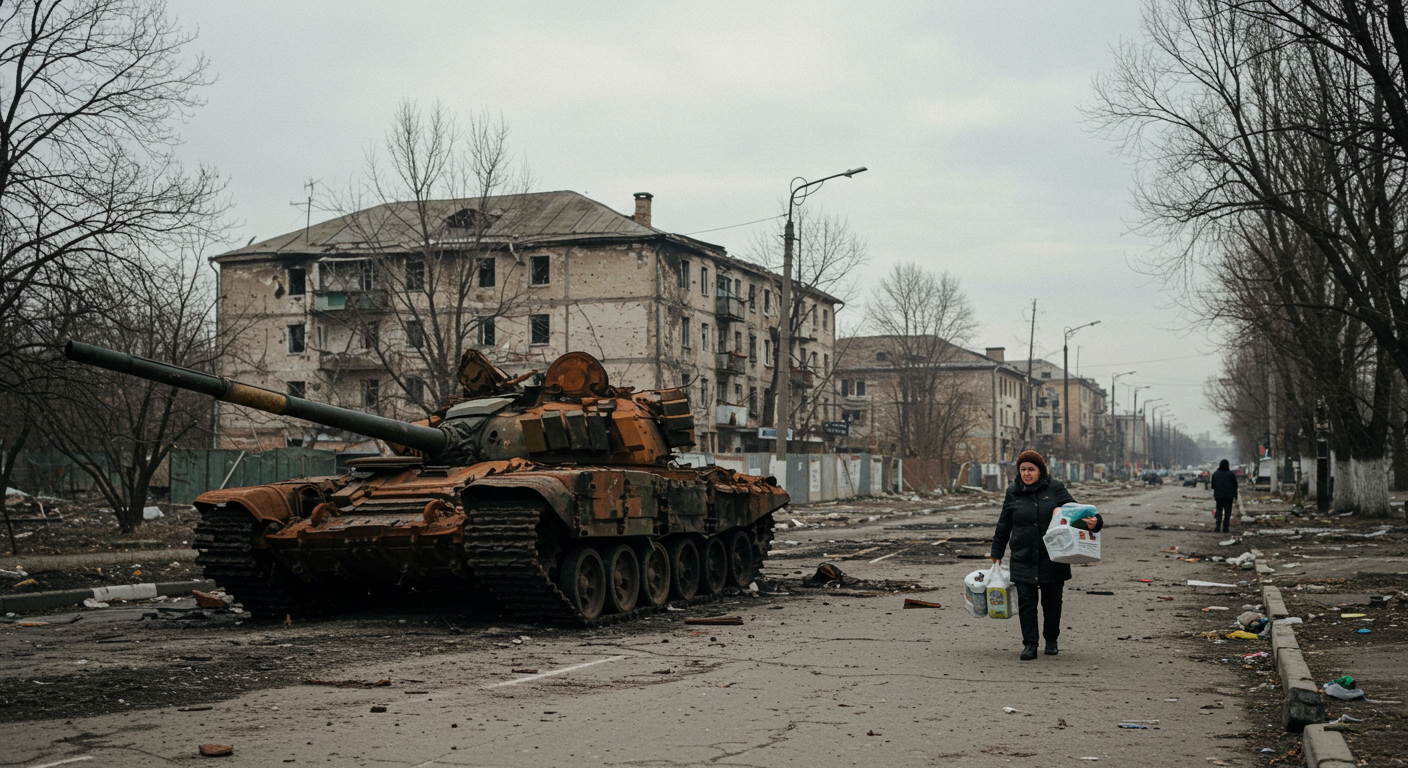
These developments point to a strategic broadening of the war’s spatial dimensions. With Ukraine increasingly targeting military-industrial infrastructure inside Russia, and Moscow accelerating its drone offensives, the battlefield is no longer confined to Donetsk, Kharkiv, or Zaporizhzhia. It now encompasses the economic, psychological, and territorial peripheries of both nations.
This is the geometry of modern conflict, an architecture of long-range engagements and symbolic exchanges. It is not merely a contest over square kilometers but over signals, symbols, and systemic endurance. The war has become recursive. Retaliation begets retaliation, escalation births expectation, and hope sustains those who must wait in silence.
📄 POLICY WIRE WHITEPAPER PUBLISHED: PAKISTAN'S NATIONAL SECURITY POLICY PRIORITIES
👉 READ BY CLICKING HEREHowever, this complexity should not obscure the war’s human core. The families at the border remind us that for every drone launched, every aircraft grounded, and every negotiation tabled, there are personal costs borne by people whose lives have been indefinitely suspended. They do not speak the language of military doctrine. They ask simpler questions: When will my brother return? Will I bury my father before another winter?
This emotional economy is not separate from the strategic one. It is deeply entangled. States operate with mandates, but legitimacy often rests in how they treat those rendered voiceless by war. For Ukraine, the ability to recover prisoners reaffirms its social contract with its soldiers and their families. For Russia, demonstrating care for returned troops sends a powerful message to its own population, particularly amid a conflict that has demanded prolonged mobilization and sacrifice.
In that regard, Monday’s exchange offered more than logistical success. It offered momentary certainty in a war defined by ambiguity. It restored some measure of dignity to the nameless and missing. It reminded all parties that, however entrenched the conflict, the horizon of humanitarian possibility still exists.
To be clear, prisoner exchanges will not end the war. Nor will they erase its devastation. But they serve as apertures, small openings through which the logic of violence can be temporarily suspended. They are acts of negotiated mercy, even in a theater of relentless confrontation.
As night fell over Chernihiv and families returned to their homes, some holding news and others still waiting, one could sense that these exchanges do not merely reunite captives with freedom. They reanimate the very idea that dialogue, however imperfect, is still possible in a fractured world.
And in that belief, bruised but not broken, lies the quiet endurance of humanity amidst history.
Author