

Los Angeles: Between Constitution and Conscience: Riots & National Guards
Los Angeles: Between Constitution and Conscience: Riots & National Guards: In the dense political and cultural fabric of Los Angeles, a city emblematic of American diversity and dynamism, the...

Los Angeles: Between Constitution and Conscience: Riots & National Guards: In the dense political and cultural fabric of Los Angeles, a city emblematic of American diversity and dynamism, the convergence of law enforcement, civic protest, and federal authority has created a defining moment for the republic. As images of self-driving vehicles ablaze and streets filled with chanting demonstrators flash across screens, the question is no longer whether Los Angeles is in turmoil. Rather, it is what this turmoil tells us about the structure and strength of American democracy.
The current protests were sparked by large-scale immigration enforcement operations conducted by Immigration and Customs Enforcement (ICE), which resulted in the arrest of over 120 undocumented individuals, many in areas with significant Latino populations such as Westlake and Paramount. While ICE’s actions fall within its federal mandate to uphold immigration law, the ripple effect has been immediate, widespread, and deeply symbolic. Demonstrations began peacefully but escalated over the weekend. Reports confirmed that five autonomous vehicles were set on fire, a major freeway was temporarily shut down, and police declared downtown Los Angeles an unlawful assembly zone.
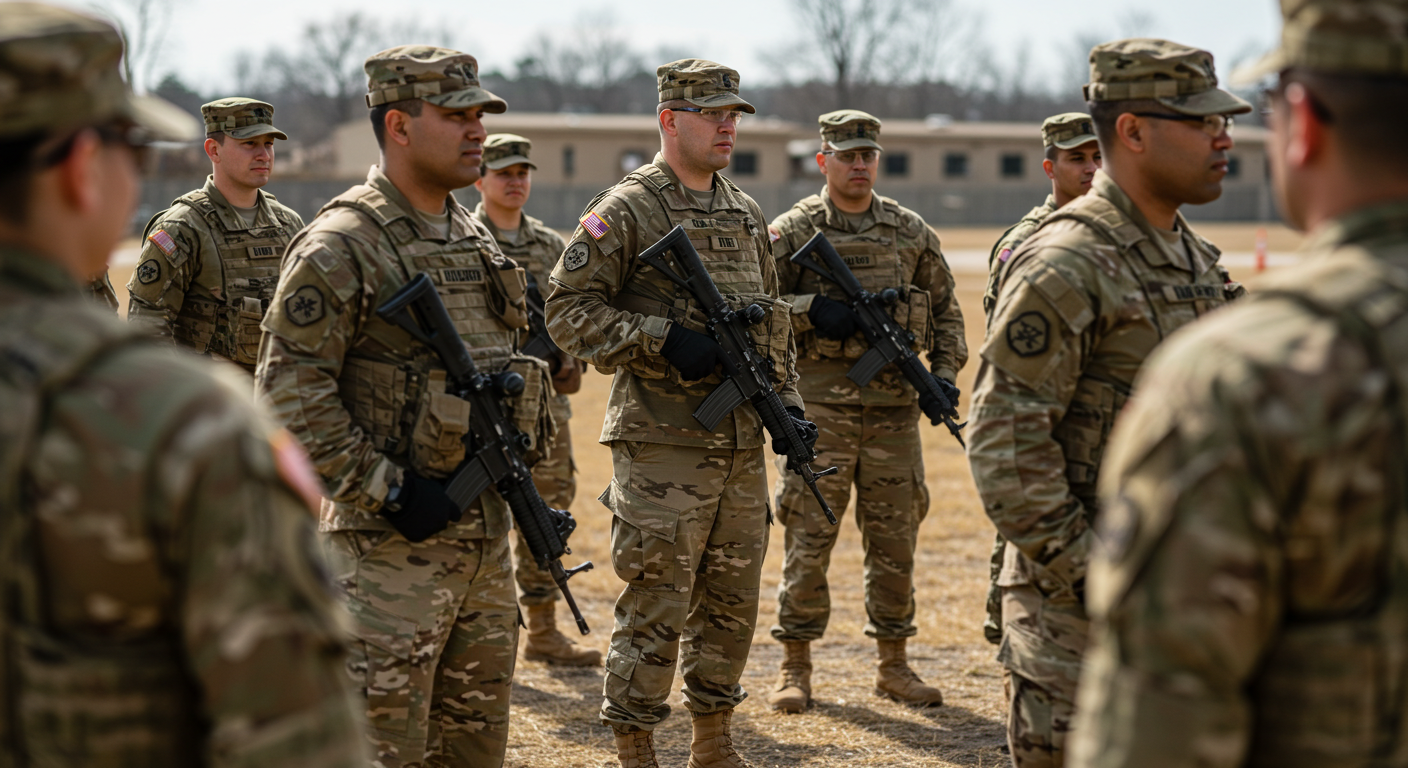
To ensure public safety and safeguard federal installations, President Donald Trump deployed 2,000 National Guard troops to Los Angeles. This was followed by an additional 2,000 troops and 700 Marines. These actions, aimed at supporting federal agencies such as ICE and the Department of Homeland Security, underscore the administration’s commitment to upholding rule of law during a time of public unrest. The deployments, authorized under rare emergency provisions, mark a significant moment in the exercise of federal authority, particularly given that this is reportedly the first such activation without a state governor’s request since 1965.
Legal debate has swiftly followed. The state of California, led by Governor Gavin Newsom and Attorney General Rob Bonta, filed a lawsuit challenging the deployment. They cited the Tenth Amendment’s protection of state autonomy. The state argues that the federal action, although lawfully rooted in emergency powers, bypasses state consent and sets a complex precedent. From a constitutional standpoint, the federal government does hold legal avenues to intervene when national interests are perceived to be at stake. President Trump has not invoked the Insurrection Act, one of the primary statutory frameworks for domestic military deployment. Instead, his administration has cited the need to restore order amid what they described as a form of rebellion.
This balancing act between federal prerogative and state sovereignty is not new in American history. Federal interventions during the civil rights era, natural disasters, and riots have all tested the bounds of cooperative federalism. What is unique in the Los Angeles case is the scale of the deployment, its timing during a period of socio-political transition, and the fusion of immigration enforcement with civil protest.
The civic reaction has been multifaceted. Protesters from a range of ethnic, labor, and faith-based groups have expressed concern over the scope and targeting of ICE operations. In response, law enforcement agencies have sought to maintain order with measured restraint. The Los Angeles Police Department made 29 arrests on Saturday and an additional 27 on Sunday, while simultaneously coordinating with federal agencies and military units deployed to protect federal infrastructure. Public demonstrations have concentrated in the downtown corridor, notably around the Federal Building and the Metropolitan Detention Center, with parallel gatherings in neighborhoods such as Paramount and Compton.
The symbolism of these sites matters. The Federal Building is now widely seen by demonstrators as a focal point for policy dissent. The protest at a Home Depot in Paramount, initially fueled by unconfirmed reports of a workplace raid, highlights the emotional tenor of the moment. In a city where over a third of the population is foreign-born, immigration policy is not an abstract federal concern. It is deeply local, personal, and, at times, generational.
Despite episodes of unrest, it is important to underscore that the vast majority of participants have demonstrated peacefully. Religious leaders, union organizers, students, and local residents have consistently emphasized nonviolence and solidarity. Civil society in Los Angeles, rich in its organizational capacity and moral energy, has mobilized not to challenge the state but to affirm its values: inclusion, accountability, and justice.
It is precisely in such moments that democratic societies reveal their character. The essence of democracy lies not in the absence of dissent but in the mechanisms through which dissent is expressed, managed, and reconciled. The constitutional architecture of the United States offers a framework where such tensions are not only permissible but necessary. Courts adjudicate legality. Legislatures define oversight. The public exercises the right to assembly, all within a shared commitment to institutional stability.
In this context, President Trump’s decision to deploy federal resources can be interpreted as a calculated and constitutionally grounded measure to reinforce security, prevent further escalation, and support law enforcement. At the same time, California’s legal response represents the vitality of American federalism, where institutional pushback does not imply rebellion but rather the exercise of procedural checks and balances.
This moment also invites a deeper examination of immigration policy as a structural rather than episodic issue. The administration has outlined its intention to carry out the largest deportation operation in American history. It has set ambitious daily targets for ICE and expanded operations to include workplaces, restaurants, and commercial establishments. While the legal framework for such enforcement is established, the human dimension; families disrupted, legal residents misidentified, communities destabilized, poses questions for policymakers on both sides of the aisle.
Moreover, the operational challenges of enforcing immigration law in sprawling, populous, and diverse urban centers like Los Angeles require coordination that is not only legalistic but also humane. The role of local law enforcement, community intermediaries, and public communication strategies becomes essential to prevent misinformation and ensure that public safety and civil liberties are not mutually exclusive.
What happens in Los Angeles in the coming days will shape not only state-federal relations but also the national conversation on democracy’s elasticity. Can a city exercise its conscience without forfeiting cohesion? Can a state defend its autonomy without rejecting national responsibility? Can the federal government assert control without undermining the consent of the governed?
These are not rhetorical questions. They are constitutional, operational, and moral. They do not indict any party but rather illuminate the dilemmas faced by all: policymakers, protestors, military personnel, and civilians alike.
In the end, the test of democracy is not whether it avoids tension but how it manages it. The streets of Los Angeles, lined with both prayer circles and patrols, are not signs of failure but of a system still in conversation with itself. And in that conversation, difficult as it may be, lies the continued promise of the American experiment.
Author