

Strategic Betrayal? India’s QUAD Role Casts Doubt on BRICS Unity
Countries often come together to pursue common goals and amplify their voices on the global stage. While governments typically use alliances to advocate for shared interests, they have also...

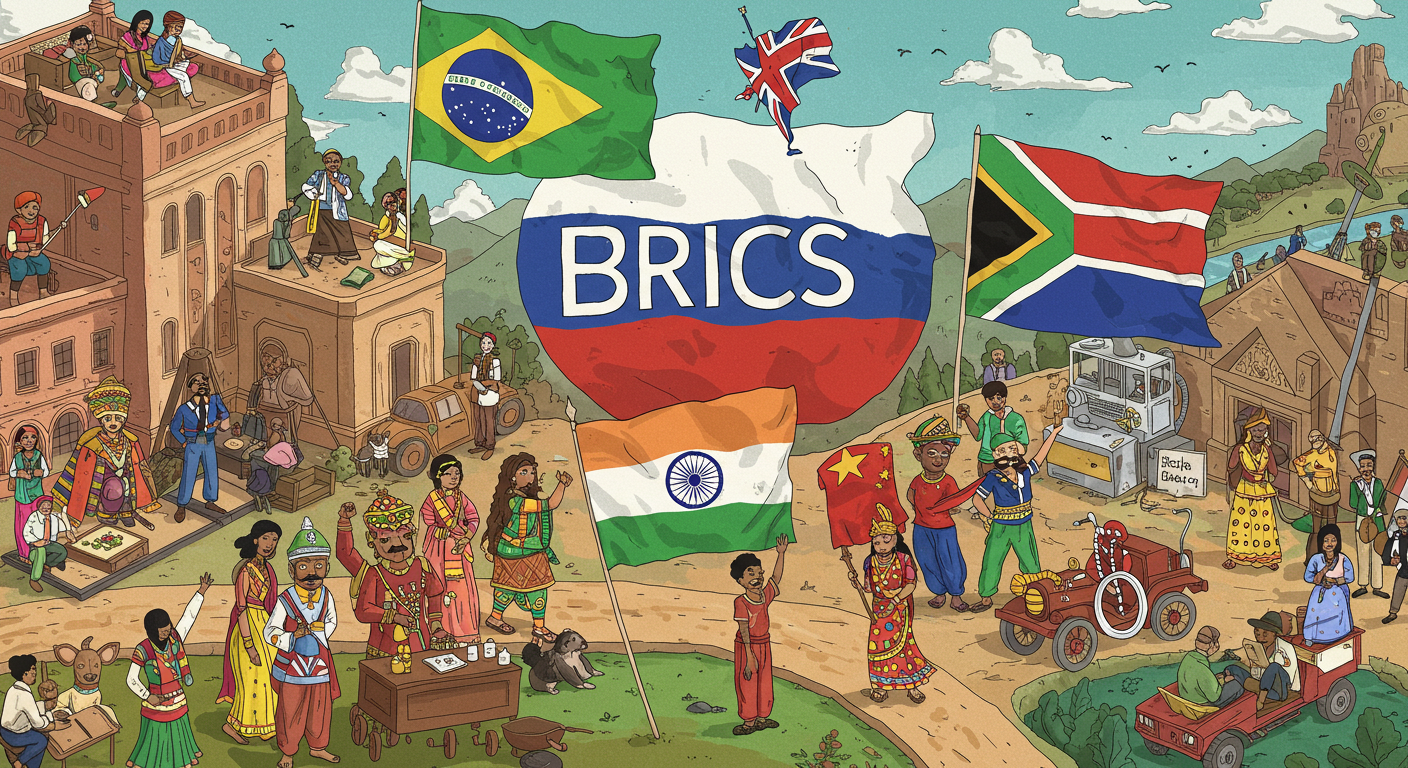
Countries often come together to pursue common goals and amplify their voices on the global stage. While governments typically use alliances to advocate for shared interests, they have also established coalitions for that purpose. One such association is BRICS, composed of Brazil, Russia, India, China, and South Africa. More than just an economic club, BRICS was built on the understanding of fairness. It is a multipolar world, where power does not remain confined to a few powers of the West but is shared more evenly across the Global South. In BRICS, developing countries made efforts to create new platforms and create alternative channels of development finance so as to challenge the Western dominance through the existing institutions such as the IMF and the World Bank.
One of these fractures, which is well-known for creating cracks from within, passes directly through New Delhi. India, a BRICS founding member, is also an active member of another grouping: QUAD, or Quadrilateral Security Dialogue. Its focus is strategic, such as military drills, defense cooperation, and above all, the countering of Chinese influence in the Indo-Pacific, and includes the United States, Japan, and Australia. The even greater presence of China and India on two different sides of this strategic chessboard has developed growing unease concerning the question: Can India genuinely support BRICS’ ideals while simultaneously aligning with a group widely seen as anti-China?
When India joined BRICS, it was seen as a natural fit. Its economy was booming, its foreign policy was traditionally non-aligned, and its development ambitions matched those of its BRICS partners, but today, things look different. India has pivoted toward Washington, joining military exercises like the Malabar drills, signing technology-sharing agreements with the U.S., and loudly supporting a “free and open Indo-Pacific,” often seen as code for containing China.
That’s where the problem lies. BRICS is built on cooperation, economic development, and dialogue, not on military confrontation or bloc politics. India’s deepening role in QUAD throws that balance off. It’s hard to claim solidarity with China in BRICS meetings while working against China’s regional influence through QUAD partnerships.
The Galwan Valley clash in 2020, where soldiers from both India and China lost their lives, only deepened this divide. Since then, India’s posture toward China has hardened. It’s become less enthusiastic in BRICS initiatives, quietly pushing back on Chinese leadership while avoiding open confrontation. This dual strategy may make sense for India’s short-term interests, but it’s taking a toll on BRICS’ internal cohesion.
Take, for instance, India’s lukewarm approach to key BRICS projects. It hesitated on expanding the group’s membership. It hasn’t fully embraced the New Development Bank, a major initiative to fund development in the Global South. And it often sits on the fence when proposals seem too China-led, without offering its bold alternatives. This passive resistance doesn’t just slow progress, it undermines the spirit of unity the bloc needs to thrive.
In contrast, voices are rising in favour of potential new members who may better align with BRICS’ foundational goals. Indonesia stands out. With a large population, strong economic potential, and a deeply rooted policy of non-alignment, Indonesia brings credibility and balance. It’s not part of any military bloc that targets fellow BRICS countries. Instead, it has consistently advocated for reform of global governance systems and speaks out against Western dominance, values that echo the original BRICS vision. Unlike India, Indonesia doesn’t send mixed signals. It isn’t trying to play both sides. It represents a voice of the Global South that stays focused on development, sovereignty, and peace, without being pulled into strategic rivalries.
Some argue that India is merely pursuing “strategic autonomy,” balancing relationships with different powers without tying itself to one side. But strategic autonomy, if it is to mean anything, must come with clarity. If India is seen as working against a fellow BRICS member in one room and trying to cooperate in another, trust erodes. Unity falters. BRICS becomes less about shared goals and more about navigating each other’s contradictions.
For BRICS to remain relevant and respected on the world stage, it needs members who are aligned in purpose, not just economically powerful or diplomatically agile. If unity and consistency are to matter, the bloc must be willing to ask hard questions, even about who sits at its table. That is not to argue that India does not have a role in world leadership. However, it is nearly impossible to balance QUAD and BRICS without throwing the balance off. The inconsistencies are becoming too obvious to overlook.
India’s growing alignment with the West, especially through QUAD, risks weakening BRICS from the inside. If the group truly wants to lead the Global South and reform the international order, it must be honest about its internal dynamics. Maybe the time has come to welcome new voices like Indonesia, voices that carry fewer contradictions and a clearer commitment to the collective mission. Only then can BRICS stay true to what it set out to be: a force for fairness, equality, and cooperation in a world long dominated by a few.
Author