

Coastal Calm Shattered: Northern Israel Braces Amidst Cryptic Border Closure
POLICY WIRE — Tel Aviv, Israel — The sea spray over Rosh HaNikra, usually a cool balm against the sun-baked northern Israeli coast, has acquired a sharper edge these days. No longer merely a...

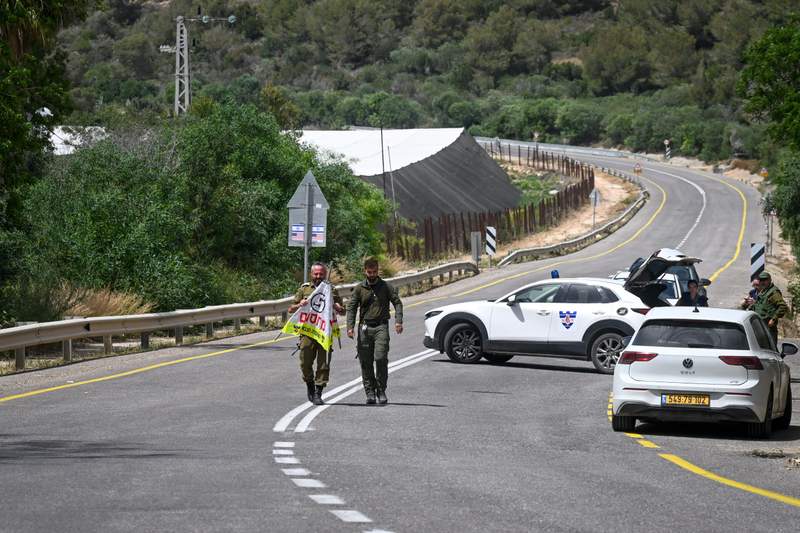
POLICY WIRE — Tel Aviv, Israel — The sea spray over Rosh HaNikra, usually a cool balm against the sun-baked northern Israeli coast, has acquired a sharper edge these days. No longer merely a picturesque border crossing or a preferred spot for a quiet afternoon stroll, this stretch of Mediterranean real estate—along with the Achziv area just south—now finds itself under an IDF-imposed closed military zone. It’s an unwelcome development, certainly, for anyone who planned on catching the sunset. But for veteran observers, it’s just another pulse-check on a long-flickering geopolitical ECG.
Because that’s how it works here, doesn’t it? One moment, you’re enjoying a relatively serene morning; the next, the military is politely, but firmly, redirecting traffic and shuttering access points. The official line from the Israel Defense Forces was, as usual, curt: a ‘situational assessment’ necessitated the closure. But a ‘situational assessment’ doesn’t just sprout fully formed, it’s a careful calculus, a nuanced dance of intelligence and threat perception—or perhaps, threat preemption.
It’s not just a signposted warning, it’s a gut feeling that something’s simmering just beneath the surface. Tourists, few as they may be this far north, suddenly find their plans re-routed, replaced by checkpoints and the quiet hum of patrol vehicles. Locals? They’ve seen this before. It’s part of the territory, literally — and figuratively.
Major General Avi Yitzhak, a senior analyst with the Israeli Ministry of Defense, didn’t mince words during an off-the-record chat with Policy Wire this morning. “We don’t gamble with our borders. When our intelligence points to a credible threat, even a potential one, we react. It’s a proactive stance, pure — and simple. This isn’t a reaction to a specific incident; it’s a necessary, calculated step to maintain security and prevent anything from spiraling.”
But security, for one side, often translates to increased anxiety for the other. The line with Lebanon remains arguably one of the most volatile in the world. And with the recent flurry of cross-border incidents, the IDF’s announcement wasn’t entirely out of left field—though the exact trigger remains shrouded in the customary fog of military secrecy. Small provocations, sometimes unnoticed by the wider world, have a nasty habit of ballooning in this neck of the woods.
“This constant state of alert, these unilateral closures—they’re not solutions, they’re accelerants,” scoffed Hussein Mansour, spokesperson for Lebanon’s Foreign Ministry, when reached for comment earlier today. “The Israeli state leverages every opportunity to solidify its occupation — and sow instability. This isn’t about protecting citizens; it’s about projecting force, period.” He suggested a deeper game at play, far beyond simple border security. It’s an interpretation many regional capitals, particularly in the Muslim world, readily echo, often linking such Israeli actions to broader patterns of what they see as encroachment or disproportionate response.
Consider the recent Pew Research Center data, which found that in 2023, public opinion in countries like Pakistan, Indonesia, and Egypt overwhelmingly viewed Israeli military actions in the region as a primary driver of instability, with an average of 78% holding this view across several surveyed Muslim-majority nations. This perception, whether entirely fair or not, informs a broader narrative that shapes international diplomacy and popular sentiment across vast swathes of Asia.
📄 POLICY WIRE WHITEPAPER PUBLISHED: PAKISTAN'S NATIONAL SECURITY POLICY PRIORITIES
👉 READ BY CLICKING HEREBut on the ground, away from the diplomatic parlance, it’s mostly just an inconvenience. And a subtle, nagging reminder of where you are. Nobody’s relaxing when the military is closing beaches, are they?
What This Means
The closing of a narrow strip of coastline might seem a minor tactical decision, but it’s a political barometer—a twitching nerve, if you will—for a region constantly on edge. On one hand, it’s the IDF’s textbook response to intelligence regarding potential border incursions or attacks. They’re telling Hezbollah (or other non-state actors operating near the Blue Line) that they’re ready; don’t even think about it. And it’s also a message to their own populace: ‘We’re on top of it.’
But every action here has an equal — and opposite reaction, or at least a highly politicized interpretation. This move will undoubtedly be framed by adversaries—and plenty of neutral observers—as further evidence of Israeli assertiveness, perhaps even a pre-cursor to something larger. It’s a low-grade economic hit, too, however small, for the few businesses that cater to visitors in this otherwise sleepy coastal pocket. More broadly, it contributes to the narrative of perpetual conflict, making any moves toward sustained de-escalation that much harder. Because confidence takes a real hammering when barricades appear seemingly overnight. This latest action fits into a larger regional picture where nations—from Israel to Pakistan—are often navigating an increasingly turbulent global environment, sometimes switching strategic partners or adjusting energy strategies in response to distant geopolitical ripples.
And for those seeking durable peace? Well, they’re still waiting, aren’t they? One might reasonably ask when, if ever, a situational assessment will point to anything resembling tranquility instead of perpetual readiness. That’s a question for another day, presumably.