


Wozniak’s ‘Actual Intelligence’ Barb Cuts Through AI Hype, Challenging Tech’s Siren Song
POLICY WIRE — Cupertino, USA — The Silicon Valley echo chamber, forever buzzing with the latest prophet of techno-utopia or apocalypse, got a sharp, almost quaint, dose of reality the other day. It...

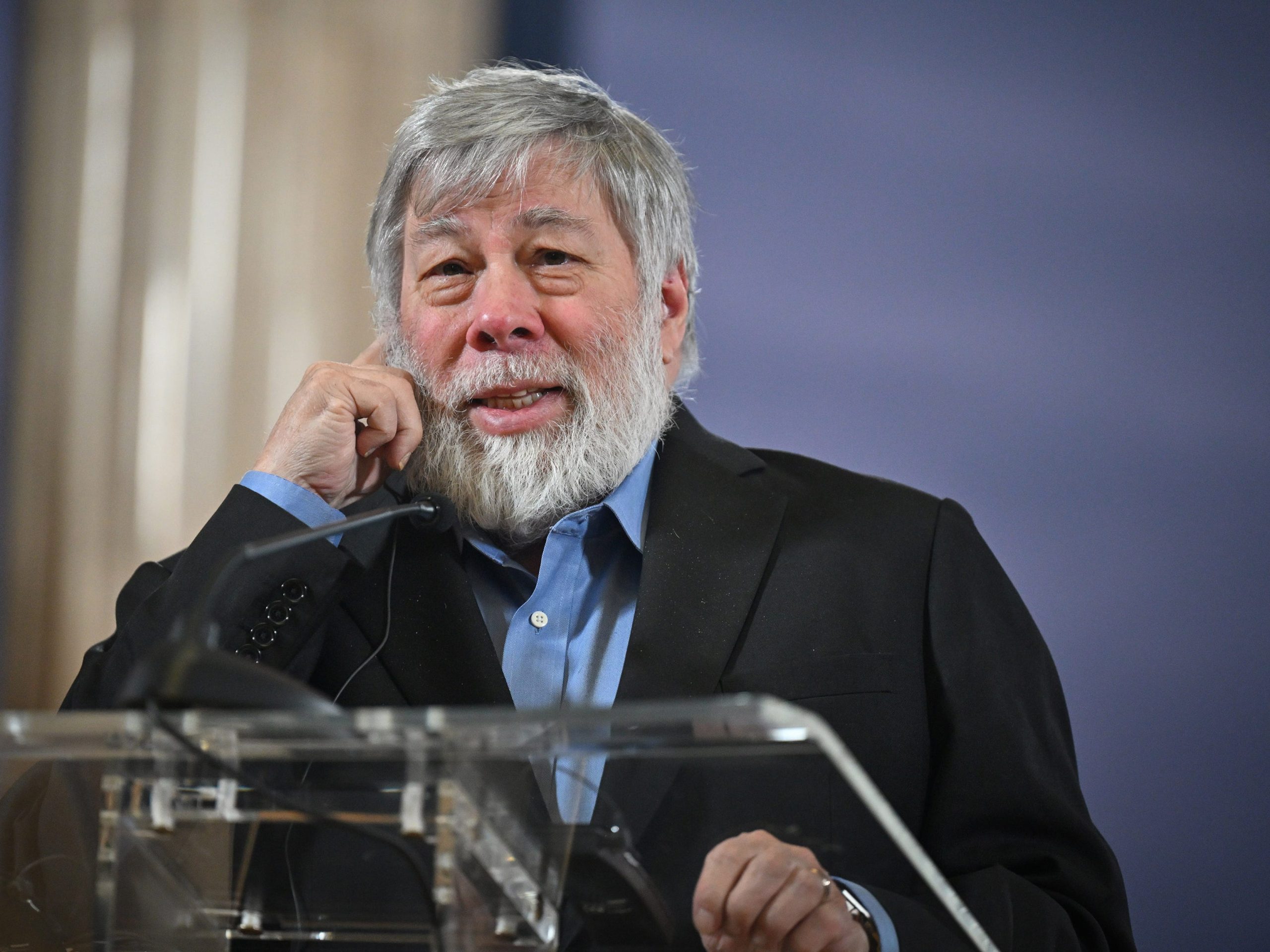
POLICY WIRE — Cupertino, USA — The Silicon Valley echo chamber, forever buzzing with the latest prophet of techno-utopia or apocalypse, got a sharp, almost quaint, dose of reality the other day. It wasn’t another breathless CEO announcing a disruptive paradigm shift. Nor was it some fearmongering futurist warning of the robot uprising. It was Steve Wozniak, the guy who, let’s be frank, built much of the future we’re busy predicting today, cutting through the noise with the kind of common-sense observation that often goes unsaid when billions are on the line. He got cheers, mind you. Actual applause.
It seems an audience of students, perhaps jaded by relentless talk of artificial intelligence that can write Shakespearean sonnets or perfectly mimic a human voice, actually enjoyed being told they already possess something far more remarkable: actual intelligence. Wozniak, Apple’s cofounder, America’s beloved tech uncle with a reputation for bluntness, threw that line out there. And it landed. You know, it’s refreshing, isn’t it? A founder of modern computing reminding us that the ‘human’ in ‘human-computer interaction’ still matters.
Because, honestly, the air’s thick with the scent of AI hype. Venture capitalists are throwing money around like confetti at a particularly lucrative wedding. And don’t even get me started on the think-tanks, all penning white papers warning of job-market disruption on a scale unseen since, well, probably never. But Wozniak? He’s always been more interested in the raw mechanics, the elegant simplicity that makes technology a tool, not a god. He’s a hardware man at heart, someone who knows that without solid, intelligent human input, all the algorithmic wizardry in the world is just, you know, glorified calculations.
It’s not just an old-timer waxing nostalgic, either. It’s a subtle yet pointed critique of an industry sometimes prone to confusing simulation with sentience. That’s the rub, isn’t it? We’ve built incredibly complex pattern-matching machines, brilliant at prediction and data crunching, but they don’t, for all their supposed smarts, experience a quiet awe at a sunset. They don’t write bad poetry from heartbreak. And they certainly don’t question their own existence — mostly because there’s nothing much there to question beyond the lines of code.
The numbers speak volumes about where investment is heading. Gartner, for example, projects worldwide AI software revenue to reach an eye-watering $297.8 billion in 2024. That’s a serious chunk of change. Yet, how much of that’s truly fostering innovation that enhances human faculties, rather than attempting to bypass them? Policy makers are watching this closely, they really are, trying to make sense of the noise.
“We can’t afford to be seduced by the idea that technology alone is a panacea,” stated Sarah Chen, U.S. Deputy Secretary for Digital Transformation, speaking from her D.C. office. “Yes, AI offers efficiencies, but without investing in our people – their critical thinking, their creativity, their ability to ask the right questions – we’re building a gleaming machine with no one truly intelligent at the controls. Wozniak’s message? It’s a good splash of cold water.”
The conversation around AI, particularly in parts of the world where foundational digital literacy is still a major hurdle, tends to be quite different. Think about Karachi, or Lahore, for instance, cities grappling with balancing economic growth with a burgeoning young population eager for skilled jobs. The narrative often shifts from existential dread to tangible opportunity – or threat – for a workforce that might not be prepared. It’s not just about job displacement there, it’s about access, infrastructure, and making sure their ‘actual intelligence’ is recognized and developed, not just competed against.
“In Pakistan, our focus isn’t just on adopting the latest AI tools; it’s on nurturing the human intellect that can build, adapt, and critically evaluate these systems for our specific needs,” remarked Dr. Omar Farooq, Rector of the National University of Computer and Emerging Sciences (NUCES), during a recent tech summit in Islamabad. “The global North’s debates often forget that human ingenuity, particularly in contexts with limited resources, is the most powerful AI there’s. We’re doubling down on STEM education, not just consumption.” It’s a sentiment many developing nations could echo.
Because what Wozniak reminded us is that innovation isn’t always about replacing human capability. It’s supposed to be about augmenting it. Making us better, smarter, more efficient. That means designing systems that genuinely collaborate with human insight, not merely perform tasks. We don’t just need sophisticated algorithms; we need actual human judgment—the kind that makes moral decisions, understands nuance, and laughs at bad puns (most of the time).
His seemingly simple quip, therefore, wasn’t just a feel-good moment. It was a potent challenge to an industry often lost in its own hubris. It forced a pause. It asked us to remember where true intelligence resides, — and that, well, it’s always been us. Maybe we ought to cultivate it, protect it, — and definitely, truly, value it.
What This Means
Wozniak’s unvarnished comments have significant, though often unacknowledged, implications for global policy and economic strategy. Politically, his push for valuing “actual intelligence” underscores the necessity for governments, particularly those in the developing world, to re-evaluate their investment in human capital rather than passively awaiting AI solutions. There’s a quiet consensus brewing that unchecked AI adoption, without parallel investments in education and reskilling, could exacerbate economic disparities, especially for nations like Pakistan wrestling with rapid technological shifts and significant youth unemployment rates. But because this narrative often gets drowned out by flashier tech headlines, its importance sometimes gets lost.
Economically, this perspective directly challenges the notion that automation is an end in itself. If policymakers start to genuinely believe that human critical thinking remains irreplaceable, then strategies shift dramatically. Instead of primarily funding AI research, governments might pivot to massive overhauls of education systems, fostering creativity and problem-solving skills that AI currently struggles to replicate. That’s a long game, of course. It might mean a push for more apprenticeship programs, greater focus on liberal arts alongside STEM, and a renewed emphasis on lifelong learning initiatives. But ultimately, an economy built on robust human intelligence might just prove more resilient and equitable in the long run. We’re watching to see if any real policy shifts emerge from this quiet pushback against the AI monolith.