


Desert Dreams or Fiscal Delusion? New Mexico’s Tax Cut Showdown
POLICY WIRE — Santa Fe, N.M. — It’s a familiar drama playing out on the dusty stages of state capitals across America: the eternal tug-of-war between tax cuts and public services. But here in New...

POLICY WIRE — Santa Fe, N.M. — It’s a familiar drama playing out on the dusty stages of state capitals across America: the eternal tug-of-war between tax cuts and public services. But here in New Mexico, Republicans are dialing it up, not just proposing an income tax repeal, but demanding a special legislative session to ram it through. It’s an aggressive move, an audacious power play — an old dance in a new desert, if you will. This isn’t just about tweaking tax brackets; it’s about yanking a fundamental pillar of state finance out from under its own foundation, all in the name of the working man, they say.
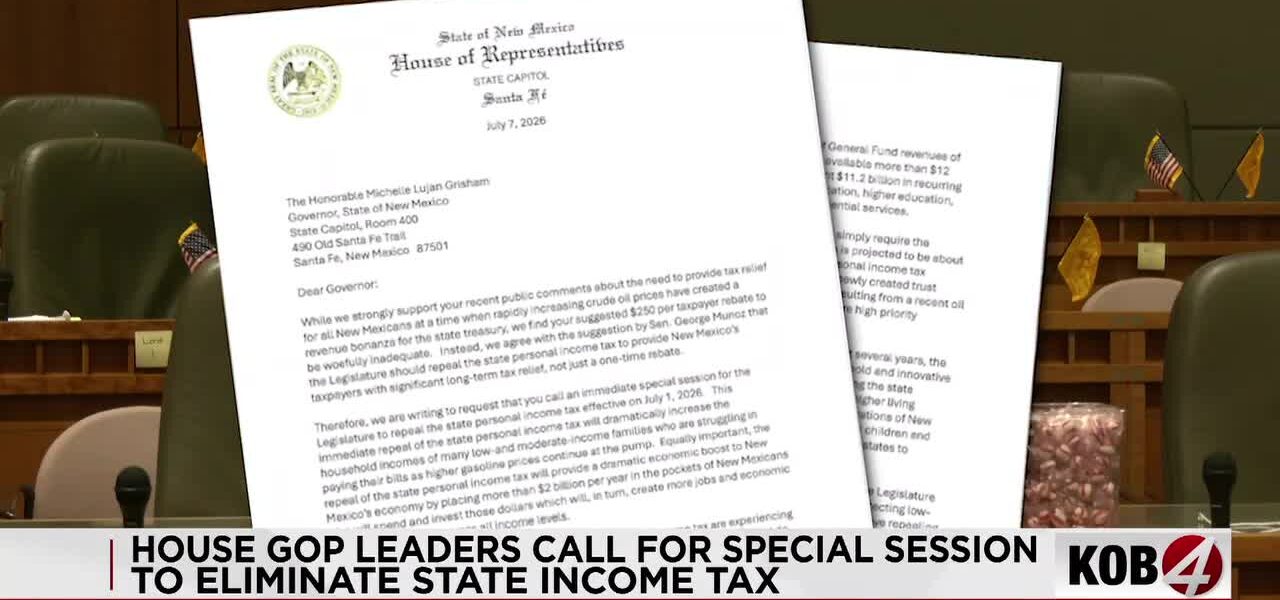
Picture this: New Mexico’s GOP leaders, pen in hand, send a letter to Governor Michelle Lujan Grisham. The message? Ditch the income tax. Now. They claim it would put more money in workers’ paychecks.
Which, fair enough, sounds swell on the surface. Who doesn’t want fatter paychecks? Their argument hangs on the state’s expected record levels of state revenue over the next several years put New Mexico in a unique moment to do something bold and innovative.
But boldness often flirts with recklessness, especially in matters of the public purse. [QUOTE_PLACEHOLDER]
If they got their way, New Mexico would become the 10th state without a state income tax. That’s a cold, hard fact: only nine others currently operate that way, relying on other revenue streams. The GOP leadership is pretty confident it won’t gut the public sphere either, asserting the state can end the income tax without cutting education, health care, public safety and other essential services.
Optimistic? Perhaps. Historically challenging? Absolutely.
But the Governor’s office wasn’t exactly showering them with roses. A spokesperson didn’t miss a beat, swiping at the GOP’s timing — and motives. Gov. Lujan Grisham appreciates that Republican leaders support her proposal to give New Mexicans a $250 rebate to help offset the cost of soaring gas prices that resulted from President Trump’s war in Iran.
Ouch. A not-so-subtle jab connecting inflation to past federal policy, simultaneously acknowledging the problem and dismissing the GOP’s radical solution as overkill. But the spokesperson wasn’t done, noting that the governor’s proposed rebate would require a one-time expenditure.
Then the policy-heavy kicker: Eliminating New Mexico’s personal income tax would have recurring and significant budget implications that demand comprehensive analysis and rigorous debate better suited to a regular legislative session than a special session. If Republican leaders want to pursue this proposal, Gov. Lujan Grisham suggests they introduce legislation at the outset of the next 60-day session that begins in January.
Basically, go sit down, come back in January, and play by the rules.
And boy, did the state Democrats lay into them. Daniel Garcia, speaking for New Mexico’s Democratic party, pulled no punches, delivering a frankly blistering take. He said DPNM calls on the NM House GOP, the most unserious and ineffective legislative caucus in the country, to do something other than publicity stunts for once, and actually work alongside Democrats to help New Mexicans who have to work for a living.
Strong words, there. He didn’t let up, adding that At a time when Trump Republicans are driving up costs on virtually everything, the NM House Republicans should be ashamed of themselves for even suggesting their latest idea for a handout for the wealthy that would be a massive shift of the tax burden onto New Mexico’s working lower and middle class.
No nuance. They see this as a tax cut for the rich, disguised as relief for the everyman, an attempt to pass costs onto the working class. It’s class warfare, pure — and simple, right there in the Land of Enchantment.
It’s hard not to notice how quickly these fiscal arguments devolve into highly charged rhetoric. This isn’t just a New Mexico thing, by the way. Look at Pakistan, for example. We’ve watched successive governments there grapple with narrow tax bases, persistent deficits, and the constant pressure of popular demands for relief, often fueled by rising inflation or the simple, understandable desire for more cash in hand. Policymakers in Islamabad routinely face the same hard choices: broaden the tax net, cut spending, or print money. Populist pushes for broad-stroke tax cuts in such environments can, and often do, lead to fiscal instability that reverberates throughout the economy, hitting the poorest hardest through inflation or reduced services. What looks like quick relief can become a structural problem, threatening long-term investment and the social safety net.
What This Means
The Republican gambit here isn’t just about lowering taxes; it’s a political tactic designed to frame the Democrats as the party of high taxes and big government, regardless of the fiscal reality. But this kind of immediate, high-pressure legislative demand, especially for something as fundamental as ending the income tax, screams of an attempt to bypass thorough public scrutiny and expert economic analysis. And honestly, it almost never ends well. Significant budget implications — that’s code for losing billions in revenue that fund everything from schoolteachers’ salaries to pothole repairs.
Removing the state income tax would likely necessitate a dramatic increase in other taxes—sales tax, property tax—which frequently hit lower and middle-income families disproportionately. The notion that a state can just eliminate a massive revenue stream without impacts to services that benefit all citizens, even those they claim to help, it’s—well, it’s hopeful, if not entirely disconnected from budgetary mathematics. Such moves have a long, somewhat spotty history in other states. Texas and Florida, famously without state income taxes, rely heavily on sales and property taxes, which create different kinds of burdens, often regressive ones. The governor’s camp, then, is playing the long game, demanding comprehensive analysis, knowing a special session provides no room for that kind of considered, complex policy work. Republicans want a quick win; Democrats want a protracted debate. The political fault lines are clear, and this latest skirmish over income tax is another chapter in the endless saga of state fiscal policy, mirroring economic debates in democracies everywhere. It’s messy, it’s contentious, — and it’s far from over.