

Why Israel Attacked Iran, and What Happens Next
In the dark, early hours of June 13, 2025, the Middle East woke up to the unthinkable. Sirens screamed over Tehran. Explosions lit up the night sky in Isfahan, Khondab, and Natanz and across...

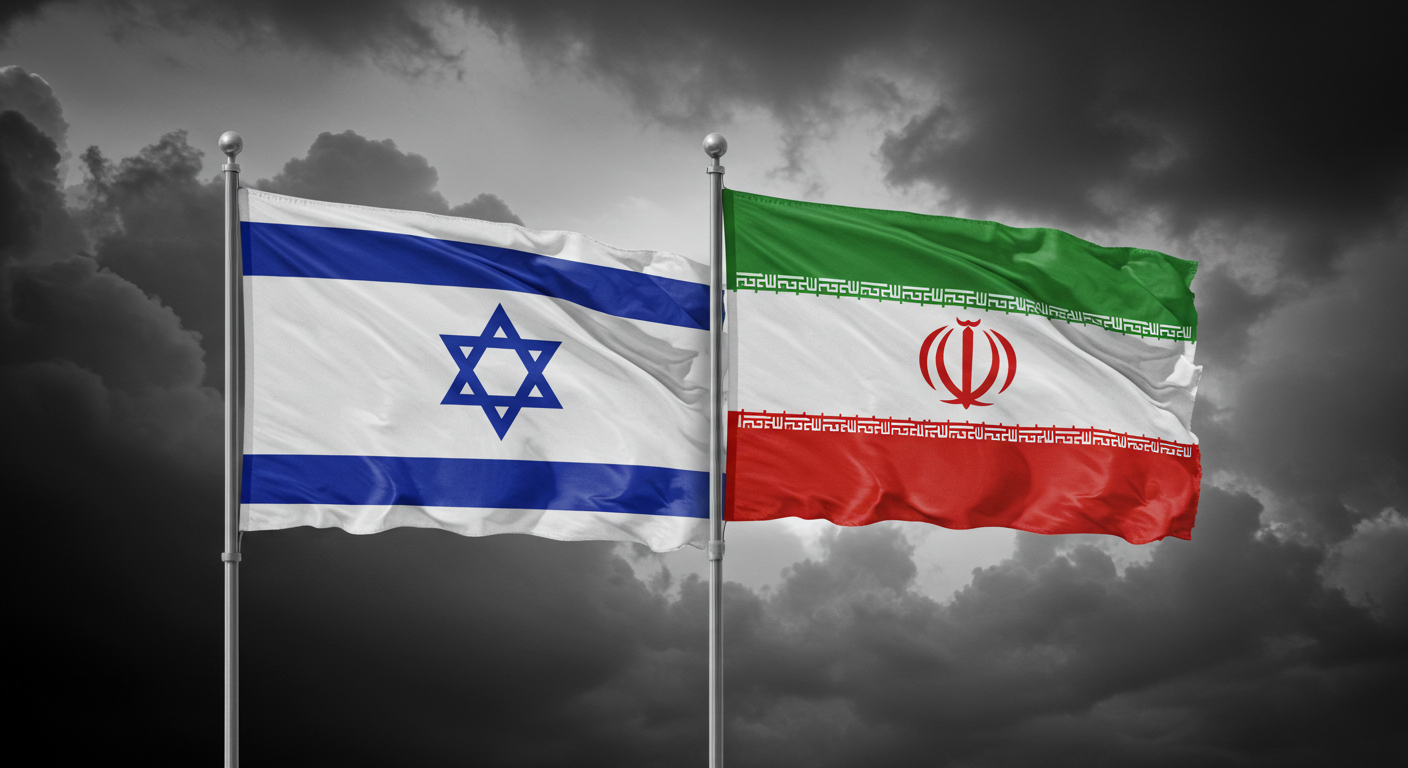
In the dark, early hours of June 13, 2025, the Middle East woke up to the unthinkable. Sirens screamed over Tehran. Explosions lit up the night sky in Isfahan, Khondab, and Natanz and across newsrooms and war rooms from Washington to Riyadh, a single question echoed: Has the war really begun? Israel had launched Operation Rising Lion, a sweeping air assault on Iranian territory. It wasn’t just a warning shot. It was a full-scale, multi-wave strike, precision bombs, drones, and missiles raining down on military targets and nuclear sites. For years, tensions between Israel and Iran had simmered. On this night, they boiled over.
A Strike That Shook the Region
According to initial reports from outlets like Reuters and AP News, Israeli jets targeted sites deeply embedded in Iran’s security architecture. Among the hardest hit were facilities involved in Iran’s nuclear and missile programs, many of them in Natanz and Khorramabad. Some strikes even came from directions suggesting use of Iraqi and Syrian airspace, likely a tactic to confuse or bypass Iran’s air defenses but the headlines weren’t just about infrastructure. Reports, still being verified, say Major General Hossein Salami, the longtime face of Iran’s powerful Revolutionary Guard, and Chief of Staff Mohammad Bagheri, were killed. Iranian state TV confirmed the death of several senior IRGC commanders, as well as two nuclear scientists. In the chaos, civilians weren’t spared. Homes were damaged, children injured. Images of bloodied schoolbooks and shattered windows quickly made their way online, fuelling public grief and outrage.
Why Now?
For Israel, this attack wasn’t spontaneous. It was strategic, perhaps even desperate. Prime Minister Benjamin Netanyahu stood before the cameras later that day and said the words he’s repeated for years: Iran is close, too close, to building a nuclear bomb. And this time, he claimed, the world was too slow to act.
“We acted in defense of our future,” Netanyahu declared, insisting the operation was not a war of choice, but a war of necessity. Israel’s defense minister echoed the message: waiting longer, he warned, would have meant waiting for a mushroom cloud. Iran has been enriching uranium to levels just below weapons-grade purity. Talks to revive the 2015 nuclear deal had stalled, and Netanyahu argued that diplomacy had failed. In Tel Aviv’s view, the threat was no longer theoretical. It was urgent.
Iran’s Fury, and Its Next Move
Iran didn’t waste time responding. Within hours, military forces were mobilized. Supreme Leader Ayatollah Ali Khamenei promised revenge and blamed not only Israel but also the United States, accusing Washington of complicity. Though the U.S. denied any role, its regional forces were placed on high alert. Iran has options. It could strike directly, or unleash its network of armed allies: Hezbollah in Lebanon, militias in Iraq and Syria, and the Houthis in Yemen. Each of them has missiles, fighters, and a long-standing motive, but a full-scale war? That’s a terrifying gamble, for both sides. Some in Tehran might prefer a shadow war instead: cyberattacks, drone strikes, covert assassinations. Iran has played this game before. And now, its playbook just got a lot thicker.
The American Dilemma
For the United States, the timing couldn’t be worse. Just days before, U.S. and Iranian officials were scheduled to meet in Oman to revive nuclear negotiations. Those talks are now frozen. Permanently, perhaps. Washington admitted it had been briefed by Israel beforehand but reiterated it did not take part in the operation. “Israel has a right to self-defense,” a State Department spokesperson said, while urging both sides to avoid escalation. Yet for many Iranians, U.S. statements ring hollow. The diplomatic space between Tehran and Washington, a narrow hallway to begin with, has now all but collapsed.
A World Holding Its Breath
📄 POLICY WIRE WHITEPAPER PUBLISHED: PAKISTAN'S NATIONAL SECURITY POLICY PRIORITIES
👉 READ BY CLICKING HEREAround the globe, reactions have ranged from measured concern to outright condemnation. Russia and China accused Israel of violating international law. France and Germany warned of a regional “nightmare scenario.” Oil markets spiked; Brent crude jumped more than 6%. The Strait of Hormuz, through which a third of the world’s seaborne oil passes, has become a potential flashpoint. At the United Nations, the Security Council scrambled into an emergency session but as usual, it ended in deadlock. Words flowed. Agreement did not.
Where This Could Go
No one can say for sure what comes next. If Iran hits back hard, Israel will almost certainly respond. That kind of tit-for-tat could spiral into a regional war, pulling in Lebanon, Iraq, Syria, Yemen, and possibly even Gulf Arab states but some analysts suggest Iran may bide its time. It has a long memory and a patient strategy. Revenge doesn’t have to come tomorrow. It can come next week, or next year. At the same time, there’s a faint hope, however slim, that diplomacy might not be dead. Countries like Oman, Qatar, or even China could step in as mediators. But make no mistake: trust is broken. And rebuilding it will take more than words.
A Dangerous New Chapter
What’s certain is this: The Israeli strike has changed everything. The old rules no longer apply. Iran will almost certainly rethink its nuclear strategy, not necessarily by abandoning it, but by hardening and hiding it further. Israel, in turn, may believe it bought time, but at a cost. For ordinary people, from Tel Aviv to Tehran to Baghdad, the fear is real. War no longer feels like a distant possibility. It feels close. Tangible. Personal. What began as an air raid may now ignite fires no one can control? The world watches. The region waits and the question remains:
Was this the beginning of a new war, or just the end of any chance for peace?
Author