

Tragedy in the Skies: The Ahmedabad Air Crash and the Gaps in India’s Aviation Oversight
A somber cloud has descended over the international aviation community following the catastrophic crash of Air India Flight 171 in Ahmedabad, marking the deadliest aviation disaster in over a decade....

A somber cloud has descended over the international aviation community following the catastrophic crash of Air India Flight 171 in Ahmedabad, marking the deadliest aviation disaster in over a decade. The aircraft, a Boeing 787-8 Dreamliner carrying 242 people bound for London’s Gatwick Airport, crashed shortly after takeoff, claiming over 200 lives in an instant. The disaster not only shocked India but also raised serious concerns about aviation safety standards, crisis preparedness, and repeated systemic shortcomings that have plagued Indian civil aviation in the past. This crash, in fact, marks the first-ever recorded incident of a Boeing 787 Dreamliner crashing – a grim milestone in the history of one of the world’s most widely used aircraft.
The plane departed from Sardar Vallabhbhai Patel International Airport at 1:38pm local time and issued a “Mayday” signal within a minute of takeoff. Tragically, no further communication was established with air traffic control after that distress call. The aircraft then crashed into a doctors’ hostel near the airport during the busy lunch hour, erupting into flames and scattering debris over a wide radius. Only one person is reported to have survived the crash, currently undergoing treatment. Most of the victims were Indian nationals, with others including British, Portuguese, and Canadian citizens. The loss resonates across multiple continents, leaving families shattered and global aviation authorities deeply troubled.
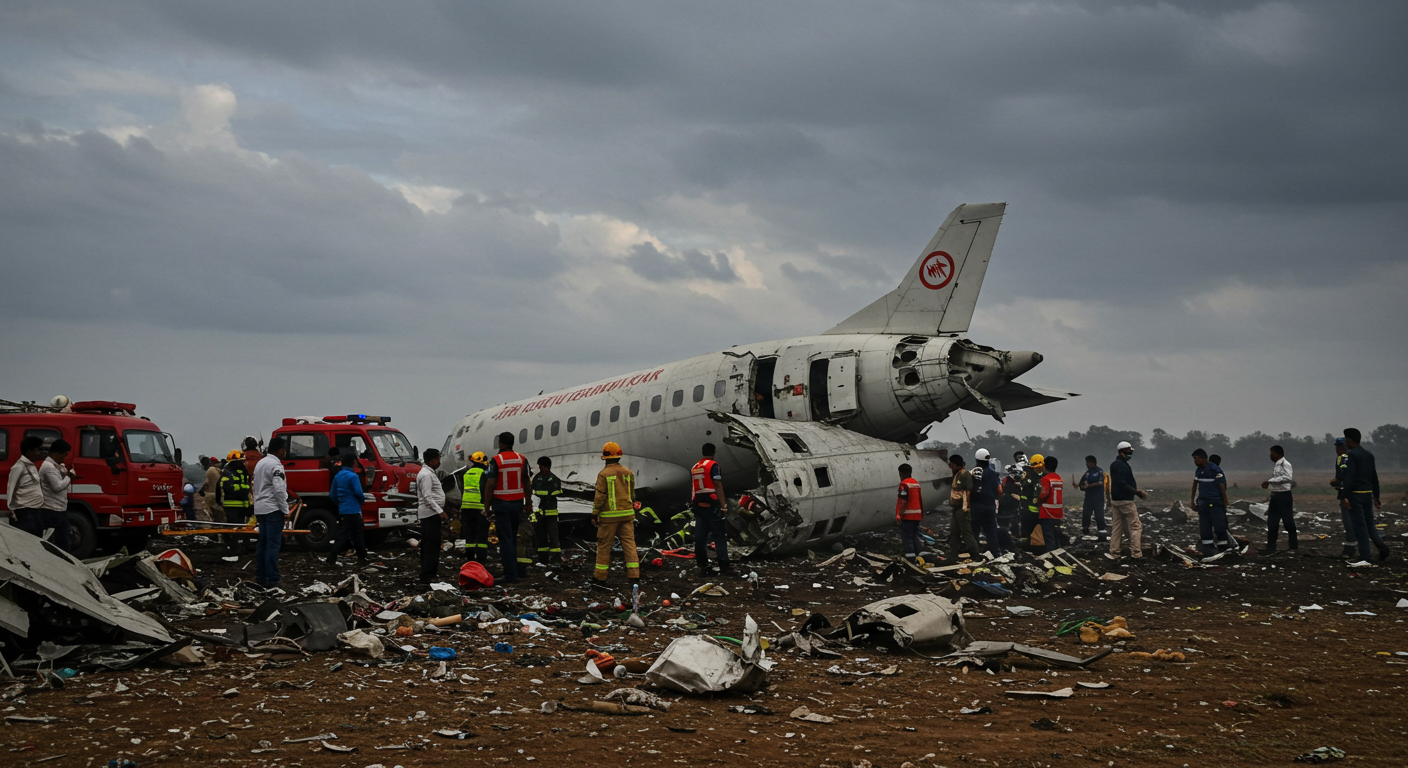
In the immediate aftermath, visuals of the flaming wreckage and thick plumes of smoke painted a picture of horror. Rescue workers raced against time, working overnight to recover bodies and search for the flight data and voice recorders. So far, over 204 bodies have been recovered, and authorities believe some victims were people on the ground when the plane struck the building. The sheer scale of destruction overwhelmed local hospitals and prompted urgent appeals for DNA samples from the victims’ families to identify the dead. As per Air India’s statement, the tragedy has sent shockwaves throughout the organization. CEO Campbell Wilson expressed heartfelt sorrow while affirming the airline’s full cooperation with investigators.
What makes this tragedy particularly significant is the aircraft model involved. The Boeing 787 Dreamliner had, until now, maintained a clean safety record in service. Although some airlines had previously reported technical issues, particularly with engine performance, these problems had never culminated in a crash. Aviation Safety Network and other global databases confirm this to be the first fatal incident involving this model. This unprecedented event has therefore not only shaken passenger confidence but also dealt a heavy blow to Boeing’s efforts to regain its reputation following past issues with other models like the 737 Max. Boeing’s shares dropped nearly 8% in the aftermath, while GE Aerospace – the engine supplier – also saw its stock value decline by 4%.
This crash exposes glaring weaknesses in India’s aviation safety framework. Despite being one of the fastest-growing air travel markets, India has suffered multiple fatal air incidents in recent decades. For instance, in 2020, an Air India Express plane crash-landed in Kerala, killing 21. A decade earlier, in 2010, another Air India Express jet crashed in Mangalore, taking 158 lives. The most tragic of all remains the 1996 mid-air collision near New Delhi that claimed 349 lives. Such a history reveals a disturbing pattern of human error, technical malfunction, and procedural lapses, suggesting that while fleet sizes and passenger numbers have increased, safety oversight has not always kept pace.
Experts are now questioning the effectiveness of India’s Directorate General of Civil Aviation (DGCA) in preventing such disasters. Although a formal investigation has been initiated by the Aircraft Accident Investigation Bureau (AAIB), and international safety protocols are being followed, previous inquiries in India have often been criticized for delays and lack of transparency. Rescue efforts in this case were prompt, but as many analysts observe, proactive preventive mechanisms are more effective than reactive crisis management. Aviation Minister Ram Mohan Naidu Kinjarapu has announced a high-level committee to assess and improve safety standards, but such efforts must translate into long-term reforms, not short-lived assurances.
Another significant concern is the potential lapse in pre-flight inspections and real-time aircraft monitoring. Flight-tracking site Flightradar24 noted that the signal from the plane was lost within a minute, highlighting how suddenly the emergency unfolded. However, with the aircraft giving a Mayday call, there’s growing scrutiny over whether the response mechanism in the control tower was swift and effective enough. More worrying is the possibility of a technical failure that was not identified or addressed before takeoff – something that regulatory audits must now explore in depth.
Moreover, India’s ambition to position itself as a global aviation leader makes these failures even more consequential. With a booming domestic travel market and projections to become the third-largest aviation market globally within the next decade, India’s aviation infrastructure must match global safety benchmarks. In 2023, Air India made headlines by placing a massive order for 470 new aircraft, including Boeing and Airbus models, signaling its intent to dominate global skies. However, expanding fleet size without parallel investments in safety training, maintenance, and regulatory enforcement can yield tragic results, as this crash has sadly demonstrated.
While India grieves, international leaders, including those from Pakistan, expressed deep sorrow and solidarity. Pakistan’s Prime Minister Shehbaz Sharif, former PM Nawaz Sharif, President Asif Ali Zardari, and other high-ranking officials offered heartfelt condolences. These messages reflect how air tragedies transcend political boundaries, uniting nations in collective mourning. Even Pakistan International Airlines (PIA) extended their support to the victims and aviation community.
On the other hand, global attention is also turning towards the Indian government’s failure to ensure consistent upgrades in air safety systems. There are serious questions about whether the airport’s proximity to residential areas and medical institutions contributed to the extent of this disaster. Urban planning around airports, aircraft maintenance protocols, and crew training all demand renewed scrutiny. It would be premature to assign blame without the full results of the investigation, but one cannot overlook the fact that India’s civil aviation sector has repeatedly suffered major setbacks due to avoidable lapses.
Ultimately, while condolences and solidarity pour in, they must be matched with accountability and reform. The Ahmedabad crash is not just a national tragedy — it is a warning. India must now focus not only on expanding its aviation footprint but also on strengthening its safety mechanisms to prevent such heartrending incidents in the future. International aviation thrives on mutual trust and shared safety commitments. With over 1.4 billion citizens and rising air traffic, India owes it to its people – and the world – to ensure that its skies remain safe.
Author