


Why Gwadar Is the Best Strategic Alternative Amid the Hormuz Crisis
By the beginning of March 2026, the Persian Gulf experienced a significant slowdown in maritime activity. U.S.-Israeli attacks at the end of February had forced Iranian forces to announce the Strait...

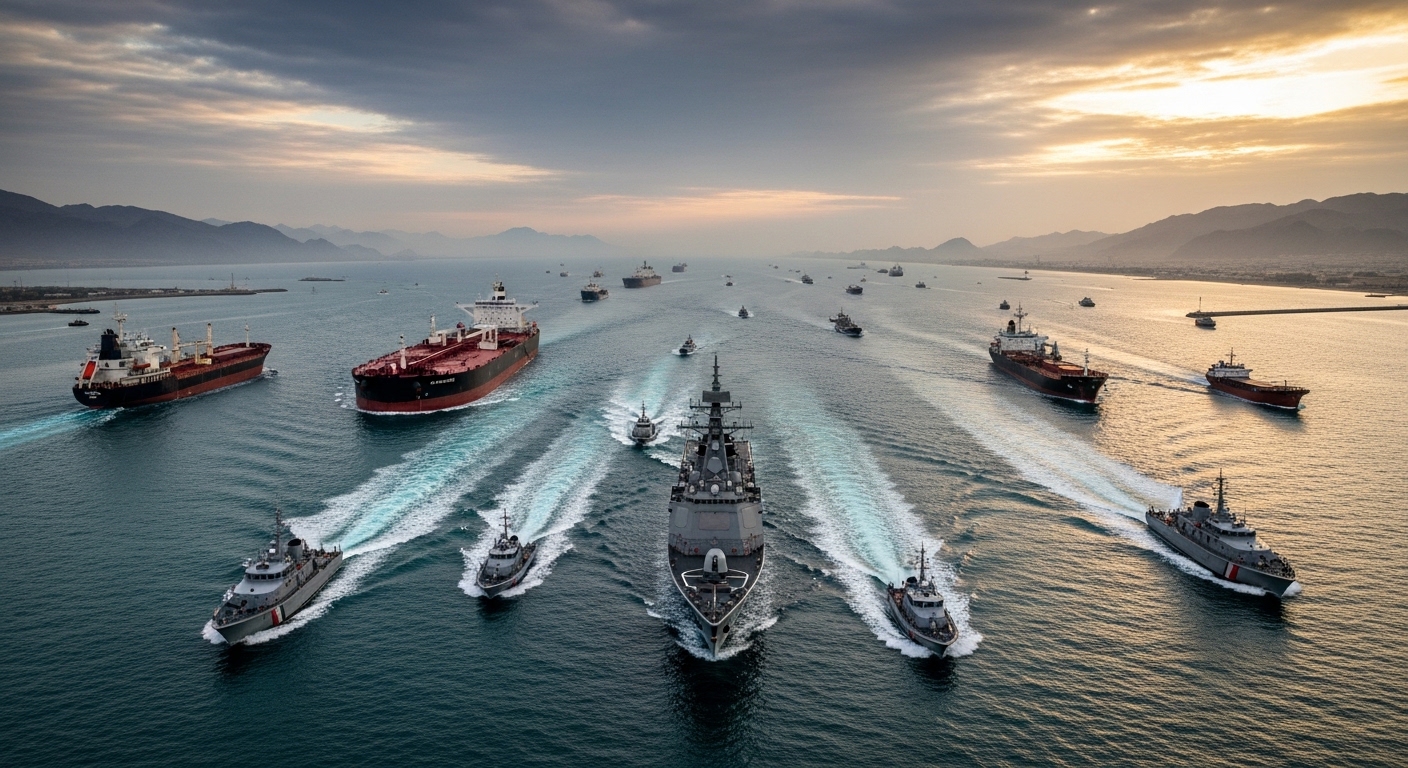
By the beginning of March 2026, the Persian Gulf experienced a significant slowdown in maritime activity. U.S.-Israeli attacks at the end of February had forced Iranian forces to announce the Strait of Hormuz closed. Tanker traffic that used to be a steady 20 million barrels of oil and products a day came to a near standstill. Shipping giants such as Maersk, MSC and CMA CGM halted ships. Insurance rates soared 300 percent and oil prices went above the world record of over 89 a barrel with worst-case scenario of close to 120 a barrel. More than 20,000 seafarers were stranded when rerouting around Africa took weeks off the trip and billions of dollars off the expenses. The most crucial energy conduit in the world, which transits about 25 percent of all seaborne oil trade and 20 percent of the world oil consumption was no longer merely vulnerable, it experienced major interruptions in trade flow.
The quiet revolution is being played out 400 kilometers away in the southwestern coast of Pakistan in the shadow of this chaos. Gwadar Port, which is at the mouth of the Arabian sea, and far beyond the Strait of Hormuz, is not coming out as an alternative, but rather as a real strategic lifeline. What was once an underutilized deep-sea opportunity is now emerging as a strategically vital maritime hub: an independent, strong entry point that can sustain the flow of trade and energy when the conventional pathways fail.
Picture the map. The Strait of Hormuz is a narrow passageway between Iran and Oman that is 21 miles wide. In 2025, almost 15 million barrels of crude alone, 34 percent of world crude traffic, will squeeze through it, largely to Asia. One shock here does not only cause an explosion in fuel prices; it spreads to inflation, supply-chain delays, and stuttered global growth. In Saudi Arabia and the UAE, bypass pipelines can only reroute 3.5 to 5.5 million barrels per day at most, and the huge bulk of Gulf exports are stuck.
Gwadar changes that equation entirely. Located beyond the chokepoint, it offers uninterrupted access to the open Indian Ocean. Ships arriving here don’t need to thread the needle of Hormuz. They dock directly in Pakistani waters, safe from the conflict zone. Pakistan’s Maritime Affairs Minister Junaid Anwar Chaudhry made this point crystal clear on March 5, 2026, urging the world to treat Gwadar as a regional transshipment hub precisely because of the Hormuz instability.
But Gwadar’s strength goes far deeper than geography. It is the southern anchor of the China-Pakistan Economic Corridor (CPEC), Beijing’s flagship Belt and Road project now valued at over $60 billion. From Gwadar, new highways and rail lines climb northward through the Karakoram mountains to China’s western Xinjiang region, slashing the traditional 12,000-kilometer sea route around the Malacca Strait to just 2,395 kilometers. For China, this cuts energy-import costs by an estimated $2 billion annually while providing a secure overland alternative. For Pakistan, it transforms a remote fishing village into a modern deep-sea port capable of handling vessels up to 50,000 deadweight tons today, and far larger ones as expansions continue.
What truly sets Gwadar apart, though, is sovereignty. With robust indigenous security capabilities, Pakistan ensures the protection of Gwadar and its surrounding maritime routes. The Pakistan Navy and Coast Guard secure the port and its approaches without needing external security guarantees. This independence matters enormously in a crisis. While the region remains influenced by complex geopolitical dynamics, Gwadar operates as a neutral, stable hub under Pakistani sovereignty.
The port’s physical advantages amplify its role. Gwadar has a draft of 14.5 meters and will eventually have a cargo capacity of 400 million tons per year, which means that it can already handle larger vessels than Karachi or Port Qasim. Its free zone and industrial parks are made to be used in transshipment, storage and value-added processing, ideal in diverting energy flows and container traffic out of the Gulf. Cargo volumes are steadily increasing, reflecting growing confidence in Gwadar’s expanding capabilities. The 2025-2029 Maritime Action Plan is being pushed at a fast rate by the government with rail connections, micro-solar power and new berths to unlock its full potential.
Economically, the timing could not be better. Global traders and energy buyers are desperate for risk diversification. Gwadar offers exactly that: a shorter, safer route for Middle Eastern oil and goods heading to China, Central Asia, and beyond. It turns Pakistan’s geographic position, sandwiched between three dynamic regions, into a strategic asset. As Gulf vulnerabilities mount, Gwadar evolves from “potential” to “essential.”
Ongoing improvements in security, connectivity, and logistics are further strengthening Gwadar’s operational efficiency and long-term potential. Yet the current Hormuz crisis has done what years of planning could not: it has focused global attention on Gwadar as the practical alternative. Shipping lines already exploring reroutes are eyeing Pakistani waters. Energy importers seeking stability are quietly studying CPEC routes.
This moment is bigger than one port or one crisis. It is a reminder that resilient connectivity matters more than ever in a fractured world. Amid instability in Hormuz, Gwadar waits, deep, secure, and sovereign, ready to keep the world’s trade arteries open. For Pakistan, the strategic opportunity is clear. For the global economy, the message is urgent: the future of secure energy and commerce may no longer flow through fragile chokepoints. It may very well begin at Gwadar.
Author