


Hoops Hypocrisy: When Even WNBA Stars Can’t Escape the Blame Game
POLICY WIRE — Indianapolis, USA — The peculiar theatre of professional sports often presents itself as a straightforward narrative: team wins, team loses, star shines, star fades. But pull back the...

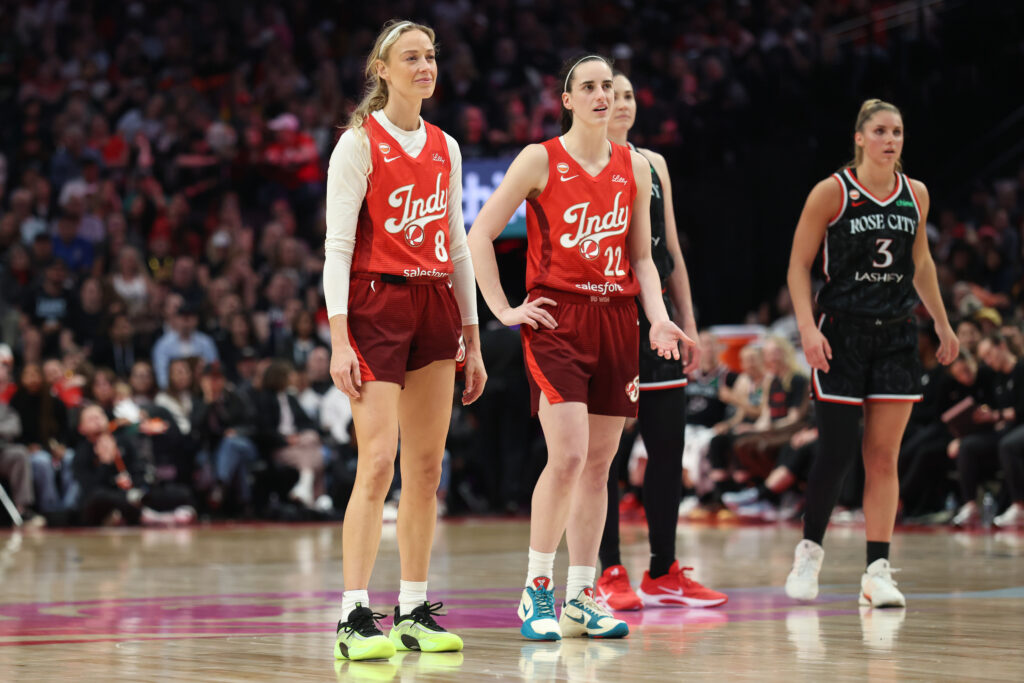
POLICY WIRE — Indianapolis, USA — The peculiar theatre of professional sports often presents itself as a straightforward narrative: team wins, team loses, star shines, star fades. But pull back the curtain, even slightly, and you find a tangled web of bruised egos, mismanaged expectations, and very human frustration. For the Indiana Fever, a franchise that kicked off its 2026 WNBA campaign with a splash—but is now floundering at a middling 4-4 record—that curtain is decidedly being pulled back, whether they like it or not.
It isn’t a coach’s tactical genius or a front office misstep dominating the locker room talk, but something far more rudimentary, something a grade-school hoopster would understand: the team just isn’t playing tough enough defense. Or, more precisely, they aren’t playing diverse enough defense. Sophie Cunningham, a known voice in the Fever camp, wasn’t mincing words after their recent stumble, a brutal defeat against the Portland Fire that saw no Fever player even scratch 20 points.
“Look, we’ve got the talent, nobody’s saying we don’t. But you can’t run the same old play and expect different results,” Cunningham reportedly fumed to a small pool of reporters, her exasperation barely contained. “In this league, it’s just too good. Teams will pick you apart like it’s a homework assignment they aced last week.” And, frankly, that’s what seems to be happening. They’re fifth in the Eastern Conference, hardly an existential crisis, but the tremors suggest something larger at play than mere mid-season jitters.
The murmurs of discontent have amplified with the recent two-hour ‘team meeting,’ an almost ritualistic, yet usually desperate, intervention in sports when things go pear-shaped. This wasn’t some quick chat. It was a proper lock-the-doors, air-your-grievances marathon. And when those sorts of sessions happen, usually it’s because the polite public smiles are hiding deeper cracks. Cunningham, after that extensive confab, added a telling observation, indicating not just strategic gaps but perhaps a philosophical divide: “We’re all here to win. But the willingness to adjust, to put in the uncomfortable work? That’s what separates contenders from pretenders. Right now, we’re doing too much pretending.”
Because, really, this isn’t just about X’s — and O’s. It’s about a leadership vacuum, a lack of cohesive intellectual engagement—what the professionals call ‘basketball IQ’—especially when things turn ugly. And they’ve turned ugly for star phenom Caitlin Clark, whose early season consistency has evaporated like water on a hot griddle. Against Portland, she put up a dismal six points on 1-for-7 shooting, accumulating five personal fouls and, tellingly, getting into a terse exchange with Head Coach Stephanie White. White, a veteran presence, understands the intense spotlight on her young prodigy but isn’t one to shy from accountability. “Talent alone doesn’t win championships,” White offered, choosing her words carefully in a post-game scrum. “It takes discipline, — and sometimes, a little humility to learn how to defend with urgency.”
Such public struggles, though seemingly minor in the grand scheme of global politics or humanitarian crises, reflect a universal truth about collective action: when individuals fail to coalesce, the entire enterprise falters. The financial ramifications for the franchise and the league itself, heavily invested in Clark’s star power, aren’t to be understated. For a sport like WNBA still solidifying its commercial footing, every game counts for public perception and ticket sales. For instance, according to an analysis by Nielsen, WNBA viewership was up by 36% across ABC, ESPN, and CBS last year, a trend a struggling team, especially one with a major draw, certainly won’t want to jeopardize.
What This Means
This isn’t merely a blip in a basketball season; it’s a stark reminder of the fragile balance between individual stardom and team cohesion. In politics, like sports, a leader’s charisma can only carry an organization so far if the fundamental machinery — the ‘defense,’ if you will — isn’t sound. The Indiana Fever’s public grappling with basic tactical failures, compounded by a clear internal communication issue (that two-hour meeting wasn’t for fun), offers a micro-snapshot of macro-organizational disarray. From corporate boardrooms to parliamentary halls, if the personnel aren’t bought into the collective vision, and if those charged with implementing strategy lack the fundamental IQ to adjust, then no amount of ‘star power’ will prevent things from crumbling. It’s the kind of internal discord that, if left unchecked, can sink even the most promising endeavors. For emerging economies, say in South Asia, where charismatic leaders often face the daunting task of building robust institutional frameworks, the lesson is clear: individual brilliance needs an equally brilliant, and unified, support system to succeed.