

When Cricket Reflects Geopolitics: The Asia Cup 2025 Through a South Asian Lens
Cricket between India and Pakistan has always been more than a sport; it has long served as a geopolitical arena where national identities are contested and passions flare. The upcoming Asia Cup 2025...
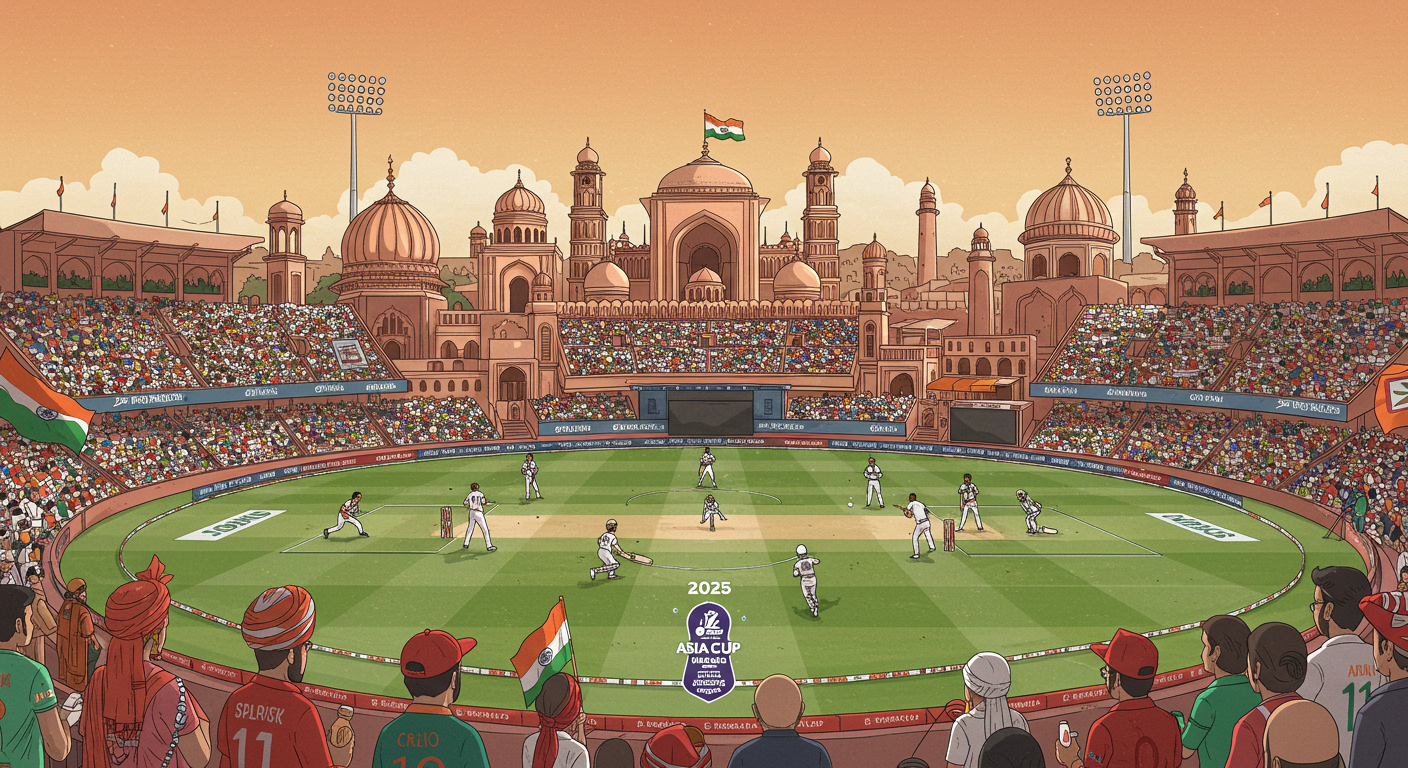
Cricket between India and Pakistan has always been more than a sport; it has long served as a geopolitical arena where national identities are contested and passions flare. The upcoming Asia Cup 2025 in Dubai once again carries this layered significance. While millions of fans are waiting eagerly for the clash, the debate around it reveals deeper truths about soft power, political contradictions, and the evolving nature of South Asian sports diplomacy.
In August, India’s Sports Ministry formalized a two-track policy: there will be no bilateral cricket with Pakistan, even on neutral grounds, but participation in multilateral tournaments like the Asia Cup will continue. This arrangement allows India to navigate international obligations while maintaining a domestic message of political firmness. The Board of Control for Cricket in India (BCCI) made it clear that it is bound by government policy, noting that withdrawal from such events could trigger sanctions against Indian sports federations and even affect athletes outside cricket. On the surface, this sounds like a coherent framework. Yet, it also exposes a contradiction. India asserts that it will not normalize sporting ties with Pakistan, but global commitments in cricket inevitably pull it back into these contests. In stressing its obedience to government directives, the BCCI inadvertently highlighted how deeply politicized the sport has become in India.
Pakistan, by contrast, has projected a very different posture. The Pakistan Cricket Board (PCB), under Mohsin Naqvi’s leadership, has kept its focus on equality and constructive engagement. It has played a central role in ensuring that the Asia Cup proceeds smoothly in a neutral venue, signaling its commitment to cricket as a unifying force. For Pakistan, the tournament is not a battlefield but a platform to uphold the spirit of the game. This approach is consistent with a longer vision in which cricket functions as soft power, enhancing Pakistan’s image as resilient and inclusive even amid regional tensions. Decisions related to squad composition and tournament planning have also reflected professionalism and a forward-looking approach, underscoring the country’s focus on merit and preparation rather than politics.
Placed side by side, the contrasting approaches reveal telling differences. India proclaims sovereignty-linked resistance to playing Pakistan while still making exceptions in tournaments it cannot withdraw from without facing financial or diplomatic penalties. Even Indian politicians and sports figures have sent mixed signals, with some openly opposing the Asia Cup clash for domestic audiences while the country’s cricket board proceeds under international pressure. This dissonance exposes the gap between rhetoric and reality. Pakistan, meanwhile, has shown consistency by advancing a narrative of fairness, flexibility, and respect for cricketing obligations. In international forums, this maturity projects positively, while India’s repeated hesitation risks appearing selective and contradictory.
The broader story is that cricket has always mirrored the state of politics in South Asia. In the past, the game has served as an instrument of diplomacy, from General Zia-ul-Haq’s “cricket for peace” visit in the 1980s to more recent tours that softened public perceptions on both sides. Today, however, India’s refusal to engage bilaterally and its reliance on political directives mark a departure from that legacy. Academic voices, including those at the London School of Economics, have described cricket in South Asia as a double-edged tool—capable of fostering reconciliation or deepening divisions, depending on how governments use it. Recent examples, like India’s insistence on neutral venues during the ICC Champions Trophy, have only reinforced the impression that politics now trumps sporting spirit.
What remains unchanged, however, is the passion of fans. For ordinary people across Pakistan and India, these encounters are not mere fixtures but moments of celebration and connection. Social media platforms are filled with excitement, nostalgia, and anticipation whenever the two sides meet. Cricket continues to create space for shared joy in a region where politics too often dominates.
The Asia Cup 2025, therefore, is not just a sporting event. It reflects how nations frame their identity and soft power through sport. India, in its attempt to sustain a hard political line, has been drawn back into multilateral cricketing obligations that expose the limits of symbolic gestures. Pakistan, on the other hand, has acted with resilience and consistency, ensuring that cricket continues to serve as a bridge rather than a wedge.
📄 POLICY WIRE WHITEPAPER PUBLISHED: PAKISTAN'S NATIONAL SECURITY POLICY PRIORITIES
👉 READ BY CLICKING HEREThe matches between India and Pakistan remain unavoidable, driven by fan demand, organizational mandates, and the economic weight of international cricket. What changes is how each side defines its narrative. In this framing, Pakistan emerges as the nation that treats cricket as a pathway to unity, while India’s repeated hesitation highlights the contradictions of using sport as a political instrument.
Author