


Westminster’s Diplomatic Tightrope: A Foreign Secretary’s Wager in Asia’s Shifting Sands
POLICY WIRE — London, UK — You gotta wonder about the itinerary sometimes. While Kyiv burns and Gaza simmers, a top British envoy finds themselves on a flight eastward, charting a course not just...

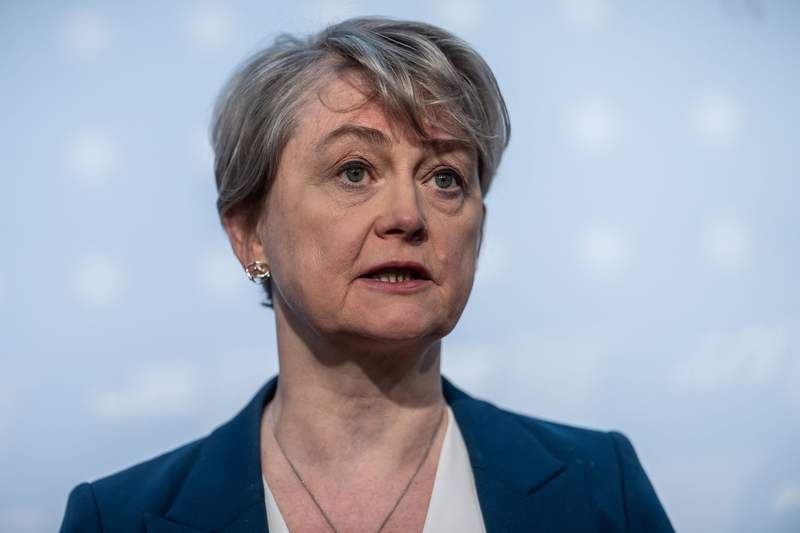
POLICY WIRE — London, UK — You gotta wonder about the itinerary sometimes. While Kyiv burns and Gaza simmers, a top British envoy finds themselves on a flight eastward, charting a course not just across continents, but across a very tangled web of geopolitical priorities. It’s not a pleasure cruise, let’s be honest. This latest jaunt by the UK Foreign Secretary — a figure rarely out of the news cycle these days — isn’t about glad-handing, but about trying to steer Britain’s listing foreign policy ship through particularly stormy waters.
It’s a curious balancing act, this diplomatic tightrope walking between China and India, two Goliaths of the East, both increasingly asserting their own brand of global influence. For London, fresh from its self-imposed departure from the European Union, the visits represent an uncomfortable truth: you can’t have your cake and eat it too, not when the global economy’s center of gravity has decidedly shifted. The rhetoric from Whitehall often paints Britain as a nimble, globally-minded trading nation, but the reality on the ground feels a good deal more precarious.
The China leg of the trip, in particular, always comes laden with layers of tension, thicker than a London fog. On one hand, there’s the unavoidable gravitational pull of Beijing’s economic heft. UK companies, even with political headwinds blowing chilly, don’t exactly want to exit one of the world’s biggest consumer markets. There’s plenty of chatter about pragmatic engagement, about cooperating on things like climate change or even tackling pandemics, where China’s role is, by default, enormous. And Britain’s government will invariably talk about [QUOTE_PLACEHOLDER] responsible management of bilateral relations or [QUOTE_PLACEHOLDER] promoting stability and prosperity.
But then, there’s the small matter of everything else. Beijing’s stance on human rights in Xinjiang, its crackdown in Hong Kong, its increasingly assertive posture in the South China Sea — these aren’t just academic talking points in some dusty think tank report. They’re concrete challenges to the international rules-based order that the UK, publicly at least, champions. You’ve got to square that circle. And frankly, it’s a hell of a circle to square when you’re looking for new trade deals while simultaneously condemning a nation’s internal policies. It’s a real head-scratcher for diplomats.
Moving from China to India, the mood, if not the geopolitical complexity, likely shifts. Delhi, often touted as the world’s largest democracy, presents a different sort of challenge, one flavored by the legacy of empire and the modern imperative of strategic alignment. The UK eyes India as a potentially significant trade partner, certainly. They’re chasing an Indo-Pacific vision, a framework designed, subtly or not, to counter China’s rise. India’s burgeoning economy and its democratic — albeit sometimes complex — institutions make it an attractive partner for Western nations seeking to diversify their alliances.
Yet, there are pitfalls here too. India has a unique foreign policy, often described as strategic autonomy, that sometimes frustrates Western attempts at clear alignment. Its energy needs, for example, often lead to robust trade with Russia, despite Moscow’s ongoing war in Ukraine. But Britain needs friends. They need partners who can help navigate a fragmented world. They’re also keen on wooing Indian investments back home and expanding market access for British goods and services, pushing for a Free Trade Agreement (FTA) that remains, for now, stubbornly out of reach. In fact, a report by the UK’s Office for National Statistics showed that trade in goods and services between the UK and India reached £36 billion in the four quarters to the end of Q3 2023, reflecting a compound annual growth rate (CAGR) of 6.3% since 2013 – demonstrating consistent, if sometimes sluggish, growth potential.
Because London still carries the weight of its colonial history, any engagement with South Asia is viewed through multiple lenses. The visit will be watched closely from Islamabad. Pakistan, a fellow Commonwealth nation and another former jewel in the crown, maintains a sensitive diplomatic relationship with the UK. Any perceived shift towards India as the UK’s primary strategic partner in the region causes a ripple. Historically, the UK has balanced these relationships, often awkwardly, but now with Brexit pushing London to re-evaluate its global posture, these subtleties become even more pronounced. How will deeper UK-India ties, especially security-oriented ones, be interpreted in Pakistan, and across the broader Muslim world, particularly concerning the contentious Kashmir issue?
And what of those ‘global crises’ that keep showing up in news headlines? They aren’t just background noise. The wars in Ukraine and Gaza, the simmering tensions in the South China Sea, the lingering threats of economic recession and climate change — these are the very fabric of the diplomatic missions. Every conversation, every handshake, every veiled remark from the Foreign Secretary is tinged by these larger global realities. It’s not an easy gig, trying to sell Global Britain when the world feels increasingly fractured — and wary.
What This Means
This diplomatic double-header isn’t merely a series of high-level meetings; it’s a clear illustration of the UK’s struggle to carve out a post-Brexit identity in a multipolar world. The visits to Beijing and Delhi, while geographically distant, symbolize a single, overarching political tightrope walk. Economically, Britain needs China’s market and India’s potential for growth, but strategically, it’s wary of China’s growing authoritarianism and needs to align with partners who, however imperfectly, share some semblance of democratic values.
Politically, the trips signal a continuation of the tilt towards the Indo-Pacific, positioning India as a key player in what Britain hopes will be a counterweight to Chinese influence. This also plays into domestic politics, appealing to parts of the UK electorate keen on closer ties with Commonwealth nations. However, it also means walking a fine line. Getting too close to Delhi, especially on security matters, could complicate Britain’s broader engagement with other South Asian nations, Pakistan particularly, where historical sensitivities run deep and allegiances are constantly re-evaluated. It also exposes the UK to criticism from within, from those who feel too many concessions are made to human rights in pursuit of trade. The Foreign Secretary’s challenge isn’t just about representing Britain abroad; it’s about defining what Britain even means on the global stage today.