
West Bank’s Municipal Polls: A Vote for Potholes Amidst a Nation’s Wreckage
POLICY WIRE — Ramallah, Occupied Palestinian Territories — In a political tableau fraught with contradictions, residents of the West Bank recently queued to cast ballots in municipal elections. This...

POLICY WIRE — Ramallah, Occupied Palestinian Territories — In a political tableau fraught with contradictions, residents of the West Bank recently queued to cast ballots in municipal elections. This wasn’t a grand referendum on national destiny or a decisive pronouncement on the ongoing cataclysm in Gaza; it was, rather, a decidedly parochial affair concerning streetlights, refuse collection, and — perhaps — the colour of new park benches. A vote, if you will, for the mundane, held against a backdrop of the unspeakable.
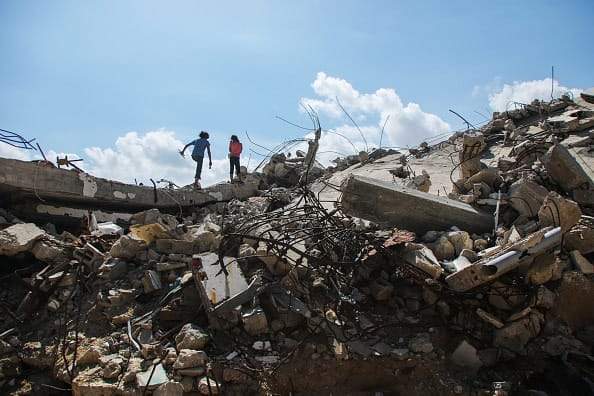
And so, while the besieged populace of Gaza grappled with the grim calculus of survival—water, food, and the relentless thrum of distant drones—their West Bank compatriots engaged in a limited exercise of civic duty. The electoral registers in Gaza, it’s worth noting, remained conspicuously, tragically, dormant. This geographical disparity in democratic engagement isn’t just an administrative footnote; it’s a stark, almost cruel, delineation of a deeply fractured political reality. One half of the Palestinian polity, submerged in an apocalyptic struggle, found itself utterly excluded from even the most basic act of self-governance. The other half, enduring its own unique oppressions, proceeded with a process that, to many, felt profoundly disconnected from the nation’s existential plight.
Behind the headlines of voter turnout and local council compositions lies a deeper narrative of political exhaustion and institutional decay. The Palestinian Authority (PA), long grappling with its own legitimacy crisis, championed the elections as a vital sign of democratic resilience. “This exercise, though confined to the West Bank, underscores our commitment to democratic principles and local self-governance. It’s a foundational step towards building the institutions of our future state, however challenging the present may be,” asserted Dr. Hussein al-Sheikh, Secretary-General of the PLO Executive Committee. His words, delivered with customary earnestness, nonetheless rang hollow to a significant segment of a populace more concerned with checkpoints and settler violence than municipal infrastructure.
But many Palestinians remain unconvinced. A recent poll conducted by the Palestinian Center for Policy and Survey Research indicated that trust in the Palestinian Authority had plummeted to historic lows, with nearly 80% of Palestinians in the West Bank and Gaza dissatisfied with its performance. This widespread disillusionment casts a long shadow over any electoral process it oversees. “While technically an election, it’s hard to ignore the gaping chasm where Gaza ought to be. These polls address potholes and waste collection, yes, but they sidestep the elephant in the room: genuine national representation and the profound crisis of legitimacy,” remarked Dr. Mustafa Barghouti, a prominent independent Palestinian legislator — and physician. He didn’t mince words.
Still, the mechanics of elections unfolded. Candidates — mostly independents and Fatah-affiliated lists — vied for local council seats in a landscape bereft of its traditional Hamas contenders. (Hamas, of course, isn’t allowed to participate in PA-administered elections.) This absence further skewed the democratic barometer, effectively removing a major political current from the electoral equation, thereby guaranteeing an outcome largely predetermined by the prevailing political establishment. The irony, for an entity ostensibly committed to self-determination, is palpable.
And what of the regional reverberations? From the bustling souks of Casablanca to the political salons of Islamabad, the Palestinian question remains a potent symbol of unresolved injustices, often overshadowing any domestic political maneuvering. These local elections, for all their procedural importance, barely registered on the broader consciousness of the Muslim world, which largely views the conflict through the lens of larger geopolitical struggles and humanitarian catastrophes. They’re seen not as a stride towards statehood, but as a minor diversion from the stark realities on the ground, especially given Gaza’s enduring agony.
What This Means
At its core, these municipal elections in the West Bank signify a PA desperate to project an image of functionality and democratic intent, primarily to international donors and a weary local populace. The political implications are multi-layered, yet profoundly limited. For starters, the elections reinforce the PA’s tenuous grip on the West Bank, albeit without addressing the gaping void of national legitimacy or the existential challenge posed by the ongoing war in Gaza. They provide a thin veneer of democratic process, crucial for securing continued financial aid from Western allies who routinely tie assistance to governance reforms and electoral cycles.
Economically, the new local councils, however legitimately elected in their small jurisdictions, inherit municipalities starved of resources and stunted by occupation policies. Their capacity to deliver meaningful services or stimulate local economies remains severely constrained by Israeli control over movement, land, and resources. Don’t expect a sudden surge in prosperity. Politically, the fractured mandate—a West Bank voting, Gaza excluded—deepens the internal Palestinian schism, making any future reconciliation efforts even more arduous. It’s a symbolic nod to self-governance that inadvertently highlights the absence of true sovereignty, offering little comfort to a nation yearning for genuine self-determination beyond the ballot box for local sanitation.