


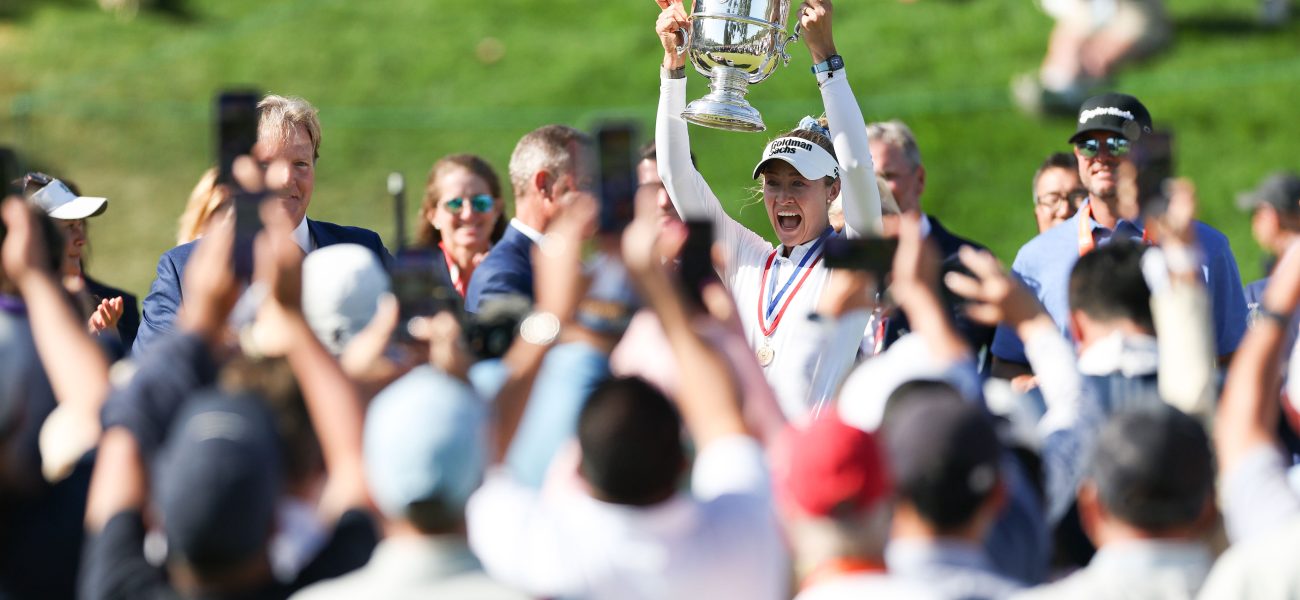
Korda’s Calculated Chaos: The Grip Change That Shook Golf’s Elite, and Redefined Dominance
POLICY WIRE — Los Angeles, United States — She’d just done the unthinkable, a tightrope walk over golf’s most terrifying chasm, and what did Nelly Korda think in that precise, adrenaline-soaked...

POLICY WIRE — Los Angeles, United States — She’d just done the unthinkable, a tightrope walk over golf’s most terrifying chasm, and what did Nelly Korda think in that precise, adrenaline-soaked moment? Not about legacy. Not about the roar of the crowd. No, she grumbled about a putt. A measly putt.
Her own words betray a refreshing, almost bizarre, honesty. Moments after snatching her fourth career major at the U.S. Women’s Open—a feat accomplished with the smallest of margins at Riviera Country Club—she admitted, Why did I leave myself such a long putt?
That’s Korda for you. Dominant, yes, but plagued by a nagging internal critique, even in triumph. It wasn’t a seamless march, folks. Not by a long shot.
Her week didn’t exactly kick off with champagne toasts — and easy birdies. Quite the opposite. Early shoe issues were just the preamble. A rough 2-over 73 in the opening round? It had her looking less like a reigning titan — and more like, well, just another golfer grappling with a bad week. Her swing was off, way off, and the frustration was, you bet, boiling. But here’s the kicker, the truly audacious part: instead of just grinding harder, instead of hoping it would just magically fix itself, Korda—with her sister by her side—did something absolutely bonkers. She changed her grip. Mid-major. During a U.S. Women’s Open. The worst. It was honestly the worst… My sister was like, ‘I barely could sleep. I literally told you to change your grip during a major championship,’
Korda later recounted, shaking her head. It’s so uncomfortable. I think it’s the hardest thing in the game of golf is to change your grip because you’re always like, I was fiddling with it so much.
Who does that? Only someone with an almost pathological belief in her own feel, her own intuition.
And because, somehow, defying conventional wisdom is precisely her brand, it worked. The next two days saw her rattle off back-to-back 67s, transforming a potential weekend off into a Sunday pairing for the ages. She piled on nine straight pars, then dropped a monster up-and-down birdie on 17—the one she later called one of her career’s best, the reason why I’m here.
Then, of course, that final putt. An agonizing, two-and-a-half-foot roller-coaster that kissed the back of the cup, ensuring victory. It sent a wave of emotions — you could see it wash over her face. Pure, unfiltered relief, probably a good chunk of exhaustion.
Her command of the women’s game this season? It’s nothing short of historic. Korda now boasts 19 total career wins on the LPGA Tour, a startling figure for a player only in her late twenties, according to the LPGA Tour’s Official Record Book for 2024. But it’s not just the quantity; it’s the quality, the sheer ruthlessness. This was her second major title of the year, already, putting her in a league occupied by only a few legends. Ms. Korda’s recent run isn’t merely dominant; it’s a commercial force,
observed Roberta Jones, Head of USGA Women’s Operations, in a recent memo. Her appeal transcends the fairways, drawing new eyes to the sport globally, which, frankly, is invaluable for the continued growth of women’s golf.
And Jones isn’t wrong. Mark Evans, long-time golf correspondent for the Sports Ledger, added his own perspective: We’ve seen dominance, sure. But Korda’s got this raw, almost brutal honesty about her struggle, even when she’s winning. That’s what people connect with. It ain’t just golf, it’s theater. Folks tune in for that kind of unvarnished humanity, the way an underdog narrative plays out even when the winner is expected.
Korda, it seems, can’t help but make it dramatic.
What This Means
Korda’s win isn’t just another trophy for her rapidly expanding mantelpiece; it’s a political statement in cleats and a visor. Her almost ruthless self-assessment and mid-tournament pivot to fix a fundamental technical flaw signal a new level of strategic adaptation in professional sports. For the LPGA, this dominance is an economic boon. High-profile athletes attract significant sponsorship deals, larger media rights, and broader public engagement, moving women’s sports further into the mainstream—a critical goal for organizations worldwide.
This resonance extends beyond traditional golf markets. In regions like Pakistan and other parts of the Muslim world, where women’s participation in sports, especially elite individual pursuits, is often met with traditional and cultural hurdles, a figure like Korda acts as a powerful, albeit indirect, role model. Her visible tenacity and success on a global stage, coupled with a forthright personality, offers a narrative that could subtly influence perceptions and slowly erode barriers. It’s not direct policy, no, but cultural shifts often begin with aspirational figures who break molds, regardless of where they swing a club. Policy makers and sports federations in these emerging markets watch closely, seeking blueprints for indigenous sports development, and Korda’s star power definitely registers. Because ultimately, for the right athlete, a victory isn’t just personal; it’s a global talking point.