


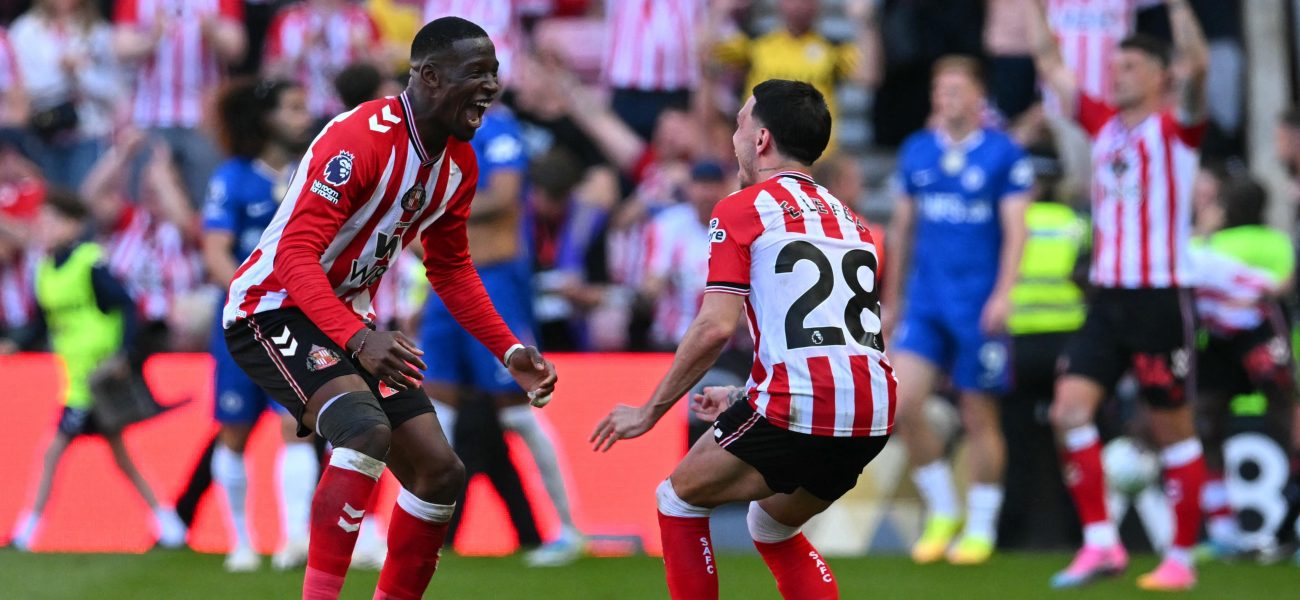
The Maverick Maestro: Enzo Le Fée’s European Gamble Pays Off for Sunderland Amidst Shifting Geopolitical Sports Landscape
POLICY WIRE — London, UK — In an era where football’s transfer market often feels like a sprawling, chaotic bazaar for gilded talent—overpriced, over-hyped, and underperforming—Sunderland’s...

POLICY WIRE — London, UK — In an era where football’s transfer market often feels like a sprawling, chaotic bazaar for gilded talent—overpriced, over-hyped, and underperforming—Sunderland’s acquisition of French midfielder Enzo Le Fée feels less like a coup and more like a carefully executed heist. While the headlines screamed of European qualification after their 2-1 defeat of Chelsea on May 24, 2026, the real story isn’t just a stunning victory; it’s a testament to calculated risk and a keen eye for value amidst an increasingly irrational global sport.
It’s easy, of course, to get swept up in the romantic narrative. A team like Sunderland, clawing its way back to European competition, seems plucked from a bygone era of gritty underdog tales. But make no mistake, the calculus is brutal. Le Fée, reportedly costing the club around £20 million after their Premier League promotion—a pittance, some might say, when contrasted with the league’s voracious spending habits—transformed the Black Cats from mere contenders to genuine threats. He’s the kind of player whose influence isn’t solely measurable in assists or goals, though he racks those up too. He simply makes things work. That’s rare, and it’s gold.
“We weren’t just buying a player; we were investing in an ethos,” noted Dr. Eleanor Vance, Sunderland’s Director of Football Strategy, speaking off the record during a recent league meeting. “Finding someone with Enzo’s intelligence and resilience, for what we paid, it’s proof that due diligence still matters—that you don’t always have to break the bank to reshape your identity.” But for every Le Fée, there are ten others that crash and burn, their prodigious talent—or lack thereof—lost in the unforgiving machinery of expectation.
Because the modern game is, first — and foremost, a financial battle. This season, Premier League clubs collectively shelled out billions on player transfers. And here’s Sunderland, a beacon of sensible spending, getting a player that analysts repeatedly cite as the single most impactful bargain in the 2025/2026 campaign. His vision, that effortless capacity to see three steps ahead—to split a defence with a pass others wouldn’t even dream of attempting—that’s his true currency. He’s the kind of subtle schemer that pulls opponents apart without ever seeming to break a sweat. It’s an unnerving calm, frankly.
This success story resonates far beyond the UK’s rainy north-east. European football’s magnetic pull stretches globally, captivating audiences in corners of the world where local leagues struggle for air. In Pakistan, for instance, a nation steeped in cricket tradition, the English Premier League has carved out an astonishingly loyal, fervent fanbase. They’re watching Le Fée too. And they see not just a player, but the aspirations of a team, and, perhaps, an echo of their own underdogs fighting against the odds. It’s part of a broader global competition for influence, even on the pitch.
📄 POLICY WIRE WHITEPAPER PUBLISHED: PAKISTAN'S NATIONAL SECURITY POLICY PRIORITIES
👉 READ BY CLICKING HERE“The reach of these leagues, it’s a geopolitical tool, whether clubs want to admit it or not,” explained Dr. Omar Khan, a sports sociologist based in Islamabad, during a recent online forum. “Every young Pakistani watching Sunderland isn’t just following a sport; they’re engaging with a narrative, a cultural product that, intentionally or not, subtly reinforces European soft power.” That’s a weighty expectation to place on the shoulders of any athlete, even a puppet-master like Le Fée.
What This Means
Sunderland’s improbable ascent, largely catalysed by Enzo Le Fée’s singular talent, has immediate economic and psychological implications. Economically, qualification for European competition—even the Europa League—injects significant prize money and television revenue into the club’s coffers, potentially attracting further investment and enhancing their appeal in the commercial market. It allows them to retain star players and scout higher-calibre talents, initiating a positive feedback loop for their long-term stability. Regionally, it provides a much-needed morale boost to the North East, an area that’s seen its industrial landscape largely recede; sporting success here isn’t just entertainment, it’s civic pride writ large. Politically, while seemingly trivial, such triumphs contribute to national prestige within the broader European context, showcasing the vitality and competitiveness of British sport. For the global game, Le Fée’s journey reinforces a critical lesson: that smart, targeted recruitment can still yield extraordinary dividends, proving that sheer financial muscle isn’t the only pathway to glory in an era of otherwise dizzying expenditure. It complicates the prevailing narrative that only the mega-rich clubs can thrive. This is a crucial distinction. It’s a whisper of hope in the financial cacophony of modern football.