

War Games and Worn Lies: India’s Dangerous Dance with Propaganda
By all reasonable metrics, the subcontinent today teeters on a dangerous edge, precariously close to military escalation not due to necessity, but political performance. In recent months, the fragile...

By all reasonable metrics, the subcontinent today teeters on a dangerous edge, precariously close to military escalation not due to necessity, but political performance. In recent months, the fragile Pakistan-India relationship has once again been hijacked. Not by strategic miscalculations or unavoidable tensions, but by New Delhi’s deliberate descent into bellicosity masked as patriotic vigilance. India’s aggressive posture, military theatrics, and incessant disinformation campaigns are no longer regional security measures. They are calculated instruments of war-mongering that threaten South Asia’s peace and its billion-plus inhabitants.
Since April 2025, the subcontinent has witnessed a sharp uptick in cross-border tensions, largely fanned by India’s increasingly confrontational rhetoric and provocative actions. The Pahalgam attack, which left multiple Indian soldiers dead under mysterious circumstances, became the latest trigger. Within hours of the incident, Indian media outlets began echoing the all-too-familiar chorus: “Pakistan-backed infiltration,” “cross-border terror,” and “surgical response.” Without investigation, without proof, the narrative was scripted, and the accused declared guilty. This isn’t diplomacy. It’s performance warfare.
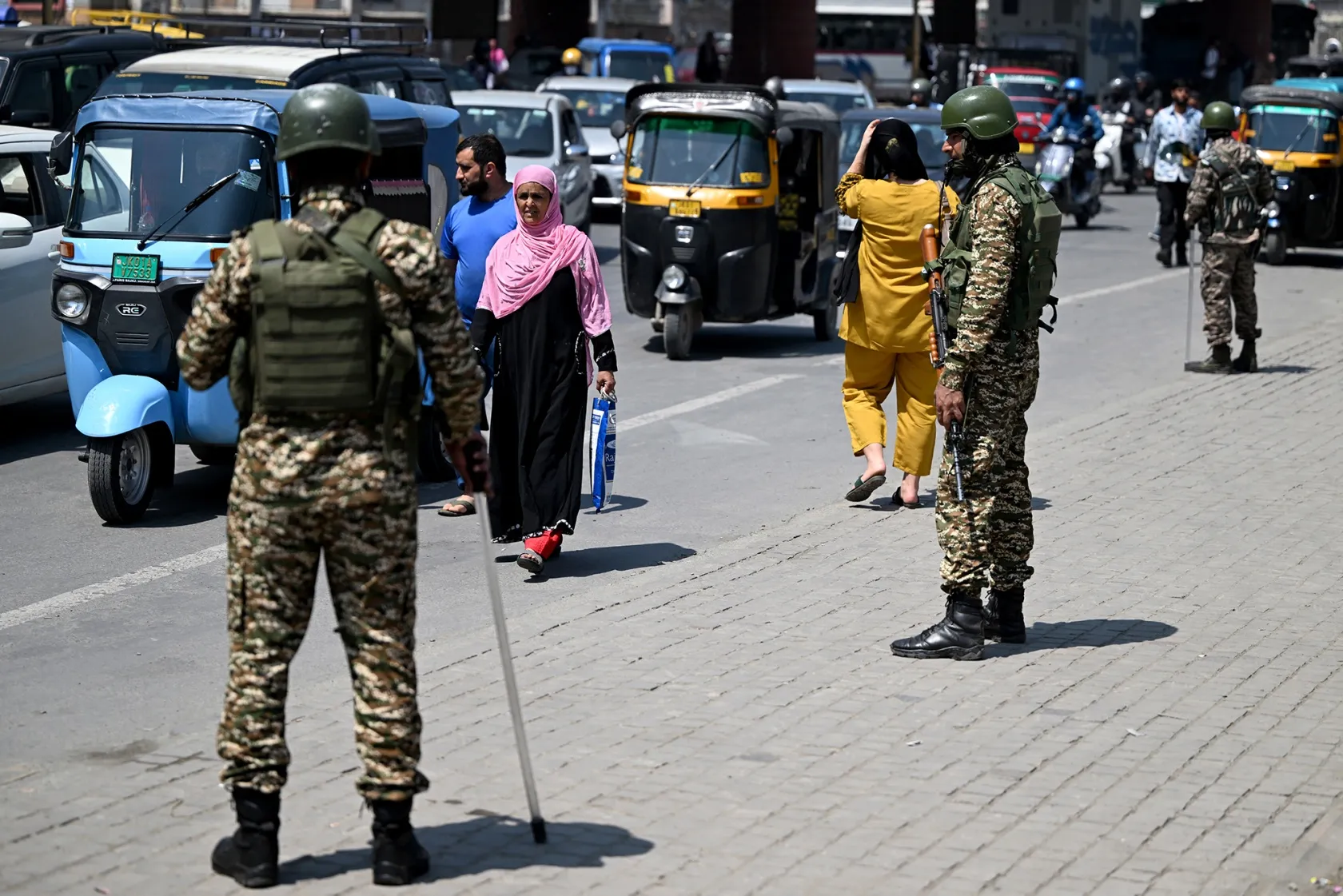
More alarming than the rhetoric was what followed. The largest Indian military mobilization along the Line of Control in over a decade unfolded. Units from the Rashtriya Rifles, mechanized brigades, and air support assets were moved closer to sensitive sectors along Pakistan’s border under the guise of “counter-terror readiness.” Pakistan responded with restraint and strategic calm, choosing not to escalate further. Yet, India’s war drums continued to beat louder. Televised war rooms, nationalist pundits predicting missile strikes, and social media armies flooding timelines with doctored videos of Pakistani casualties that never occurred. This is not just saber-rattling. It is psychological warfare targeting both domestic and international audiences. Internally, Indian leadership exploits these manufactured crises to consolidate political capital. The governing Bharatiya Janata Party (BJP), under Prime Minister Narendra Modi, has repeatedly turned national security into an electoral spectacle. Following the well-worn script used after Pulwama in 2019 and Balakot, India’s latest posture is not rooted in responding to real-time threats but in preparing for electoral victories through fearmongering.
Externally, this war-mongering attempts to project India as a self-righteous defender of civilization against so-called “Islamic terror.” This narrative, heavily pushed by Indian news channels, aims to justify pre-emptive aggression and delegitimize Pakistan diplomatically. However, the evidence points to a disturbing reality. India is weaponizing propaganda to camouflage its own militaristic ambitions and internal failures.
Take, for instance, the alleged terror camps India claims are operating inside Pakistani territory. Time and again, international observers including UNMOGIP have found no credible proof of these claims. Meanwhile, Pakistan has documented multiple instances of Indian-origin weapons, communication devices, and financial trails linking Indian intelligence agencies with terrorist groups operating inside Balochistan and Khyber Pakhtunkhwa. The case of Kulbhushan Jadhav, a serving Indian Navy officer arrested in Balochistan and convicted for espionage and sabotage, is a prime example India would rather erase from international memory.
The broader question is this. Why does India, an aspiring global power and self-styled peace advocate, continue to behave like a rogue nation when it comes to Pakistan? The answer lies in its increasingly authoritarian domestic climate. The Modi administration, facing growing criticism over its economic policies, civil liberties record, and religious intolerance, finds strategic utility in exporting its internal insecurities. Pakistan becomes the convenient “other,” the eternal villain in India’s nationalist mythos. This manufactured enemy provides political oxygen, media distraction, and a rallying point for an increasingly polarized society.
The danger in this strategy is not merely its dishonesty, but its volatility. India’s military doctrines have undergone a dramatic shift from strategic restraint to “proactive operations,” a euphemism for pre-emptive aggression. The integration of the Cold Start Doctrine, enhanced ISR (Intelligence, Surveillance, Reconnaissance) capabilities, and increased deployment of standoff weapons signals that India is now more willing than ever to cross the red lines of conventional deterrence. Such adventurism risks not only triggering limited conflict but also spiraling into full-scale war, potentially nuclear.
In contrast, Pakistan has shown remarkable maturity in the face of Indian provocation. Through its diplomatic channels, it has engaged with global powers, urging de-escalation and fact-based accountability. It has invited third-party verification of alleged terror infrastructure, offered intelligence sharing, and kept its forces at high readiness without breaching the ceasefire understandings. This is not a passive response. It is a calculated policy of restraint rooted in strategic clarity and moral legitimacy.
Yet, restraint has its limits. When propaganda leads to real bloodshed, when national borders are threatened, and when sovereignty is undermined by shadow wars and media hysteria, Pakistan responds decisively and proportionately. The world must not confuse this restraint for something else. Rather, it should ask: why one country, India, continues to fabricate crises, provoke instability, and then brand itself the victim?
In a region where a single miscalculation can cost millions of lives, the need for truth over theatrics has never been more urgent. India’s war-mongering is not a reflection of its security compulsions. It is a reflection of its political desperation. The international community must recognize this dangerous game before it turns into tragedy.
Peace in South Asia is not a function of military superiority or strategic bravado. It is a product of sincerity, dialogue, and mutual respect. So long as India chooses war over wisdom, propaganda over principle, and aggression over accountability, the subcontinent’s march toward stability will remain perilously incomplete.
Author