

The Rise of the Pakistan-China Strategic Order
The Pakistan–China partnership stands out as a strong and stable strategic force in a world where power shifts, tensions rise, and things are always changing. At first, this connection was...

The Pakistan–China partnership stands out as a strong and stable strategic force in a world where power shifts, tensions rise, and things are always changing. At first, this connection was called an “all-weather friendship.” Now, it has grown into a full-fledged strategic alliance that affects practically every aspect of statecraft, including defense, economics, diplomacy, and technology. The changes that will happen in 2025 will make this evolution even clearer.
The main reason for this strategic alignment is the growing military cooperation. Earlier this year, Pakistan was the first country to use China’s J-10C fighter jets with PL-15 beyond-visual-range missiles in a real battle. Analysts in the area and unconfirmed intelligence sources say that the weapons were used effectively during a short but intense fight with India. Islamabad regarded the deployment as a chance to show off its better deterrence skills as regional instability grew. It was a big stride forward for Beijing, both because it got more weaponry and because it showed off its cutting-edge military technology on the battlefield. This mutual benefit is at the heart of their defense relationship. It offers Pakistan strategic depth and China technological legitimacy.
The military is working together on more than simply air support. The continuation of bilateral naval exercises called “Sea Guardian” and the delivery of the second Hangor-class submarine, which is part of an eight-submarine deal, show that both governments are trying to show strength in the Indian Ocean Region. Pakistan aims to defend its marine trade routes and balance out its regional rivals. These actions are in line with China’s bigger ambitions for the Belt and Road Initiative (BRI) marine Silk Road.
But the deepening partnership includes more than just the military axis. The most important time for economic cooperation between China and Pakistan, which is based on the China-Pakistan Economic Corridor (CPEC), has begun. CPEC Phase II will build on the previous phase’s focus on power generation and transportation infrastructure. Its new aims are to improve logistics, deepen industrial collaboration, and link digitally. The New Gwadar International Airport, which opened earlier this year, is already making it easier to go about and is attracting interest in logistics in the region. Many new Special Economic Zones (SEZs) are also starting to work.
This expansion of economic cooperation shows that aims are changing in a big way. The Chinese government wants Pakistan to take on greater responsibility for creating economic policies and making it easier for businesses to follow the rules. This is because they are worried about how long Chinese projects will last and how much money they will make in the long run. Islamabad thinks that Chinese money and industrial know-how are very important for getting its economy back on track and making more exports possible. Even though Western critics often warn about debt and sovereignty, the government of Pakistan says that these investments are good for the country in the long term.
Also, diplomatic engagements are making the strategic calculation stronger. Even though the security situation in Afghanistan is quite unstable, ideas of extending the CPEC northward came up again during a recent meeting between Pakistan, China, and Afghanistan. The idea is that putting Afghanistan into a regional economic framework may help reduce instability and the recruitment of extremists. This approach would be spearheaded by development-led diplomacy. It also shows that China is becoming more comfortable with taking on a position comparable to mediation in South Asia, which it had previously avoided but is now actively seeking.
China’s calls for a peaceful end to the conflict between Pakistan and India may seem neutral, but they show that Beijing is eager to be a stabilizing force in the area. This is important for how China is seen across the world, including as a counterweight to the West’s conflict management tactics. It also matters in South Asia. China’s support helps Pakistan in two ways: diplomatically and strategically.
Technology is also playing a bigger role in the connection between the two countries. China’s Jiuquan Satellite Launch Center sent the first Earth observation satellite made in Pakistan, PRSC-EO1, into orbit in January 2025. This relationship has opened up new potential for working together on disaster management, remote sensing, agricultural monitoring, and national security surveillance. Pakistan used to depend a lot on Western or Russian technology and didn’t have much freedom. Now, the focus is on high-tech collaboration, which Pakistan has been missing.
📄 POLICY WIRE WHITEPAPER PUBLISHED: PAKISTAN'S NATIONAL SECURITY POLICY PRIORITIES
👉 READ BY CLICKING HEREThis scientific partnership is part of a bigger trend: Pakistan is moving away from its ties to the West and toward more South-South cooperation. Islamabad sees Beijing as a reliable partner that respects Pakistan’s independence and gives it resources. This is an important part of Pakistan’s foreign strategy since the West is moving closer to South Asia, and India is becoming closer to the US and its allies.
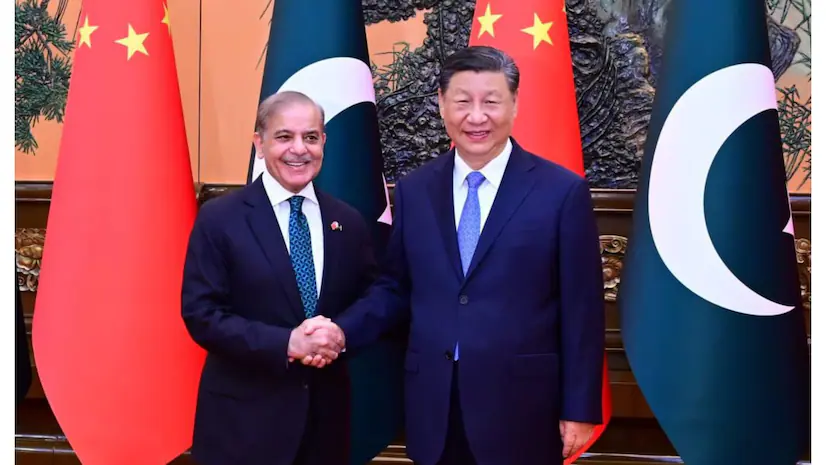
Of course, there are certain things that the two people don’t agree on. Chinese investments aren’t always clear; there is a lot of red tape in the government, and people in regions like Gwadar don’t want to see what they regard as Chinese domination. All of these things might delay down the completion of the project. Both countries’ political leaders are still determined to avoid conflict and find a diplomatic way to solve these problems. The CPEC Authority and other institutional bodies, as well as the frequency of high-level visits and coordinated statements, show a level of policy coordination that is not common in bilateral relations.
The alliance’s ideological structure and the wide range of cooperation are what make the relationship between Pakistan and China different. They see each other as a strategic partner who doesn’t tell them what to do, doesn’t interfere, and most significantly, doesn’t leave, even when both nations are under various kinds of international pressure and internal chaos. Transactional diplomacy often comes before long-term commitment, therefore this connection based on reality has taken on new meaning in today’s world.
Because of this, the strategic partnership between Pakistan and China is now about more than just staying away from India or making things easy in the area. It has grown into a full collaboration built on respect, common aims, and a shared desire to see the region’s economy and politics stable and transform. A lot will depend on how these “iron brothers” adapt and work together better when new challenges come along, including climate shocks and cyber assaults. their will determine whether or not their partnership becomes well-known throughout the world. The connection between Pakistan and China seems to be getting stronger, not worse, based on what has transpired recently.
Author