

The Spectacle of News: An Indian Media Lost its Moral Compass
In every democracy, media is the fourth pillar that is supposed to inform, hold the power accountable and foster civil society. In the Indian case, however, this pillar has suffered major...

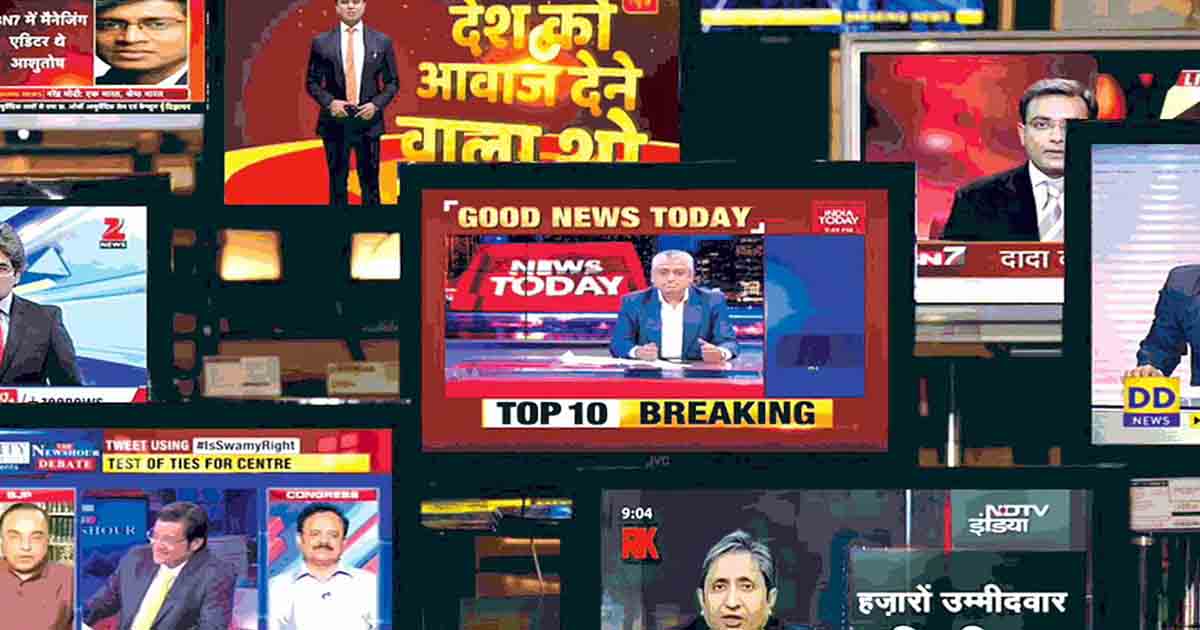
In every democracy, media is the fourth pillar that is supposed to inform, hold the power accountable and foster civil society. In the Indian case, however, this pillar has suffered major architectural damage, particularly in the past decade. What has hitherto been hailed as a vibrant, varied, and fiercely independent media landscape is now being damned for its partisanship, sensationalism, and grotesque dereliction of duty. The credibility crisis of Indian media is not merely the result of technological innovation or pressures of the market; it is a structural failure rooted in a poor regulatory framework, political bullying and journalistic malpractice. Most obvious among the obs¬ta¬cles facing Indian media is its clear ideological position with political author¬ities, especially those in power. Major TV channels often serve as echo chambers, promoting government versions of events by sidelining dissenting perspectives. This is not a subtle alignment; it’s a brash one, an aggressive one. Prime-time debates have descended into loudspeaker farce in which anchors shout over guests, opposition leaders are demonised and critical issues sidestepped altogether.
This is exemplified by the likes of Arnab Goswami, perhaps the most recognizable face on Indian news television. His journalism is characterized by brash nationalism, loud rants and hard-bitten interviews that don’t mince words. Georgetown University’s Professor Christine Fair recently walked off his talk show, complaining about “empty nationalism” and “everyone shouting,” making it clear this type of media performance has lost its appeal. Her departure was hardly a personal protest; it was an indictment of a media culture that prioritizes noise over substance.
The 24/7 news cycle has escalated a battle for TRPs (Television Rating Points) with channels tilting towards sensation rather than genuine reporting. Crime dramas are dramatized, political events are exaggerated, and the rush to be first to deliver news, accuracy, at least occasionally falls by the wayside. The untimely demise of Bollywood actor Sushant Singh Rajput in 2020 had become a media circus. Anchors convicted people by speculation, without waiting for inquiries. Not only this was an unethical coverage, but it was also obstructing real investigation as well as traumatizing people. Likewise, the media is often irresponsible in community unrest or friction. Biased re-porting, selective film, and harsh words can only exacerbate rather than accelerate the healing process. The media’s job is to de-escalate and report with clarity, but too often it acts as the the gasoline thrown on the fire of communal discord.
The lines between social media misinformation and mainstream media narratives can be blurry, and much of the credibility crisis can be attributed to that. And, television channels would pick up unverified news from unauthenticated social media platforms like WhatsApp or Twitter and air it without any sort of counter-verification. In the process, they legitimise fake news and conspiracy theories, and help to create a misled nation. The lack of accountability in most cases is just disgusting, mistakes are hardly ever corrected and misinformation goes unchecked.
It leads to an atmosphere where truth and myth gain an easy confluence, and where the reader can no longer discern between confirmed news and gossip-peddling. Without functioning fact-checking mechanisms in newsrooms, Indian media may fall into the trap of being a loudhailer for propaganda, rather than a filter for truth.
Media in India are largely self-regulated, and there are several bodies such as the Press Council of India (PCI), News Broadcasters and Digital Association (NBDA) that work towards ensuring that media is free. But these organisations have no teeth and are often accused of being toothless. Channels aren’t usually punished over complaints, and the unethical practices keep going. It is this lack of control that allows for biased and questionable reporting, libel and privacy invasion to run rampant.
Conversely, when governments limit digital media or strengthen controls over social media, they are often widely distrusted. “Name me your government that is not going to be hypocritical about these things? “In a country that has a track record of state censorship and where the press freedom index has been contracting, in other words seizing control of the agenda can be interpreted as a double-edged sword, it can serve to regulate excesses, but it also has an effect of muzzling” criticism.
The lack of public confidence is probably the most dangerous consequence of this crisis of credibility. Several surveys indicated that significant chunks of the Indian public no longer trust traditional television news outlets. This wariness leaves a hole, which other sources- often equally biassed or conspiratorial- rush in to plug. The democratic debate atrophies as people flock to echo chambers that validate their existing views. If people can’t even come to agreement on basic facts, real communication breaks down.
Indian media is on the crossroads. Either it can head further down the road of partisanship and sensationalism, or it can pause, rethink, and try to recover the public trust it has squandered. The work is hard, but not impossible. News outlets must invest in education and training, fact-checking infrastructure, and editorial freedom. And media consumers can assist by demanding better journalism, supporting independent outlets and refusing to reward sensationalism with eyeballs. In a country as vast and diverse as India, media’s role is too important, and its deficiencies too dangerous, to ignore any longer.
Author