


Munich’s Memory Lane: Tuchel’s Kane ‘Vision’ Spurs Bayern Backlash
POLICY WIRE — Munich, Germany — There’s a peculiar, almost theatrical, alchemy that occurs when history’s first draft hits the newsstands, especially in the gilded, high-stakes arena of European...

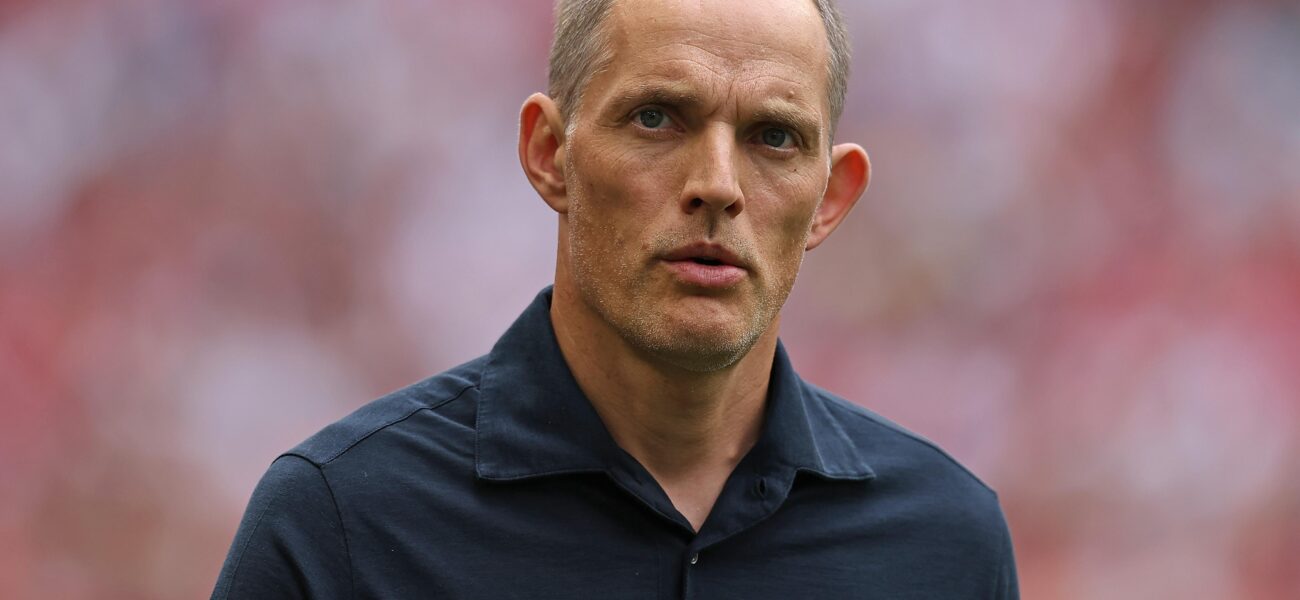
POLICY WIRE — Munich, Germany — There’s a peculiar, almost theatrical, alchemy that occurs when history’s first draft hits the newsstands, especially in the gilded, high-stakes arena of European football. Figures jockey for position, angling to cast their shadows longest over triumphs, particularly when things go a bit sideways later on. That’s precisely what appears to be playing out in Bavaria, where former Bayern Munich boss Thomas Tuchel found himself entangled in a public spat over — of all things — who really pulled the strings on Harry Kane’s monumental move to the German champions.
It wasn’t exactly the D-Day landings, but the capture of Kane was an organizational feat. But here’s the rub: Tuchel recently laid claim to the grand architect role. “When I was at Bayern, I’m still glad that I fought the fight to bring him [Kane] to Bayern Munich against some other opinions,” he reportedly said. A bold assertion, isn’t it? Almost poetic. You picture a lone wolf, standing against the tide, clutching the blueprint for footballing greatness.
And then, reality—or at least, Munich’s version of it—landed with the subtle thud of an unsourced email. Because, as Sport Bild’s Christian Falk swiftly reported, those “other opinions” Tuchel fought against simply weren’t there. Quite the opposite, actually. The powers-that-be at Säbener Straße were, let’s say, ‘nonplussed’ by the coach’s retrospective heroism. Falk, a journalist whose network in German football is as intricate as an Ottoman carpet, confirmed that Bayern’s leadership didn’t just passively greenlight the move. They’d been chasing Kane with the tenacity of a hungry hound for ages, long before Tuchel had even considered moving his tea bags to Munich.
Marco Neppe, the club’s former technical director (since departed by mutual agreement), had reportedly been maintaining contact with Kane’s family for over a year. A full 12 months, give or take. Even Julian Nagelsmann, Tuchel’s predecessor, was still on the touchline when hushed conversations began taking shape. And, perhaps most embarrassingly for Tuchel’s narrative, club insiders like Falk point out that it was the manager himself who initially hesitated. Not over a principled objection, mind you, but because Kane, at 29, wasn’t exactly a fresh-faced academy graduate. “He’s not the youngest player anymore,” Tuchel is said to have remarked, before needing a couple of days to mull over a transfer every other executive was practically sprinting toward.
It’s a stark reminder that even in sports, the story isn’t always the one told by the guy with the loudest microphone. Sometimes, it’s the plodding, relentless work of multiple departments. Karl-Heinz Rummenigge, a name etched into Bayern’s lore like granite, had a refreshingly direct take on such personal aggrandizement. “Great victories in football are always a team effort, not just one man’s vision,” he’s quoted as saying, his statement resonating with an institutional memory that predates Tuchel by decades. “We operate as a collective, especially on decisions of this magnitude.” Jan-Christian Dreesen, Bayern’s CEO, reportedly jetted off to London no fewer than three times to twist Tottenham chairman Daniel Levy’s arm—a considerable diplomatic effort for what was, ultimately, a staggering €100 million transfer, according to sources like Sky Sports.
What This Means
📄 POLICY WIRE WHITEPAPER PUBLISHED: PAKISTAN'S NATIONAL SECURITY POLICY PRIORITIES
👉 READ BY CLICKING HEREThe subtle jockeying for narrative control within a powerful institution like Bayern Munich isn’t just about sporting bragging rights. It’s deeply political. In the cutthroat world of elite football, a manager’s perceived foresight and decisiveness can directly impact his future job prospects and his standing with increasingly impatient club owners and hyper-engaged fanbases. This incident exposes the fragile dance between individual ego and collective endeavor, a dynamic common in large organizations, whether they’re football clubs or multinational corporations.
From an economic standpoint, the saga underscores the immense value attached to global footballing icons. The fact that the details of Kane’s move are scrutinised so intensely—and conflicting narratives emerge—highlights the financial and brand capital tied to these transactions. Global fanbases, from bustling Manchester to the sprawling metropolis of Karachi, track these celebrity players. And these fans aren’t just consumers; they’re often highly partisan observers, quick to laud heroes and just as quick to discredit those they feel are revisionist. They invest emotionally, financially. That’s why the narrative around any significant event, be it a football transfer or a political decision, has currency.
This particular narrative dust-up also throws a harsh light on a coach already enduring a rather rough patch. Just recently, he’d had to deal with a premature exit with England (of all teams) in a fictional World Cup quarter-final—a sting perhaps less about football and more about public perception. Now, he’s effectively being told, “Slow your roll on the self-congratulation.” It’s a dry observation, but football, much like politics, loves a hero; it just prefers its heroes to be authenticated by a few independent witnesses.
Memory, as they say, often becomes an editor, tidying up the messy reality to suit the prevailing mood or personal agenda. For Tuchel, it seems Munich’s institutional memory is refusing to be edited so easily. It’s not personal, it’s just… business. And, as we’re now finding out, history.