


Signature Shortfall Derails Maine Transgender Sports Ban, Ignites National Debate
POLICY WIRE — AUGUSTA, Maine — In the chilly political theater of Maine, sometimes, the script just doesn’t play out. Forget the grand debates, the impassioned speeches. Sometimes, it’s simply...

POLICY WIRE — AUGUSTA, Maine — In the chilly political theater of Maine, sometimes, the script just doesn’t play out. Forget the grand debates, the impassioned speeches. Sometimes, it’s simply about the pen — and the paperwork. Or, rather, the sheer lack of valid pens on the proper papers.
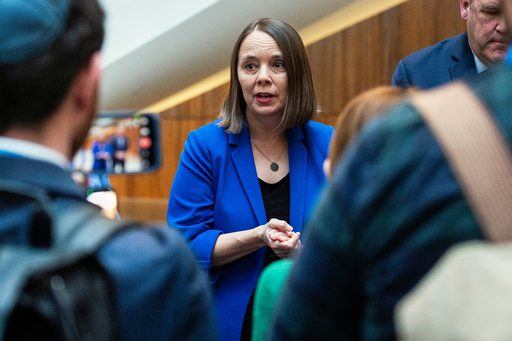
An initiative aiming to redraw the lines of school sports—specifically for transgender students—hit a hard wall this week, not on philosophical grounds, but on a distinctly less poetic one: arithmetic. Maine’s Secretary of State, Shenna Bellows, brought the gavel down. She didn’t debate the ethics or the fairness. She just pointed to the numbers. They didn’t add up. Petitioners, she declared, just hadn’t gathered enough proper signatures to push their ballot question to the November elections. You’ve gotta follow the rules, it seems, even if your cause is fiercely championed. And in politics, as we all know, details like these, however mundane, can sink even the most passionate crusades.
The proposal, spearheaded by ‘Protect Girls Sports in Maine,’ was gearing up to ask voters whether public schools ought to limit bathroom and sports access based solely on a child’s birth certificate. That’s a loaded question, alright. But before voters could even whisper a ‘yea’ or ‘nay,’ Bellows’ staff, after weeks of tedious verification, found that over 12,000 signatures submitted for the referendum were, well, garbage. That left the group some hundreds short of the 67,682 valid endorsements required for the initiative to secure its spot on the ballot, according to official records from the Maine Secretary of State’s office. A tiny miss, sure. But in procedural democracy, tiny misses are often catastrophic. That’s a brutal reality check, isn’t it?
This bureaucratic stumble isn’t just some local dust-up. It’s a significant gut punch to a sprawling national movement. A movement, by the way, that’s already seen over 30 states push laws and policies seeking to keep transgender girls and women out of girls’ and women’s sports. Maine, oddly enough, had become an unexpected flashpoint last year, particularly after some choice words were exchanged between Democratic Governor Janet Mills and former President Donald Trump on the matter. It’s part of a much bigger ideological chess game, — and right now, one side just lost a rook to a papercut.
“We treat the integrity of these petitions with the same solemnity we afford election security,” Bellows stated flatly. “Anyone seeking to bypass legislative process via ballot initiative needs to understand—and frankly, adhere to—the stringent legal framework that makes our direct democracy possible.” It wasn’t accusatory, just a statement of fact. Leyland Streiff, a principal officer for Protect Girls Sports in Maine, didn’t seem too fussed by the pronouncement. “This is a minor, if frustrating, delay,” Streiff countered. “Our defense of fairness — and biological reality in girls’ sports isn’t reliant on a single ballot line. We’ll simply regroup — and present our arguments again. Maine families deserve a say in this, and we won’t stop pushing until they get one.”
What This Means
This ruling, while ostensibly about bureaucratic compliance, speaks volumes about the shifting sands of political strategy in these fraught culture wars. Proponents of restrictions on transgender participation often favor ballot initiatives, sensing a more sympathetic ear from a general populace than from potentially ideologically-driven state legislatures. But when even that direct democratic route proves arduous, it suggests two things: either their ground game isn’t as solid as they’d hoped, or the administrative hurdles—often seen as inconvenient but necessary checks on populist fervor—are working as intended. Politically, this grants a temporary reprieve to Maine Democrats and LGBTQ+ allies, allowing them to focus on other battles, perhaps negotiating some broader regional strategies. Economically, well, it mostly just delays further legal costs that these sorts of initiatives inevitably incur.
And let’s not pretend these discussions stay contained within tidy national borders. Debates around gender identity, tradition, and personal liberty echo globally, often hitting different chords in societies with diverse cultural and religious landscapes. In parts of South Asia, for instance, conversations around gender identity can be acutely complex, balancing traditional societal norms, deeply held religious beliefs, and nascent human rights movements. The very idea of individual self-identification challenging established biological classifications, while seemingly a Western-centric discourse, inevitably ripples outwards, stirring similar questions, albeit with different cultural filters. It’s a testament to the universal tension between individual autonomy — and societal definition.
The petitioners, Bless their hearts, have ten days to appeal Bellows’ decision. Or, they can dust themselves off — and try again next election cycle. This particular skirmish over Maine’s athletic fields might be over for now. But make no mistake, the broader war—over whose bodies belong where, and under whose rules—is nowhere near finished. It’s merely paused for signature verification.